

Commentary
But their "principal to principal" model will only be as effective as the political strength of each leader back home.
Damien Ma
{
  "authors": [
    "Richard Sokolsky",
    "Steven Simon"
  ],
  "type": "other",
  "centerAffiliationAll": "",
  "centers": [
    "Carnegie Endowment for International Peace"
  ],
  "collections": [],
  "englishNewsletterAll": "",
  "nonEnglishNewsletterAll": "",
  "primaryCenter": "Carnegie Endowment for International Peace",
  "programAffiliation": "",
  "programs": [],
  "projects": [],
  "regions": [],
  "topics": [
    "Security",
    "Military",
    "Foreign Policy"
  ]
}
Source: Getty
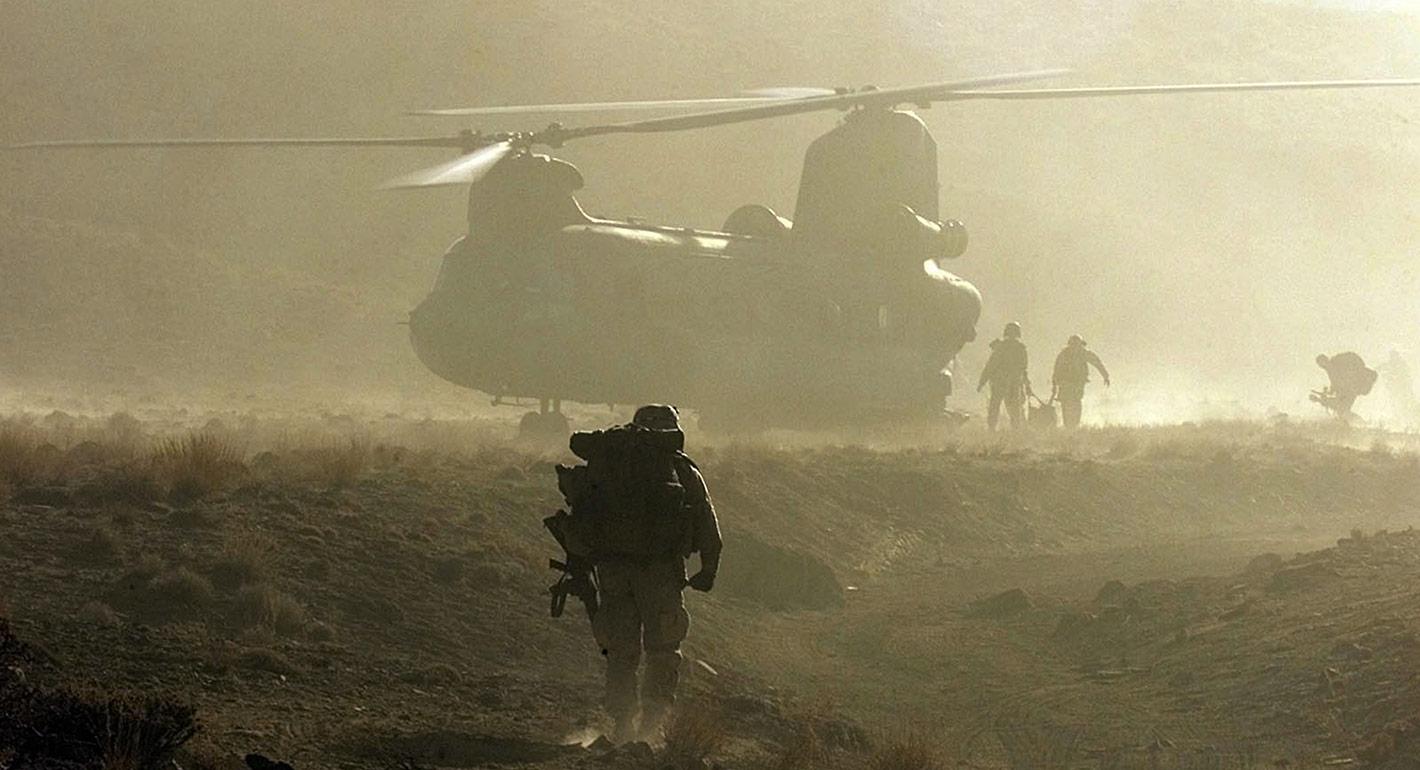
As the legacy of September 11, 2001, fades, it is time to reassess the war on terror.
Source: Quincy Institute for Responsible Statecraft
As the legacy of September 11, 2001, fades, it is time to reassess the war on terror. The United States has negotiated an Afghan withdrawal agreement with the Taliban, significantly drawn down its military presence in Iraq, and maintains only a small troop contingent in Syria. The grim innovations associated with the war on terror—indefinite detention, black sites, extraordinary renditions, torture, military trials, targeted killings—have for the most part been abandoned, although a small group of prisoners remains at Guantanamo and drones are still deployed to kill terrorism suspects. At the same time, U.S. counterterrorism (CT) operations have increased in Africa.
During this period, homeland security efforts were ramped up quickly but have remained the junior partner in the war on terror. Yet it was no doubt due to the maturation of these efforts that, since September 11, jihadists have successfully infiltrated the United States only once to carry out deadly attacks, when a Saudi aviation student deployed by the Saudi Air Force to a US naval air station in Florida murdered three U.S. sailors in December 2019. According to the FBI, the student had been in contact with al-Qaeda. The greater danger now is posed by self-radicalized individuals at home, the majority of whom are linked to white supremacist movements.
As the external terrorist threat has declined, with U.S. defenses strengthening and insurgents turning their guns on local adversaries, the U.S. has an opportunity to realign its war on terror with the realities of a new strategic dispensation. The policy departures recommended in this paper are intended to thread the needle by reducing the scope and intensity of U.S. CT operations and increasing congressional oversight while retaining an effective capacity for self-defense. Our policy proposals include the following:
This paper was originally published by the Quincy Institute for Responsible Statecraft.

Nonresident Senior Fellow, Russia and Eurasia Program
Richard Sokolsky is a nonresident senior fellow in Carnegie’s Russia and Eurasia Program. His work focuses on U.S. policy toward Russia in the wake of the Ukraine crisis.
Steven Simon
Steven Simon is visiting professor of history at Amherst College. He served on the NSC and in the State Department in five administrations and is co-author of "The Age of Sacred Terror."
Carnegie does not take institutional positions on public policy issues; the views represented herein are those of the author(s) and do not necessarily reflect the views of Carnegie, its staff, or its trustees.

But their "principal to principal" model will only be as effective as the political strength of each leader back home.

Damien Ma

U.S. unpredictability has allowed China to capitalize on its positioning as the “responsible great power”. Paradoxically, the more China wins the perception game, the more likely expectations will rise for Beijing to deliver not just words but to demonstrate with its deeds.

Chong Ja Ian

Hanoi and Beijing have long treated each other as distant cousins rather than comrades in arms. That might be changing as both sides draw closer to hedge against uncertainty and America’s erratic behavior.

Nguyễn Khắc Giang

Across Asia, China is better positioned to withstand energy shocks from the fallout of the Iran war. Its abundant coal capacity can ensure stability in the near term. Yet at the same time, the country’s energy transition away from coal will make it even less vulnerable during the next shock.
Damien Ma

Malaysia’s chairmanship sought to fend off short-term challenges while laying the groundwork for minimizing ASEAN’s longer-term exposure to external stresses.

Elina Noor