

Commentary
Peter Kellner
{
  "authors": [
    "Peter Kellner"
  ],
  "type": "legacyinthemedia",
  "centerAffiliationAll": "dc",
  "centers": [
    "Carnegie Endowment for International Peace",
    "Carnegie Europe"
  ],
  "collections": [],
  "englishNewsletterAll": "ctw",
  "nonEnglishNewsletterAll": "",
  "primaryCenter": "Carnegie Europe",
  "programAffiliation": "EP",
  "programs": [
    "Europe"
  ],
  "projects": [],
  "regions": [
    "North America",
    "United States",
    "Iran"
  ],
  "topics": [
    "Political Reform"
  ]
}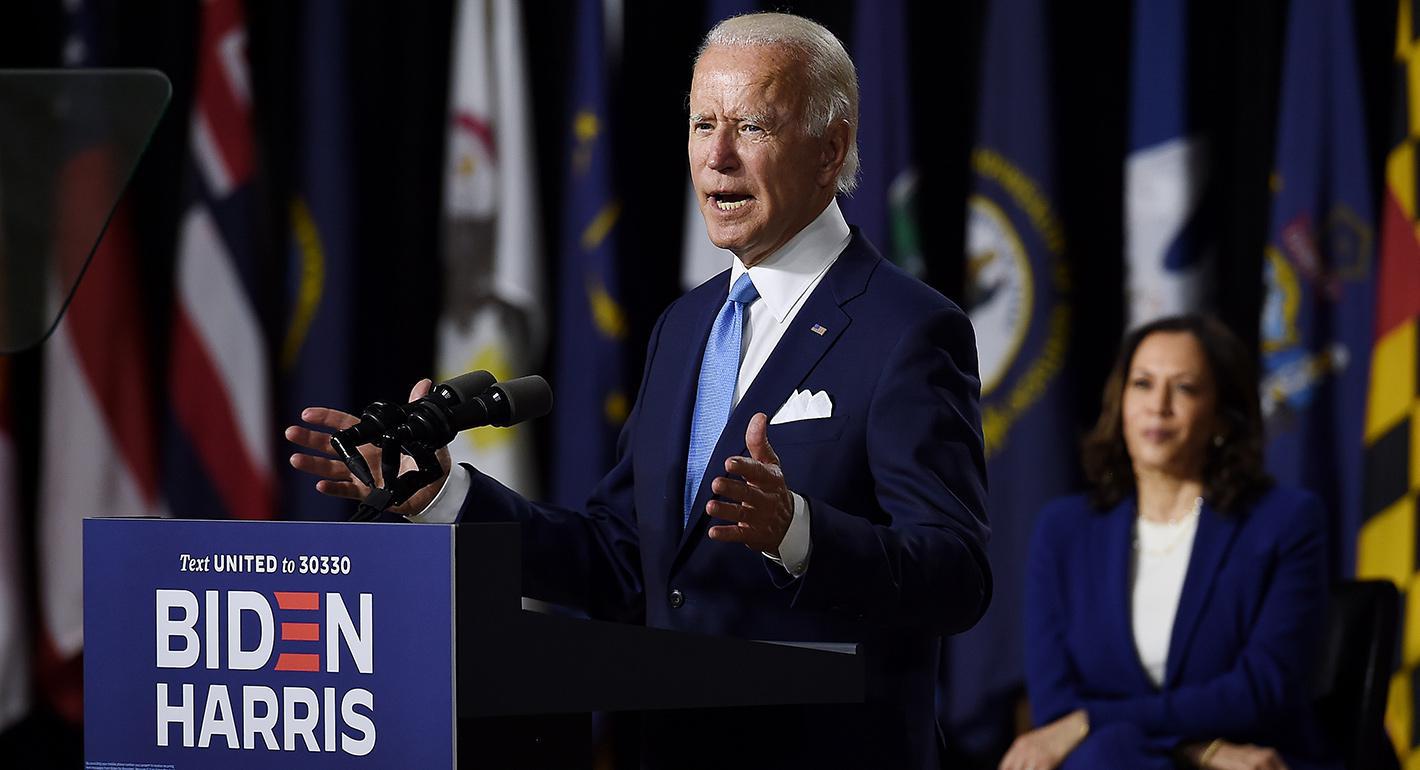
Source: Getty
Former U.S. vice president Joe Biden is well placed to defeat U.S. President Donald Trump in November. But to do so, he must mobilize America’s clear anti-Trump majority to march behind his banner.
Source: TheArticle
Joe Biden’s task seems obvious enough. He must win back a decent number of the long-term Democrats who backed Donald Trump four years ago. If he does that, he will become President. If he doesn’t, he will lose.
In fact, that’s not quite right. It is perfectly possible for Trump to retain all the support he secured in 2016 and Joe Biden to win. Indeed, Trump could add win one million — and conceivably two million — more votes than last time and still lose. As for Biden, it would obviously help to persuade last-time Trump supporters to switch sides; but it’s not necessary.As we approach Labour Day and the unofficial start of the final, hectic race to election day, let’s crunch the numbers. For the contest is not as straightforward as it looks.
In 2016, Clinton won 48 per cent of the national vote, while Trump won 46 per cent. Six per cent voted for other candidates. This “other” block was well above the recent norm. In each of the three previous presidential elections, “other” candidates won less than two per cent of the vote between them. The latest polling evidence suggests that this year’s election will see the “other” total fall back again.
What does this mean for the Trump-Biden contest? Here are two assumptions:
Former Nonresident Scholar, Carnegie Europe
Kellner was a nonresident scholar at Carnegie Europe, where his research focused on Brexit, populism, and electoral democracy.
Recent Work
Peter Kellner
Peter Kellner
Carnegie does not take institutional positions on public policy issues; the views represented herein are those of the author(s) and do not necessarily reflect the views of Carnegie, its staff, or its trustees.

US unpredictability has allowed China to capitalize on its positioning as the “responsible great power”. Paradoxically, the more China wins the perception game, the more likely expectations will rise for Beijing to deliver not just words but to demonstrate with its deeds.

Chong Ja Ian

For Malaysia, the conjunction that works is “and” not “or” when it comes to the United States and China.

Elina Noor

Regulation, not embargo, allows Beijing to shape how other countries and firms adapt to its terms.
Alvin Camba

Beijing believes that Washington is overestimating its own leverage and its ability to handle the trade war’s impacts.


Rick Waters, Sheena Chestnut Greitens
Tapping our network of China experts in the region, Carnegie China offers this latest “China Through a Southeast Asian Lens” report to offer preliminary assessments of whether the U.S. effort to reshape the global trading order will lead countries in the region to tilt toward Beijing.



Selina Ho, Khin Khin Kyaw Kyee, Joseph Ching Velasco, …