

Q&A
Jon Bateman, Andy Masley
{
  "authors": [
    "Jon Bateman"
  ],
  "type": "commentary",
  "centerAffiliationAll": "dc",
  "centers": [
    "Carnegie Endowment for International Peace"
  ],
  "collections": [
    "Major Power Tech Relations",
    "The Day After: Navigating a Post-Pandemic World"
  ],
  "englishNewsletterAll": "ctw",
  "nonEnglishNewsletterAll": "",
  "primaryCenter": "Carnegie Endowment for International Peace",
  "programAffiliation": "TIA",
  "programs": [
    "Technology and International Affairs"
  ],
  "projects": [],
  "regions": [],
  "topics": []
}
Source: Getty
Calls to decouple the United States from China obscure steep obstacles and unknown risks that warrant fuller debate.
By 2020, the United States and China had already begun to decouple—selectively paring back their interdependence in sensitive areas, especially technology—and the coronavirus pandemic will only accelerate the process. With bilateral tensions at a modern high point, Americans and their leaders are less comfortable relying on China for lifesaving medical supplies like masks and gloves and will be even keener to control technology, a vital force in the life of nations.
Decoupling is an appealing metaphor, suggesting the simple disconnection of a cable between the two countries. But the more accurate—and daunting—image is disentanglement. U.S. and Chinese technologies are woven together in enormous, overlapping webs that span the global economy. They can’t be pulled apart without breaking many strands and risking unknowable consequences.
U.S. and Chinese technologies are woven together in enormous, overlapping webs.
Rather than acknowledge the difficult questions involved, U.S. leaders have largely sidestepped them. First, what is the ultimate objective of disentanglement? Maximizing U.S. prosperity and security? Or containing China’s rise? These goals are not the same and, indeed, are often in conflict. For example, U.S. President Donald Trump’s administration wants to strangle the Chinese firm Huawei by choking off its supply of semiconductors. But this would also weaken the semiconductor industry in the United States and complicate domestic access to foreign-made chips.
Second, what is the scope of disentanglement? Will the United States impose targeted protections on a handful of the most strategic technologies? Or will it apply sweeping controls across many technology areas? The latter approach could be self-defeating, slowing U.S. innovation or even leading to a total rupture of economic ties with China. Yet a narrower approach may be inadequate to achieve key goals, like preventing the export to China of technologies with both civilian and military uses. Something will have to give.
Third, what is the United States’ domestic strategy? Should it rely on the free market to out-innovate China? Or does government need to actively direct and fund U.S. technological development? If Beijing’s potent blend of state capitalism is set to dominate future industries, the United States may need to adapt its economic system in response. But such a major shift would need significant evidence to justify it and extraordinary political will to implement it; these may simply come too late.
Fourth, how will the United States lead a larger global coalition? Which countries would join a split from China’s technology, and what enticements or concessions would the United States offer these countries? The Trump administration has bullied its closest democratic allies with only modest success. But a multilateral approach comes with its own limits. Some U.S. partners are unwilling to break from China. Others, such as the Gulf states, prefer Beijing’s model of digital authoritarianism to what they see in the United States.
These are just four sets of unresolved questions among many—each of which requires making complex value judgments and testing unproven theories. Yet one answer is clearly wrong: lurching forward without a coherent strategy or even real debate. Ad hoc actions are creating long-term risks for the United States that are barely understood and widely overlooked. Before leaping any further into the unknown, the United States should work toward greater national consensus on the difficult road ahead.

Senior Fellow and Co-Director, Technology and International Affairs Program
Jon Bateman is a senior fellow and co-director of the Technology and International Affairs Program at the Carnegie Endowment for International Peace.
Recent Work

Jon Bateman, Andy Masley

Jon Bateman, Steve Feldstein
Carnegie does not take institutional positions on public policy issues; the views represented herein are those of the author(s) and do not necessarily reflect the views of Carnegie, its staff, or its trustees.

With the potential of enabling not only significant economic growth but also the innovation of critical technologies in various fields, both the United States and China view 5G as one of the key influencing factors in the “great power competition.”
Lyu Jinghua

Effective nuclear arms control engagement with China will likely require confidence-building measures by the United States and greater support from the international community.

Tong Zhao
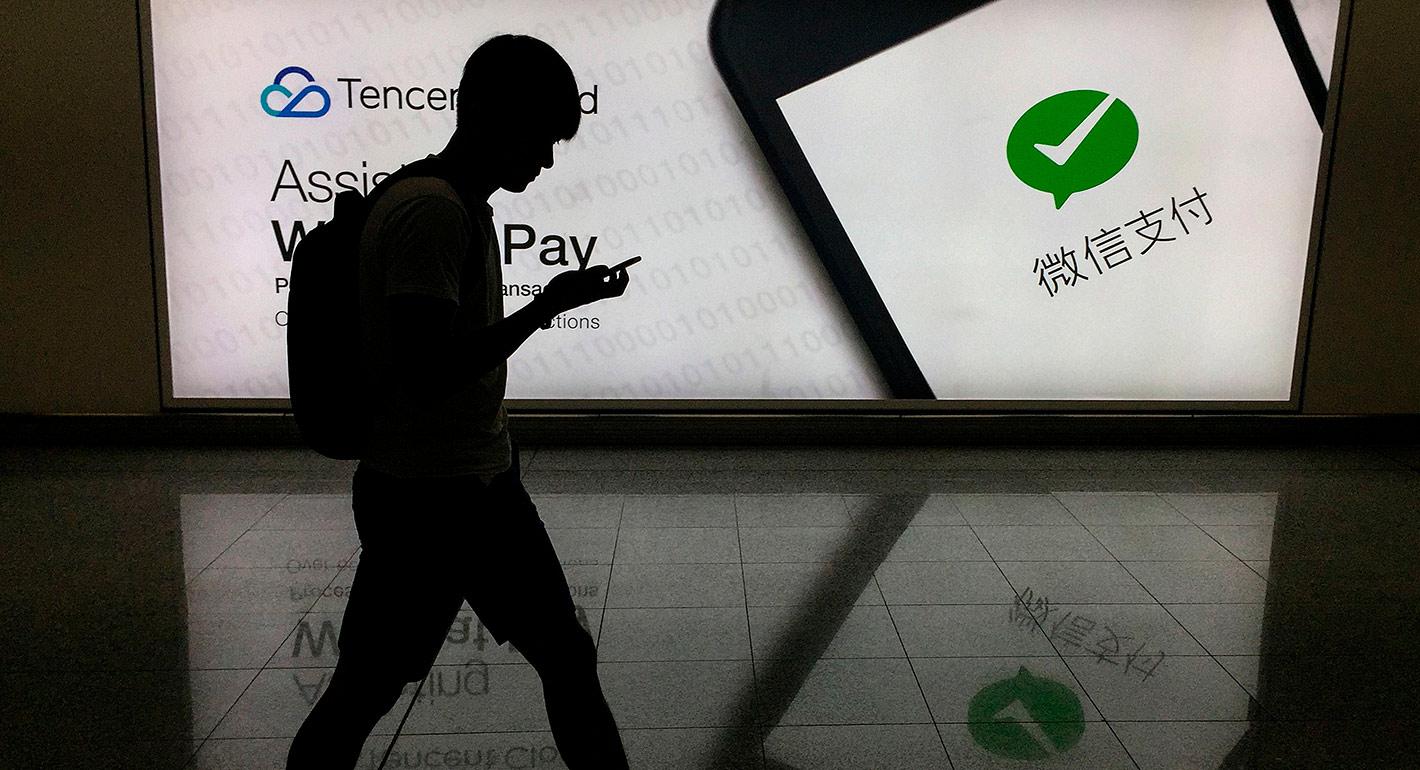
Two experts, one Chinese one American, weigh in on the TikTok and WeChat ban. This high-stakes contest reflects a wider technological decoupling that could splinter the internet
Jon Bateman, Lyu Jinghua
While the world hoped this pandemic might lead to more cooperation between these two great powers, American and Chinese leaders instead fell into a blame game and allowed their increasing suspicions to guide their decision-making.
Lyu Jinghua

In the wake of the agreement between President Obama and President Xi, there’s a bigger strategic discussion that will continue to play out around the future of the internet and the issue of sovereignty.

Tim Maurer