

Other
Anders Aslund

REQUIRED IMAGE
Source: Carnegie
Summary
Recent experience in Eastern Europe, East Asia, and South America supports the idea that institutions—such as an effective judiciary, protection of property rights, and more specific laws—are key to both long-term economic development and recovery from crises. Developing good institutions is generally viewed as a desirable goal, but there is no agreed road map for such changes.
Åslund and Johnson suggest, at least for former communist countries, the right way to begin strengthening institutions is by lowering the barriers to entry for new small businesses and the costs of running these firms by switching to a simple low lump-sum tax. This policy has economic advantages, but its most important effect is to change the political equilibrium, creating a powerful force for further institutional improvement.
Click on link above for the full text of this Carnegie Paper.
About the Authors
Anders Åslund is director of Carnegie's Russian and Eurasian Program. He is the author of The Enlargement of the European Union: Consequences for the CIS Countries (Carnegie Working Paper No. 36), and Building Capitalism: The Transformation of the Former Soviet Bloc.
Simon Johnson is associate professor of economics at the Sloan School of Business at the Massachusetts Institute of Technology.
Some print copies are available.
Request a copy

Former Senior Associate, Director, Russian and Eurasian Program
Recent Work
Anders Aslund
Anders Aslund
Carnegie does not take institutional positions on public policy issues; the views represented herein are those of the author(s) and do not necessarily reflect the views of Carnegie, its staff, or its trustees.

In the latest Five-Year Plan, the Chinese president cements the shift to an innovation-driven economy over a consumption-driven one.

Damien Ma

Regulation, not embargo, allows Beijing to shape how other countries and firms adapt to its terms.

Alvin Camba

Rather than climate ambitions, compatibility with investment and exports is why China supports both green and high-emission technologies.

Mathias Larsen
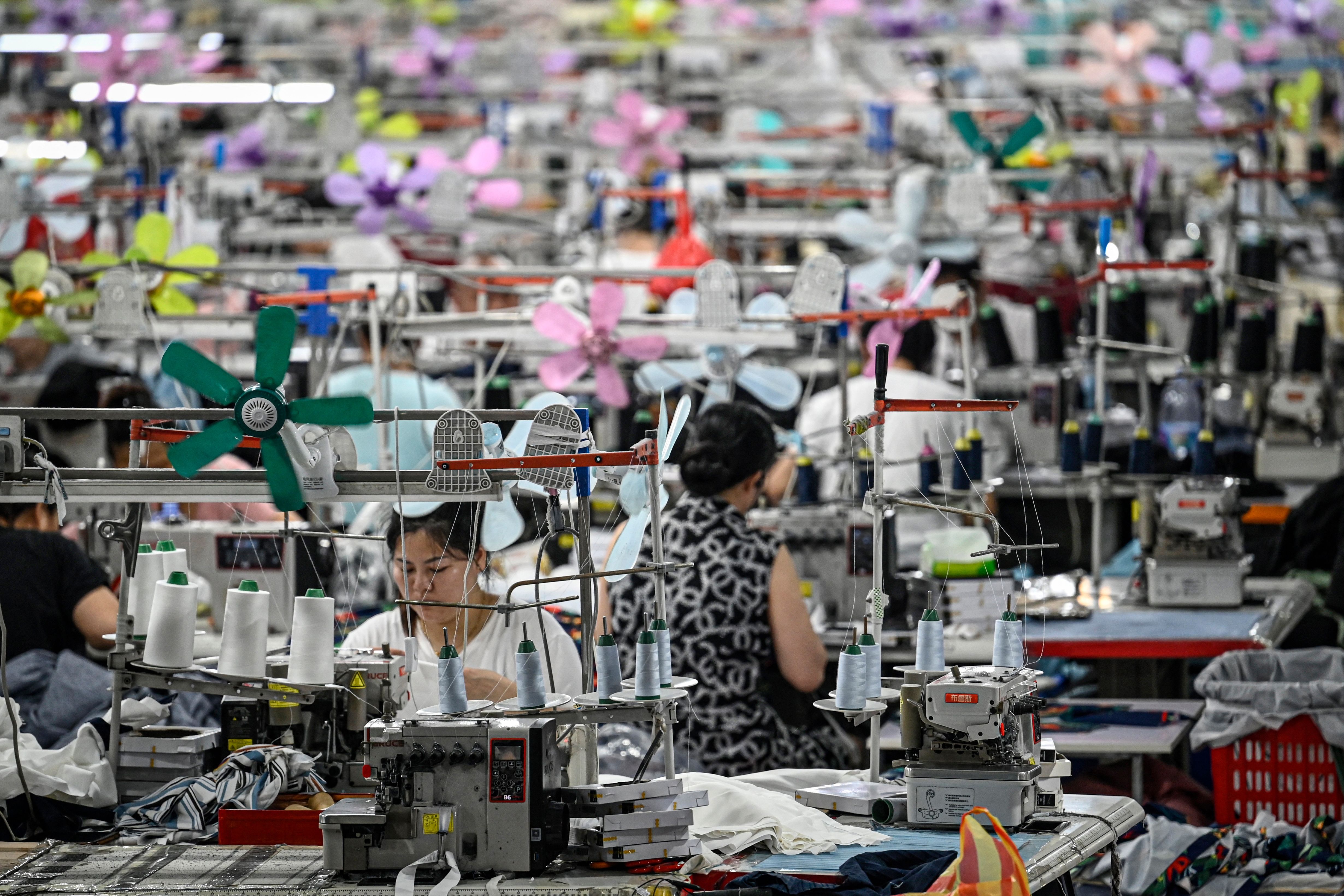
“Involution” is a new word for an old problem, and without a very different set of policies to rein it in, it is a problem that is likely to persist.

Michael Pettis

While China's investment story seems contradictory from the outside, the real answers to Beijing's high-quality growth ambitions are hiding in plain sight across the nation's cities.

Yuhan Zhang