

Commentary
Malaysia’s chairmanship sought to fend off short-term challenges while laying the groundwork for minimizing ASEAN’s longer-term exposure to external stresses.
Elina Noor

REQUIRED IMAGE
Arabs indisputably desire more predictable, responsive, and fair laws, even as the Middle East presents acute challenges to rule-of-law reform. To achieve the most success, the United States should focus less on the performance of courts and concentrate on building a broad social understanding of legal rights and respect for the law’s authority.
Summary
Arabs indisputably desire more predictable, responsive, and fair laws, even as the Middle East presents acute challenges to rule-of-law reform. David M. Mednicoff’s Carnegie Paper argues that to achieve the most success, the United States should focus less on the performance of courts and concentrate on building a broad social understanding of legal rights and respect for the law’s authority. Law school curriculum enhancement, funding of independent local media projects that provide information about law, and collaboration with indigenous human rights groups would help advance these long-term goals of rule-of-law reform.
Legalism Sans Frontieres? U.S. Rule of Law Aid in the Arab World is the latest paper in the Carnegie Endowment’s Rule of Law Series, which provides analyses by experts on rule-of-law development about key questions in the field.
Click on the link above for the full text of this Carnegie Paper.
About the Author
David M. Mednicoff is assistant professor in the Department of Legal Studies and the Center of Public Policy and Administration at the University of Massachusetts-Amherst.
A limited number of print copies are available.
Request a copy
David M. Mednicoff
Carnegie does not take institutional positions on public policy issues; the views represented herein are those of the author(s) and do not necessarily reflect the views of Carnegie, its staff, or its trustees.

Malaysia’s chairmanship sought to fend off short-term challenges while laying the groundwork for minimizing ASEAN’s longer-term exposure to external stresses.

Elina Noor

For Malaysia, the conjunction that works is “and” not “or” when it comes to the United States and China.
Elina Noor
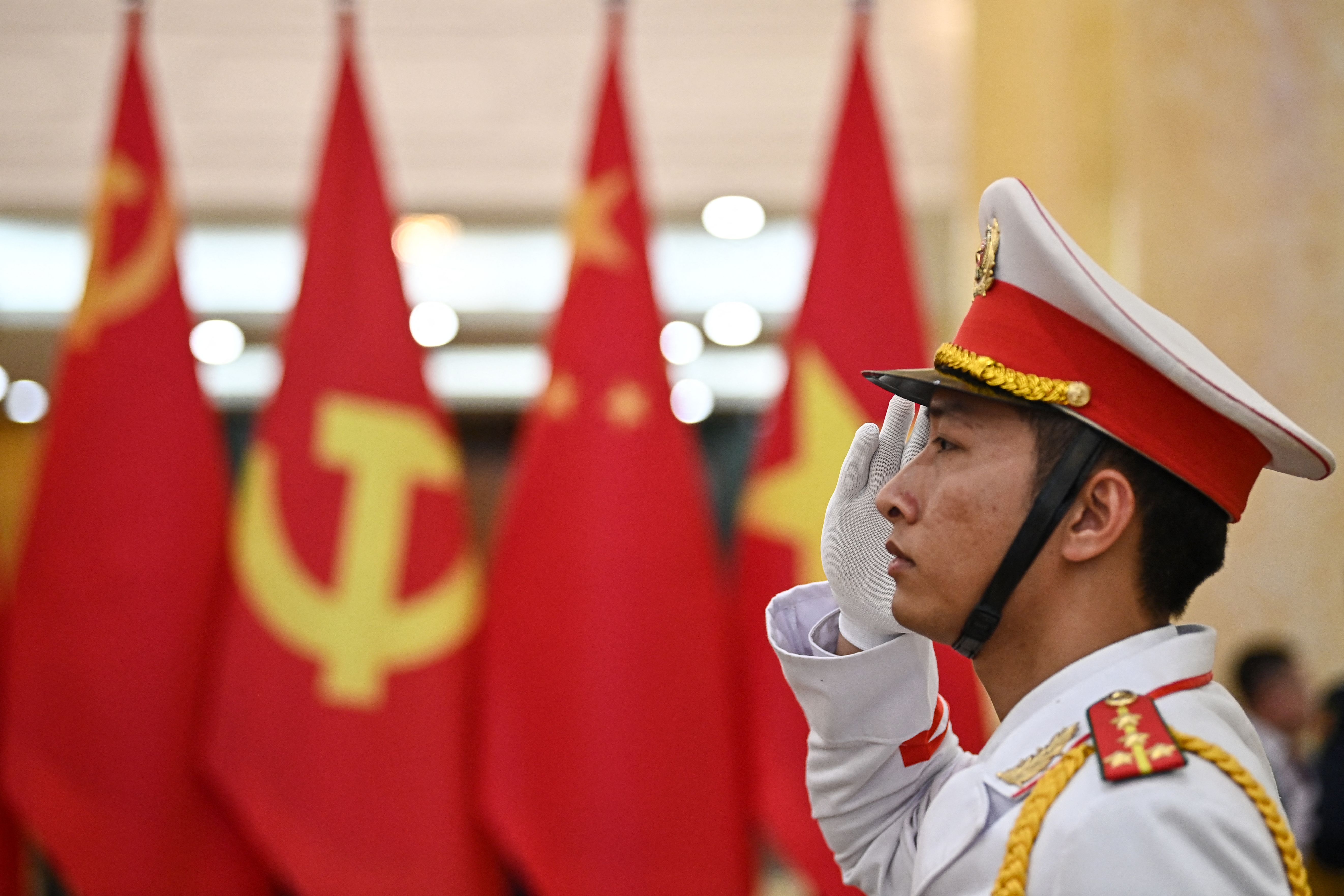
In July 2025, Vietnam and China held their first joint army drill, a modest but symbolic move reflecting Hanoi’s strategic hedging amid U.S.–China rivalry.

Nguyễn Khắc Giang

Regulation, not embargo, allows Beijing to shape how other countries and firms adapt to its terms.
Alvin Camba

Rather than climate ambitions, compatibility with investment and exports is why China supports both green and high-emission technologies.

Mathias Larsen