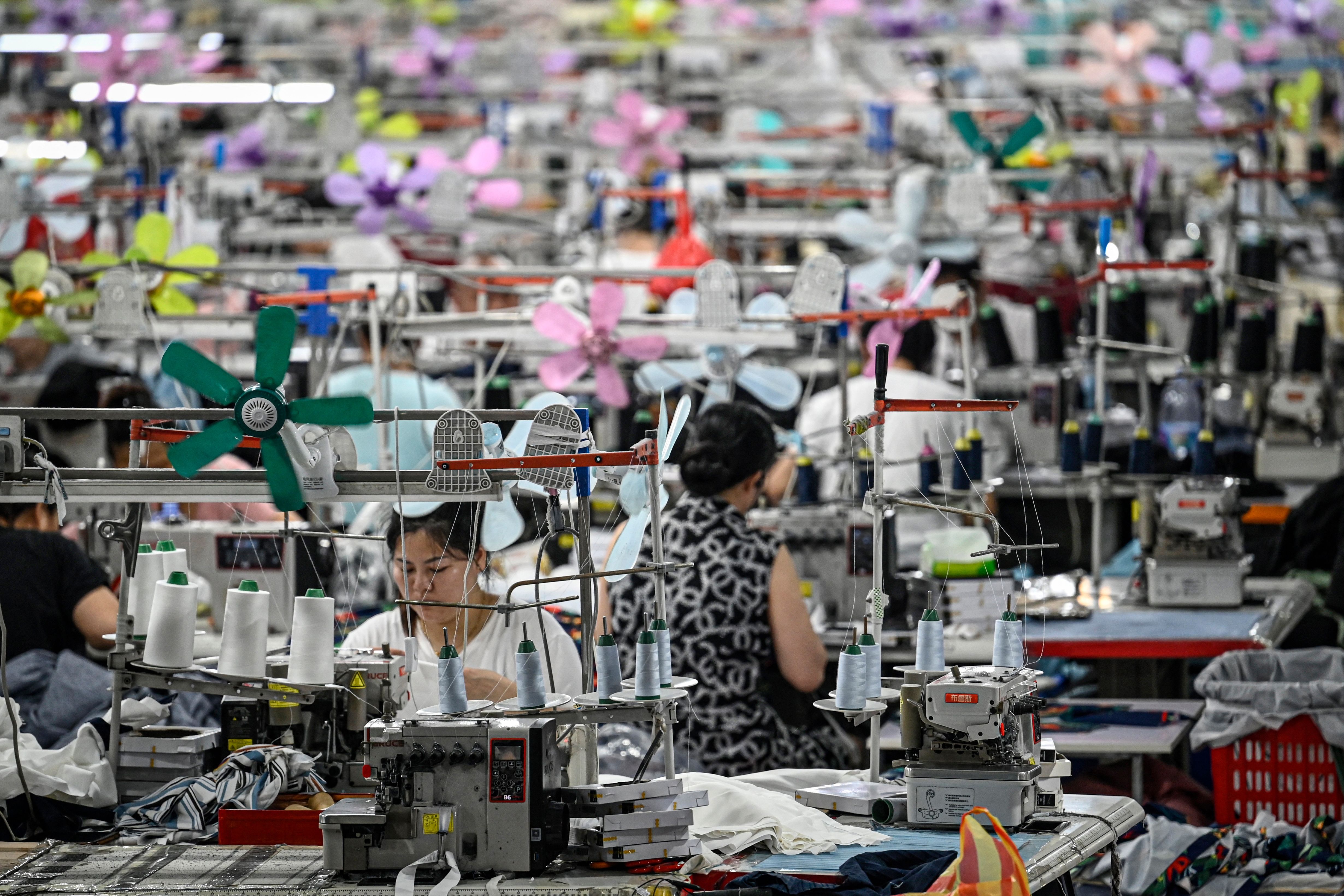


Rather than climate ambitions, compatibility with investment and exports is why China supports both green and high-emission technologies.
Mathias Larsen
Human Rights in the Arab World: Independent Voices offers perspectives from those at the forefront of research and debate at the intersection of human rights and Islam, globalization, transnational advocacy, and the politics of key states such as Egypt, Morocco, and Yemen.
Source: University of Pennsylvania Press

Why have human rights been marginalized in the Arab world? How do we gauge the relevance of human rights in the region, given the political, social, and economic context? What are the practical and theoretical obstacles to the implementation of these rights?
Human Rights in the Arab World: Independent Voices offers perspectives from those at the forefront of research and debate at the intersection of human rights and Islam, globalization, transnational advocacy, and the politics of key states such as Egypt, Morocco, and Yemen. Some chapters provide essential historical background to current political realities, while others consider ways to confront this region's practical and theoretical challenges to human rights. By placing the question of human rights in the often tragic context of Arab politics, the very real stakes are made clear.
This book is available from University of Pennsylvania Press. To order the book from Penn Press, please click here.
Amr Hamzawy is Senior Associate at the Democracy and Rule of Law Project, Carnegie Endowment for International Peace.
Anthony Chase teaches in the Department of Diplomacy and World Affairs at Occidental College.
Director, Middle East Program
Amr Hamzawy is a senior fellow and the director of the Carnegie Middle East Program. His research and writings focus on governance in the Middle East and North Africa, social vulnerability, and the different roles of governments and civil societies in the region.
Anthony Chase
Carnegie does not take institutional positions on public policy issues; the views represented herein are those of the author(s) and do not necessarily reflect the views of Carnegie, its staff, or its trustees.
Rather than climate ambitions, compatibility with investment and exports is why China supports both green and high-emission technologies.
Mathias Larsen
“Involution” is a new word for an old problem, and without a very different set of policies to rein it in, it is a problem that is likely to persist.
Michael Pettis
While China's investment story seems contradictory from the outside, the real answers to Beijing's high-quality growth ambitions are hiding in plain sight across the nation's cities.
Yuhan Zhang
China's stimulus addiction cannot go on forever. Beijing still has policy space to clean up the country's massive debt issue, but time is running short.
Michael Pettis
A quick look at the complexities behind Beijing’s enduring Catch-22 situation with revaluing the Renminbi, despite advantages of a stronger currency.
Michael Pettis