

Paper
The nuclear relationship between China and the United States is increasingly shaped by widening perception gaps rather than deliberate strategic design.
Tong Zhao
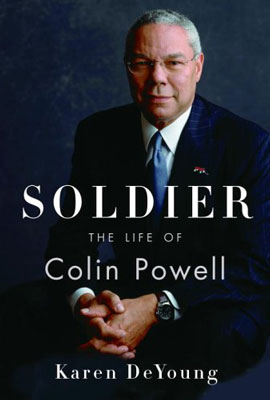
Colin Powell became a national hero. From his humble origins to the highest levels of government in four administrations, he helped guide the nation through some of its most heart-wrenching hours.
Source: Knopf
Over the course of a lifetime of service to his country, Colin Powell became a national hero, a beacon of wise leadership and, according to polls, “the most trusted man in America.” From his humble origins as the son of Jamaican immigrants to the highest levels of government in four administrations, he helped guide the nation through some of its most heart-wrenching hours. Now, in the first full biography of one of the most admired men of our time, award-winning Washington Post journalist Karen DeYoung takes us from Powell’s Bronx childhood and meteoric rise through the military ranks to his formative roles in Washington’s corridors of power and his controversial tenure as secretary of state.
With psychological acumen and a reporter’s eye for detail, DeYoung introduces us to the racially integrated neighborhood where Powell grew up, his courtship of and marriage to Alma Johnson, and his years as a promising young Army officer. We are witness to the pivotal events that helped shaped his world view, including two tours of duty in Vietnam, where he was disillusioned by a breakdown in leadership and the lack of a clear objective, and a 1988 meeting as President Reagan’s national security adviser with Mikhail Gorbachev, who looked at him dead-on and effectively declared an end to the Cold War. We are privy to his reasoning as the architect of Operation Desert Storm and the chairman of the Joint Chiefs of Staff under George H. W. Bush and Bill Clinton, a position that made him a household name and an international celebrity. And we experience his agonizing deliberations in the face of a groundswell of public desire that he run for the presidency.
Yet it was his capacity as America’s chief diplomat in the administration of George W. Bush that brought Powell the most renown—and criticism. Charged with the formidable task of making the case for war with Iraq, he convinced a wary nation that it was both necessary and right, only to find his own credibility hanging in the balance as the justification for invasion began to unravel. At odds with the White House on a range of foreign policy issues, Powell’s counsel went unheeded and his reputation was tarnished.
With dramatic new information about the inner workings of an administration locked in ideological combat, DeYoung makes clearer than ever before the decision-making process that took the nation to war and addresses the still-unanswered questions about Powell’s departure from his post shortly after the 2004 election. Drawing on interviews with U.S. and foreign sources as well as with Powell himself, and with unprecedented access to his personal and professional papers, Soldier is a revelatory portrait of an American icon: a man at once heroic and all-too-humanly fallible.
Karen DeYoung is an associate editor at The Washington Post, where she has held a number of senior editing positions and served as a foreign policy reporter in Washington and correspondent abroad.
Former Visiting Scholar
Carnegie does not take institutional positions on public policy issues; the views represented herein are those of the author(s) and do not necessarily reflect the views of Carnegie, its staff, or its trustees.

The nuclear relationship between China and the United States is increasingly shaped by widening perception gaps rather than deliberate strategic design.

Tong Zhao

But their "principal to principal" model will only be as effective as the political strength of each leader back home.

Damien Ma

U.S. unpredictability has allowed China to capitalize on its positioning as the “responsible great power”. Paradoxically, the more China wins the perception game, the more likely expectations will rise for Beijing to deliver not just words but to demonstrate with its deeds.

Chong Ja Ian

Hanoi and Beijing have long treated each other as distant cousins rather than comrades in arms. That might be changing as both sides draw closer to hedge against uncertainty and America’s erratic behavior.

Nguyễn Khắc Giang

Across Asia, China is better positioned to withstand energy shocks from the fallout of the Iran war. Its abundant coal capacity can ensure stability in the near term. Yet at the same time, the country’s energy transition away from coal will make it even less vulnerable during the next shock.
Damien Ma