There is a general tendency in the Arab region to view Barack Obama’s victory as a positive change. More flexible and intelligent than his predecessor, and possessing a culturally and racially diverse background, he is likely to be more open to different religions, races, and cultures than President George W. Bush.
The most important issue to test how differently Obama will approach foreign policy is Iran and its nuclear program, both of which top U.S. and Middle East priorities. Obama’s willingness to hold direct talks with the Iranians is one reason for the positive perception of him among Arabs. Israelis also hope that his diplomatic approach will prompt Iran to accept the “incentive package” that calls for a halt to its uranium enrichment program in exchange for the lifting of sanctions. According to a memo prepared under the guidance of Israeli foreign minister Tsipi Livni and leaked to Israeli media, the majority of Israelis assume that U.S.–Iranian talks will start as early as the first six months of Obama’s term. They believe the Israeli government should accept dialogue as a way to deal with Tehran and abandon its “wrong illusion” ―as quoted in the Israeli text―that it could stop Iran’s nuclear program unilaterally.
In fact, Obama sees the Bush administration’s policies―whether in Iraq or Lebanon―as a contributing factor to growing Iranian influence in the region. He believes that reversing this policy by withdrawing from Iraq and engaging Syria could shake up the structure of powers in the Middle East and weaken Iran’s influence in favor of other regional powers. Meanwhile, Tehran understands that toppling its regime will no longer be a top priority for the White House under the incoming administration and that the next stage of U.S. policy will witness the opening of dialogue between the two countries. Such a policy shift would be facilitated by the fact that Iranians appear to be reassured by the incoming administration’s “good intentions” and by what Speaker of Parliament Ali Larijani called its “realism in handling crises.”
However, this openness to Iran does not mean that the incoming administration will abandon all of the Bush administration’s policies in the Middle East. Dealing with Islamists is one of the most important redlines the new administration is unlikely to cross. Islamist movements considered Obama’s election a victory for them, believing that his realism would lead to policy changes based on the lessons learned from President Bush’s mistakes. Islamists think that the new administration will no longer view their opposition as a force capable of sinking any U.S. project in the region that goes against their interests. However, this is a grave misreading of Obama’s priorities and strategies.
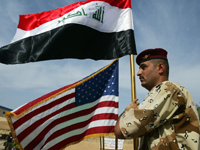
It is true that Obama’s campaign centered on criticizing the current administration’s policies―whether in Iraq, the war on al-Qaeda, or the handling of the Iranian issue. However, the campaign’s slogans were not the slogans of the Islamists. Obama’s objective is not to undermine U.S. influence in these regions, but rather to reassess objectively the web of conflicts and improve the chances of a U.S. “victory” in future confrontations. Any objective reading of Obama’s positions on Afghanistan, his exit strategy in Iraq, and the standoff with Iran shows that his strategic objective is to deprive the Islamist movements of justification for the anti-American rhetoric that characterizes their verbal confrontation with the U.S. Unlike Bush, Obama does not see the conflict with Islamists as an open war with the West but rather recognizes the specificity of each conflict and intends to deal with each accordingly. This is why, for instance, he distinguishes between the war with the Taliban and hunting down al-Qaeda leaders; he thinks the latter should have been the top U.S. priority in the past seven years. Obama does not believe that the United States has an interest in remaining in Iraq if Iraqis can maintain security on their own. Nevertheless, he still plans to keep 50,000 troops as a “reserve force” to crack down on al-Qaeda members if they tried to jeopardize the stability of the country or if Iraqi forces were unable to combat them.
Whether Islamists think their “opposition” was the real winner in the U.S. elections or regard Barack Obama’s victory as a natural consequence of the failure of the Bush doctrine and the need for an alternative, they have to deal more realistically with the new administration. Obama was elected president of the United States and his job is to protect his country’s interests. All Islamists can do is to spare themselves and us additional conflicts in the region and try to find common points that coincide with U.S. interests. Otherwise, we will have the same Bush policies, this time wearing a black mask.
Elias Harfoush, daily pan-Arab al-Hayat Newspaper journalist, Lebanon.