

Other
- +1
Dmitri Trenin, Sergei Aleksashenko, Sam Greene, …
Source: Getty
Russia remains hobbled by an unfulfilled need to diversify its economy and to strengthen the independence of its economic and judicial systems. A global turnaround will not solve these problems.
In a recent conference in Moscow, participants were asked to suggest policies that could get Russia out of its economic crisis. None of them, economists included, said much about the economy. The focus, rather, was on politics; Russia, they said, needs better institutions, freer courts and media, an empowered parliament with fair elections, and so on.
Four Crises
Russia faces four distinct but interlinked crises, two of which are international in origin and two of which are indigenous. On the international side, the worldwide collapse in economic activity and the resulting decline in commodity prices have robbed the Russian economy of demand and natural resource rents. Second, the global credit crunch has deprived Russia economy of capital inflows (a large part of investment over the last decade was financed by leveraging off Russia’s raw materials to borrow from Western banks; as the value of that income has decreased, Russian borrowers find themselves over-extended). These problems are out of the government’s control; when they are resolved externally, Russia’s sails will be somewhat re-inflated.
But a global recovery will do nothing to resolve Russia’s other two, domestic crises. The first is that Russia’s economy remains heavily concentrated, both sectorally, with a focus on the extractive industries, and in terms of ownership. The second is a crisis of management: with weak institutions and rule of law, Russia’s economy seems unusually susceptible to pernicious or incompetent government interference. And weak institutions deter private investment and diversification.
A global turnaround will not solve Russia’s fundamental problems.
It is worth remembering that Russia’s economic downturn began well before the global crisis ever made it to Moscow. On July 24, 2008, Prime Minister Vladimir Putin publicly accused Mechel, a metals company, of engaging in transfer pricing, and suggested that if it did not stop voluntarily, it would do so involuntarily; Russian stock indices proceeded to plummet nearly six percent (erasing some $5 billion from Mechel’s market capitalization). On the following Monday, Putin repeated the attacks, leading to similar losses.
The resulting investor panic was exacerbated by the war with Georgia in August, which scared away many remaining international portfolio investors, bringing shares down 80 percent from their May 2008 highs by January 2009. They have since recovered but remain 55 percent off their peak. The market has also become less diverse, with trading dominated by state-run institutions. Such large-scale capital flight has inevitably impacted the currency; the ruble lost as much as 57 percent against the U.S. dollar, although, thanks again to oil prices, now it is only down 35 percent.
Deep-set Economic Woes
By some measures, Russia is not doing too badly at the moment. After burning approximately a third of its reserves, the Central Bank has gotten the ruble under control. Reserves are slowly being rebuilt as oil prices remain above $60 per barrel; foreign currency reserves increased by $1.2 billion in the last week of May, though they remain 27 percent below where they were the year prior. And inflation, once predicted to top 25 percent for the year, has moderated and is now seen as unlikely to top 13–14 percent.
The underlying economic figures, however, remain troubling. According to official statistics, industrial output fell 14.9 percent in the first four months of the year and appears to be falling at an increasing rate. Manufacturing was down 23.5 percent in the first quarter of 2009―its worst drop since the crisis began, with automobile manufacturing alone falling 55.9 percent. Construction, mining, and metals have also been hard hit. Only in some agricultural sectors, where domestic production can readily be substituted for increasingly expensive imports, did production grow noticeably.
Government Intervention Conveniently Uneven
The government’s response has been ad hoc interventionism. After intervening to shore up the ruble and help large, heavily indebted corporations deal with their foreign currency obligations, the government announced that it would prefer to see the private sector resolve its own problems. It then proceeded, however, to direct major industrial enterprises not to fire workers, even if they could not afford to continue production.
While unemployment has doubled to some 14 percent, even more significant job losses have thus far been avoided. But this fact masks significant drops in incomes, as workers remain nominally employed but receive virtually no salary (and, because they still have jobs, are ineligible for unemployment benefits). Local and regional governments, the overwhelming majority of which operate with budget deficits and rely on handouts from Moscow, are left to deal with the consequences.
The government’s response has been ad hoc interventionism.
When social crisis erupts, as it did recently in the town of Pikalevo, near St. Petersburg, where furloughed workers occupied government buildings and highways, the government is quick to shift the burden back to business, which is expected to bear the cost of keeping the peace. Meanwhile, to stave off crisis within the ruling elite, the government has tacitly allowed (and in some cases facilitated) a redistribution of assets, allowing various private and public sector interests to gain control of companies, ranging from banks to Aeroflot, that had not previously been part of one of the major “empires.” And new laws will allow regional and local governments to gain (and then redistribute) control of enterprises within their jurisdictions.
Russia’s Catch-22
The result is a fifth crisis: one of confidence. Few believe that the government has a clear economic strategy. Ordinary citizens have no faith that their welfare will be looked after. Entrepreneurs worry that the government could seize their assets. And politicians and officials, fearing destabilization, are endlessly suspicious of citizens, businessmen, and each other.
Russia thus faces a Catch-22. With no money flowing into the economy and no access to private-sector credit, only the state has the resources to support demand as well as the power to drive structural change. But in many ways, the state has too many resources: the Kremlin (directly or indirectly) is now the most important banker, investor, shareholder, broker, and manager in the country, not to mention its regulatory and police functions. Yet Russia’s government is also the problem, having contributed to the structural deficiencies that have made Russia’s crisis worse than in many other parts of the world.
Institutional reform is the real challenge confronting Russia’s leaders.
Institutional reform is the real challenge confronting Russia’s leaders. An independent and empowered regulator would restore balance to capital markets and reassure investors that manipulations will not be tolerated. An independent judicial system would allow courts, rather than politicians, to arbitrate disputes between businesses, which would no longer fear expropriation. And restoring representative government would give citizens, finally, a say in their own welfare. When the global economy returns wind to Russian sails, the onus will be on the state to enact such reforms. Whether it will do so is one question. Whether anyone will trust it to do so is another.

Former Deputy Director for Operations, Moscow Center
Sam Greene was a deputy director for operations at the Moscow Center. He joined the Moscow Center in 2005. Previously, he was senior media program advisor for the New Eurasia Foundation, and a London and Moscow correspondent for FT Business.
Recent Work
Dmitri Trenin, Sergei Aleksashenko, Sam Greene, …
Sam Greene
Carnegie does not take institutional positions on public policy issues; the views represented herein are those of the author(s) and do not necessarily reflect the views of Carnegie, its staff, or its trustees.

China’s banking crisis in the 2000s was resolved by transferring the costs to households through financial repression—a decision that recapitalized the banks while exacerbating the structural imbalances that continue to shape the Chinese economy today.

Michael Pettis

In the latest Five-Year Plan, the Chinese president cements the shift to an innovation-driven economy over a consumption-driven one.

Damien Ma
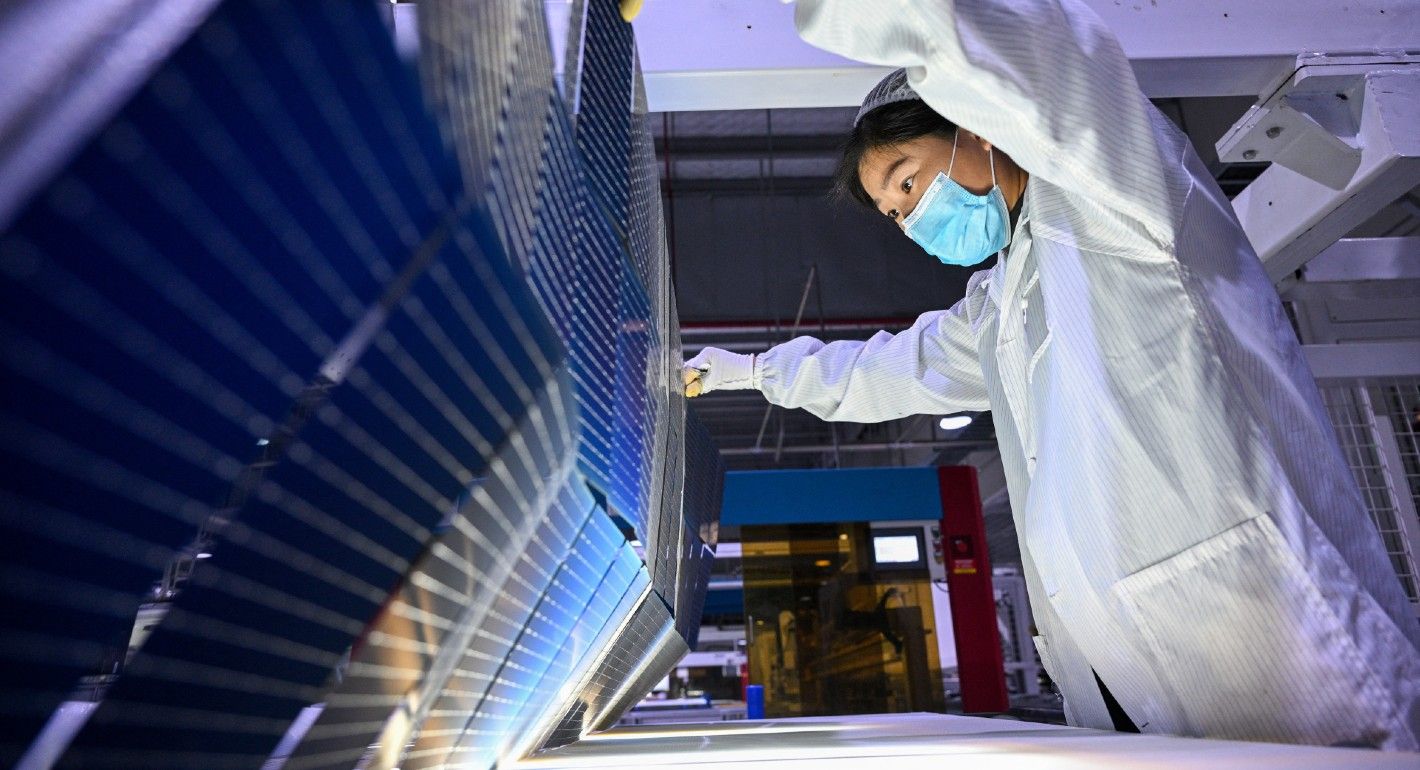
Rather than climate ambitions, compatibility with investment and exports is why China supports both green and high-emission technologies.

Mathias Larsen
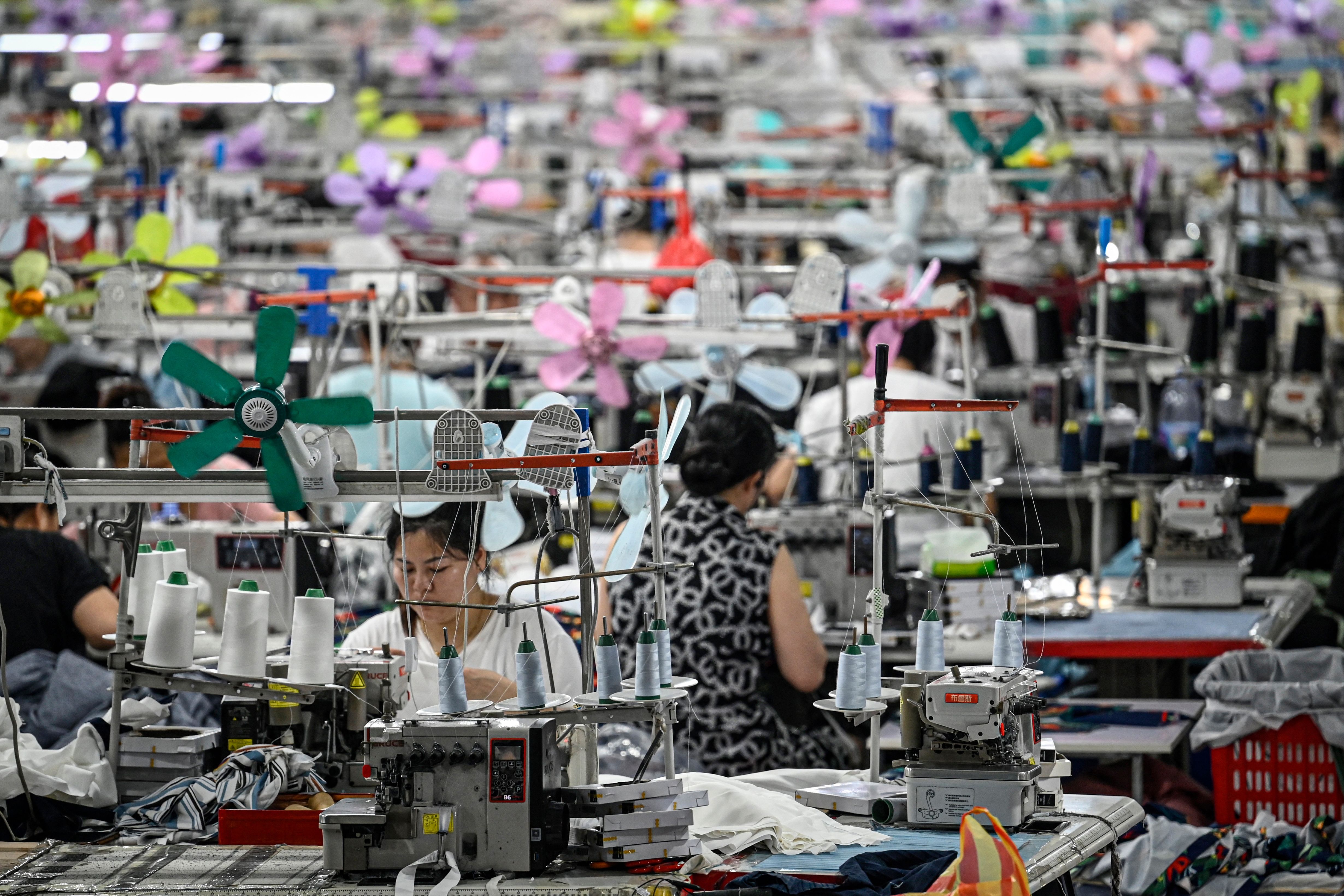
“Involution” is a new word for an old problem, and without a very different set of policies to rein it in, it is a problem that is likely to persist.
Michael Pettis
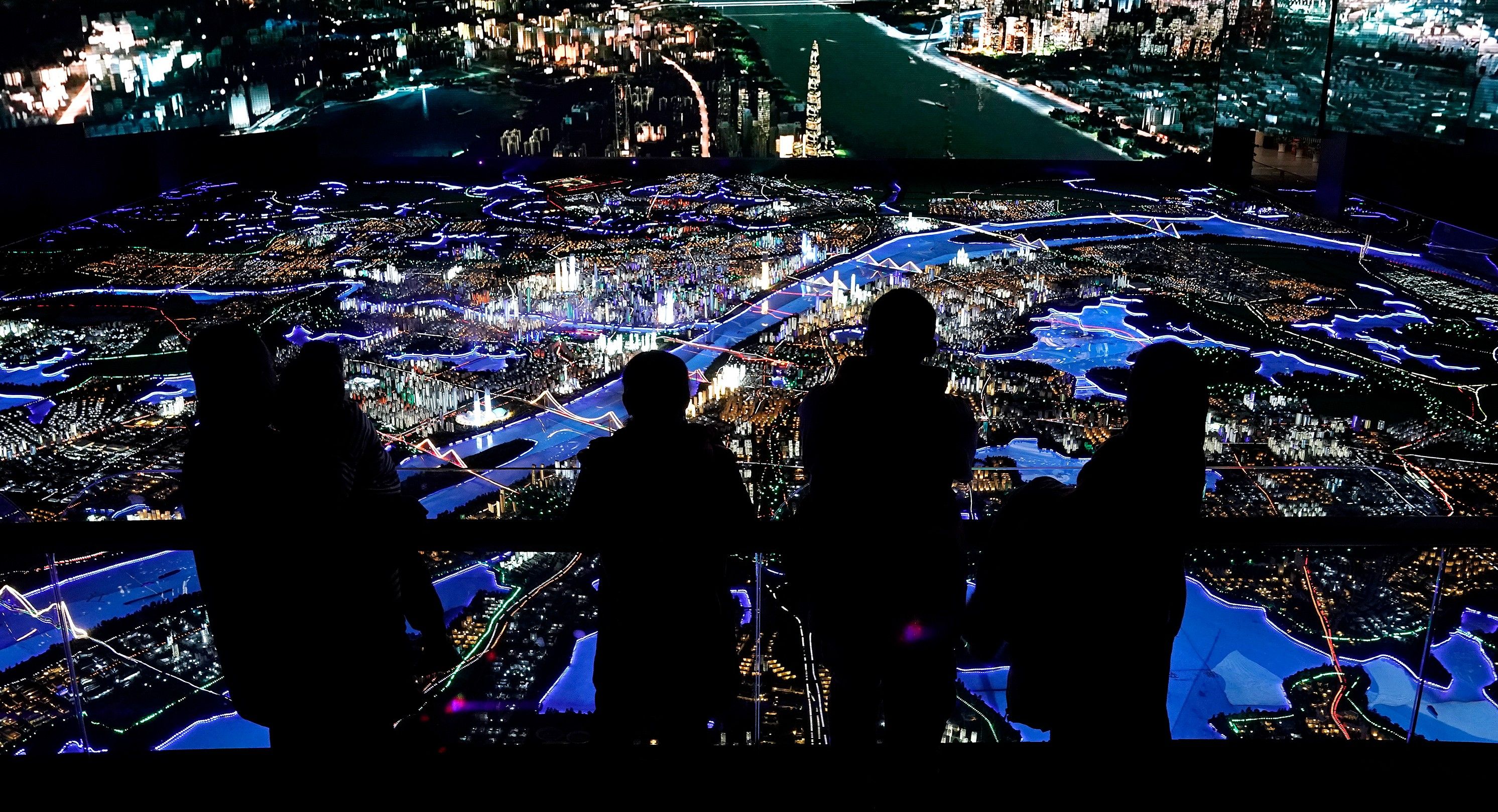
While China's investment story seems contradictory from the outside, the real answers to Beijing's high-quality growth ambitions are hiding in plain sight across the nation's cities.
Yuhan Zhang