

Paper
The nuclear relationship between China and the United States is increasingly shaped by widening perception gaps rather than deliberate strategic design.
Tong Zhao
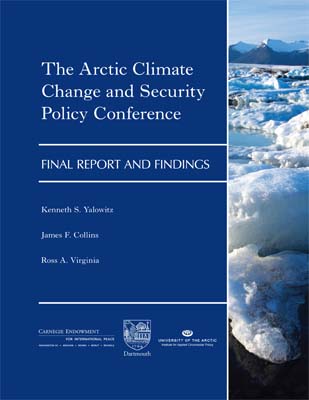
Minimizing the environmental impact of climate change and resource development in the Arctic must be a top priority, if environmental disaster is to be avoided.
The accelerating pace of climate change, increasing competition over resources, and new territorial claims demand that greater attention be paid to the Arctic. As the most immediate and serious threat to the region, minimizing the environmental impact of climate change and resource development must be the top priority, according to a report from the Carnegie Endowment, the University of the Arctic, and Dartmouth College.
Key points:
As a major Arctic power, the United States has environmental, political, and security interests and responsibilities and should play a key role in preserving the Arctic ecosystem.
Recommendations for U.S. policy makers:
The report concludes:
“The environment and the management of natural resources are the most pressing security issues in the North. States are committed to addressing boundary and access issues through existing institutions, principally UNCLOS. Large-scale damage to the Arctic from transportation accidents, energy development, fishing, and pollutants from the South pose greater immediate threats than classic security issues. Existing emergency response systems and contingency plans are not up to the task.”
Kenneth S. Yalowitz
Dartmouth College
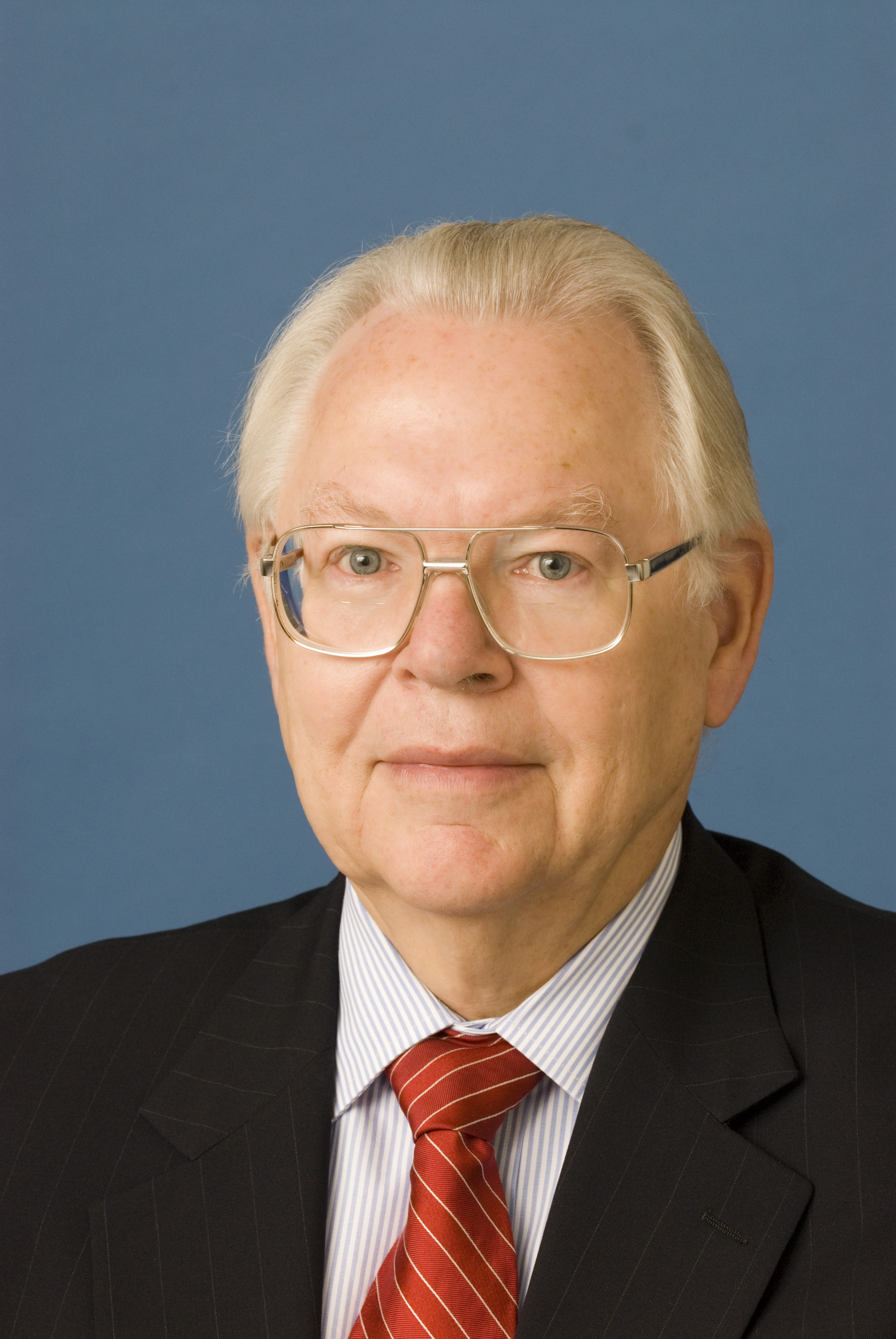
Nonresident Senior Fellow, Russia and Eurasia Program; Diplomat in Residence
Ambassador Collins was the U.S. ambassador to the Russian Federation from 1997 to 2001 and is an expert on the former Soviet Union, its successor states, and the Middle East.
Ross A. Virginia
Dartmouth College
Carnegie does not take institutional positions on public policy issues; the views represented herein are those of the author(s) and do not necessarily reflect the views of Carnegie, its staff, or its trustees.

The nuclear relationship between China and the United States is increasingly shaped by widening perception gaps rather than deliberate strategic design.

Tong Zhao

But their "principal to principal" model will only be as effective as the political strength of each leader back home.

Damien Ma

U.S. unpredictability has allowed China to capitalize on its positioning as the “responsible great power”. Paradoxically, the more China wins the perception game, the more likely expectations will rise for Beijing to deliver not just words but to demonstrate with its deeds.

Chong Ja Ian

For Malaysia, the conjunction that works is “and” not “or” when it comes to the United States and China.

Elina Noor

Regulation, not embargo, allows Beijing to shape how other countries and firms adapt to its terms.

Alvin Camba