• Commentary
  • Research
  • Experts
  • Events
Carnegie China logoCarnegie lettermark logo
The United States' Challenges in the Middle East: Arab Perspectives

Source: Getty

Article

The United States' Challenges in the Middle East: Arab Perspectives

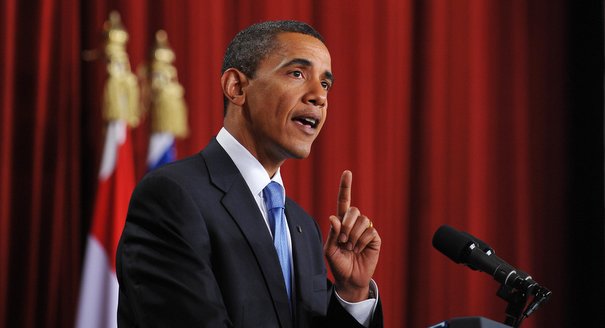
The Middle East greeted President Obama’s Cairo speech with enthusiasm, but many cautioned that words, though welcome and encouraging, must be matched by actions to mend the relationship. To explore the issues the Muslim world hopes the U.S. administration will address, the Carnegie Middle East Center in Beirut commissioned eight commentaries from prominent Arab writers and policy makers.

Link Copied
By Amr Hamzawy, Marina Ottaway, Farah Choucair, Adriana Qubaia
Published on Jun 17, 2009

In December 2008, the Carnegie Middle East Center in Beirut and the Carnegie Endowment for International Peace in Washington solicited commentaries about the election of President Obama from a small number of Arab intellectuals and analysts. The commentaries revealed a complex picture. On the one hand, they showed great enthusiasm about Obama personally and about the fact that Americans had elected as president a member of a minority group that has only enjoyed full rights for a few decades. On the other hand, the commentaries revealed continued, deep skepticism that even the new, admired president would have the capacity to address successfully the burning issues of the region, above all the Palestinian–Israeli conflict. The commentaries also underlined profound differences in the ways issues are perceived in the United States and in the Arab world.

  • PALESTINE
    Islamists and the West: Time for a Common Vision?
    Ahmed Yousef, Deputy Foreign Minister, Gaza
  • SYRIA
    Drivers of U.S.–Syrian Relations Under the Obama Administration
    Yassin Al-Haj Saleh
  • BAHRAIN/GULF
    The Case for a Collective Security Organization in the Gulf
    Mohammed Jabber Al-Ansari, Arab Gulf University
     
  • ALGERIA
    U.S.-Algerian Security Cooperation and the War on Terror
    Mhand Berkouk, University of Algiers
     
  • TUNISIA
    The Tunisian Elite and U.S. “Democratic Reform Policy”
    Lutfi Hajji
  • MOROCCO
    The United States, Morocco, and the Western Sahara Dispute
    Abdel-Rahim Al-Manar Slimi, Mohammed V. University
     
  • EGYPT
    Bilateral and Regional Issues in U.S.–Egyptian Relations
    Hassan Abou Taleb, vice president, Al-Ahram Center for Political and Strategic Studies

    U.S. Aid to Egypt: The Current Situation and Future Prospects
    Ahmad Al-Sayed El-Naggar, Al-Ahram Center for Political and Strategic Studies

The present set of commentaries seeks to explore further Arab views about specific issues that affect their relations with the United States. This time we posed different questions to commentators coming from different countries. Once again, the commentaries reveal startling differences in perception between the United States and people in the region on many issues.
 
We chose countries from each of the Arab world’s main sub-regions―North Africa, the Levant and Egypt, and the Gulf. For each country, we posed a question on an issue that shapes its relationship with the United States.  In North Africa, we selected the Western Sahara issue, which is a key component in the relations between Morocco and the United States although it is often ignored in other countries. We also selected the policy to curb terrorism, which has become the backbone of a strategic partnership between Algeria and the United States. We finally looked at the impact of the Middle East Partnership Initiative and its democracy promotion projects in Tunisia, where the United States does not have major strategic interests that interfere with its general concern for political reform and human rights.
 
In the Levant and Egypt, countries also face very different challenges in their relations with the United States. We solicited a commentary by an independent Syrian intellectual on the future of his country’s relations with the United States, which appear to be in flux at this time. We asked a leading member of Hamas to write a commentary on what Hamas expects from the Obama administration; the commentary obviously reflects the party line, but also contains details that are not well known in the Western world. In Egypt, we asked for comments on the challenges of U.S.–Egyptian bilateral relations following the tensions between the Bush administration and the Mubarak regime.
All commentaries are written by well known, respected intellectuals and researchers. And while the responsibility for each commentary ultimately is the author’s alone, we believe that they all denote views and approaches that are widespread in the region and thus deserve attention.

With regard to the Gulf, the interrelated issues of Iran’s regional role and the future of security arrangements are at the core of the relationship of the Gulf states with the United States and are also object of intense debate domestically. We included a commentary by a well known Bahraini intellectual that addresses both issues and moves beyond a simple recounting of existing problems to suggest a new overarching security system for the Gulf that includes Iran and aims at safeguarding the sovereignty of Arab and non-Arab states in the Gulf.
 
Finally, we solicited a commentary that addresses the impact of U.S. economic assistance. As Obama’s Cairo speech clearly demonstrated, the issue of America’s development aid to the region is back to the forefront of the U.S. engagement with Arab countries. While the commentary focuses specifically on Egypt, the major Arab recipient of US assistance, it raises broader regional concerns that deserve attention.

We have decided to publish all the commentaries that were submitted to us, regardless of the authors’ political and ideological inclinations. All commentaries are written by well known, respected intellectuals and researchers. And while the responsibility for each commentary ultimately is the author’s alone, we believe that they all denote views and approaches that are widespread in the region and thus deserve attention.

About the Authors

Amr Hamzawy

Director, Middle East Program

Amr Hamzawy is a senior fellow and the director of the Carnegie Middle East Program. His research and writings focus on governance in the Middle East and North Africa, social vulnerability, and the different roles of governments and civil societies in the region.

Marina Ottaway

Former Senior Associate, Middle East Program

Before joining the Endowment, Ottaway carried out research in Africa and in the Middle East for many years and taught at the University of Addis Ababa, the University of Zambia, the American University in Cairo, and the University of the Witwatersrand in South Africa.

Farah Choucair

Adriana Qubaia

Former Research Assistant, Middle East Program

Authors

Amr Hamzawy
Director, Middle East Program
Amr Hamzawy
Marina Ottaway
Former Senior Associate, Middle East Program
Marina Ottaway
Farah Choucair
Adriana Qubaia
Former Research Assistant, Middle East Program
North AmericaUnited StatesMiddle EastNorth AfricaPolitical ReformForeign Policy

Carnegie does not take institutional positions on public policy issues; the views represented herein are those of the author(s) and do not necessarily reflect the views of Carnegie, its staff, or its trustees.

More Work from Carnegie China

  • Commentary
    Malaysia’s Year as ASEAN Chair: Managing Disorder

    Malaysia’s chairmanship sought to fend off short-term challenges while laying the groundwork for minimizing ASEAN’s longer-term exposure to external stresses.

      Elina Noor

  • Commentary
    When It Comes to Superpower Geopolitics, Malaysia Is Staunchly Nonpartisan

    For Malaysia, the conjunction that works is “and” not “or” when it comes to the United States and China.

      Elina Noor

  • Commentary
    Neither Comrade nor Ally: Decoding Vietnam’s First Army Drill with China

    In July 2025, Vietnam and China held their first joint army drill, a modest but symbolic move reflecting Hanoi’s strategic hedging amid U.S.–China rivalry.

      • Nguyen-khac-giang

      Nguyễn Khắc Giang

  • Commentary
    Today’s Rare Earths Conflict Echoes the 1973 Oil Crisis — But It’s Not the Same

    Regulation, not embargo, allows Beijing to shape how other countries and firms adapt to its terms.

      Alvin Camba

  • Commentary
    China’s Mediation Offer in the Thailand-Cambodia Border Dispute Sheds Light on Beijing’s Security Role in Southeast Asia

    The Thai-Cambodian conflict highlights the limits to China's peacemaker ambition and the significance of this role on Southeast Asia’s balance of power.

      Pongphisoot (Paul) Busbarat

Get more news and analysis from
Carnegie China
Carnegie China logo, white
  • Research
  • About
  • Experts
  • Events
  • Contact
  • Careers
  • Privacy
  • For Media
Get more news and analysis from
Carnegie China
© 2026 Carnegie Endowment for International Peace. All rights reserved.