
• Commentary
  • Research
  • Experts
  • Events
Carnegie China logoCarnegie lettermark logo
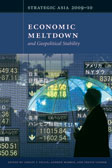
Strategic Asia 2009-10: Economic Meltdown and Geopolitical Stability
Book

Strategic Asia 2009-10: Economic Meltdown and Geopolitical Stability

This volume analyzes the impact of the current global economic crisis on key Asian states and explores the strategic implications for the United States.

Link Copied
By Ashley J. Tellis, Andrew Marble, Travis Tanner
Published on Sep 18, 2009

Additional Links

Overview by Ashley J. Tellis

Source: The National Bureau of Asian Research

Co-edited and introduced by Ashley Tellis, with chapters by leading Asia specialists including Peter Bottelier, non-resident scholar at the Carnegie Endowment for International Peace, this book, the ninth volume in NBR’s Strategic Asia series, analyzes the impact of the current global economic crisis on key Asian states and explores the strategic implications for the United States. Through a combination of country, regional and topical studies, leading experts examine the potential effects of the crisis on the economic performance and strategic goals of various Asian states and the resulting implications for the larger balance of power, both regionally and globally.

Order this book, or read the introduction by Ashley J. Tellis for free.

About the Editors:

Ashley J. Tellis, Senior Associate at the Carnegie Endowment for International Peace and Research Director of the Strategic Asia Program at NBR, served in the U.S. Department of State as senior adviser to the Undersecretary of State of Public Affairs, and previously as senior adviser to the Ambassador at the U.S. Embassy in India. He also served on the National Security Council Staff as special assistant to the President and senior director for Strategic Planning and Southwest Asia. He is the author of India’s Emerging Nuclear Posture (2001) and co-author of Interpreting China’s Grand Strategy: Past, Present, and Future (2000), as well as the co-editor of six most recent volumes of Strategic Asia, published by NBR.

Andrew Marble is the Editor at the National Bureau of Asian Research.

Travis Tanner is the Senior Project Director and Director of the Pyle Center for Northeast Asian Studies at the National Bureau of Asian Research.

About the Authors

Ashley J. Tellis

Former Senior Fellow

Ashley J. Tellis was a senior fellow at the Carnegie Endowment for International Peace.

Andrew Marble

NBR

Travis Tanner

NBR

Authors

Ashley J. Tellis
Former Senior Fellow
Andrew Marble
NBR
Travis Tanner
NBR
North AmericaUnited StatesSouth AsiaIndiaPakistanEast AsiaChinaCaucasusRussiaEconomySecurityMilitaryForeign Policy

Carnegie does not take institutional positions on public policy issues; the views represented herein are those of the author(s) and do not necessarily reflect the views of Carnegie, its staff, or its trustees.

More Work from Carnegie China

  • Commentary
    China’s Energy Security Doesn’t Run Through Hormuz but Through the Electrification of Everything

    Across Asia, China is better positioned to withstand energy shocks from the fallout of the Iran war. Its abundant coal capacity can ensure stability in the near term. Yet at the same time, the country’s energy transition away from coal will make it even less vulnerable during the next shock.


      • Damien Ma

      Damien Ma

  • Xi walking into a room with people standing and applauding around him
    Commentary
    Emissary
    The Xi Doctrine Zeros in on “High-Quality Development” for China’s Economic Future

    In the latest Five-Year Plan, the Chinese president cements the shift to an innovation-driven economy over a consumption-driven one.

      • Damien Ma

      Damien Ma

  • Commentary
    Malaysia’s Year as ASEAN Chair: Managing Disorder

    Malaysia’s chairmanship sought to fend off short-term challenges while laying the groundwork for minimizing ASEAN’s longer-term exposure to external stresses.

      Elina Noor

  • Commentary
    When It Comes to Superpower Geopolitics, Malaysia Is Staunchly Nonpartisan

    For Malaysia, the conjunction that works is “and” not “or” when it comes to the United States and China.

      Elina Noor

  • Commentary
    ASEAN-China Digital Cooperation: Deeper but Clear-Eyed Engagement

    ASEAN needs to determine how to balance perpetuating the benefits of technology cooperation with China while mitigating the risks of getting caught in the crosshairs of U.S.-China gamesmanship.

      Elina Noor

Get more news and analysis from
Carnegie China
Carnegie China logo, white
Keck Seng Tower133 Cecil Street #10-01ASingapore, 069535Phone: +65 9650 7648
  • Research
  • About
  • Experts
  • Events
  • Contact
  • Careers
  • Privacy
  • For Media
Get more news and analysis from
Carnegie China
© 2026 Carnegie Endowment for International Peace. All rights reserved.






