• Commentary
  • Research
  • Experts
  • Events
Carnegie China logoCarnegie lettermark logo
China and the International Financial Crisis
Book

China and the International Financial Crisis

China is emerging from the economic crisis sooner than any other large economy, accelerating its rise as a global leader in the economic and financial arena.

Link Copied
By Pieter Bottelier
Published on Oct 14, 2009

Source: The National Bureau of Asian Research

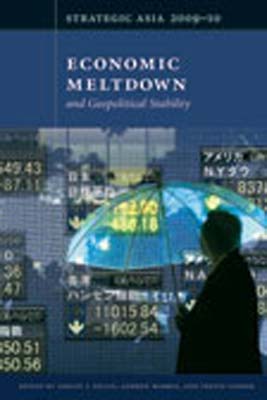
IMGXYZ2805IMGZYXThe global economic crisis came to China as large scale lay-offs in construction preceded the collapse of exports, which triggered massive additional unemployment. China's strong fiscal situation, low leverage, and relatively strong banks left ample room, however, for aggressive fiscal and monetary stimulus to beat the recession. China is emerging from the crisis sooner than any other large economy, and the crisis will probably accelerate China's rise and expand China's global leadership role in the economic and financial arena. 

These developments have several important policy implications:

  • The United States must continue to accommodate China as a rising power, in part by intensifying and expanding the bilateral dialogue with China, as agreed upon between Presidents Obama and Hu at the April G20 summit.

  • An informal G2 relationship to provide leadership on global governance issues such as climate and energy should be promoted, but not at the expense of other international forums for consultation and decisionmaking.

  • The United States must understand that the crisis has damaged its credibility in the financial arena and that emerging economies such as China will intensify their search for alternative models of finance while promoting South-South economic relations.

  • The United States has to both rebalance its own economy by keeping consumption growth below GDP growth for an extended period and strengthen its international competitiveness by improving infrastructure, public education, health care, energy efficiency, social security, fiscal responsibility at all levels of government, and financial regulation. 

About the Author

Pieter Bottelier

Former Nonresident Scholar, International Economics Program

Bottelier was a nonresident scholar in Carnegie’s International Economics Program and senior adjunct professor of China studies at the School of Advanced International Studies (SAIS), the Johns Hopkins University. His work currently focuses on China’s economic reform and development.

    Recent Work

  • Article
    China's Economy is Slowly Becoming More Normal

      Pieter Bottelier

  • Article
    China's Economy: Slower Growth, But Structural Reforms Progressing

      Pieter Bottelier

Pieter Bottelier
Former Nonresident Scholar, International Economics Program
Pieter Bottelier
East AsiaChinaNorth AmericaEconomyForeign Policy

Carnegie does not take institutional positions on public policy issues; the views represented herein are those of the author(s) and do not necessarily reflect the views of Carnegie, its staff, or its trustees.

More Work from Carnegie China

  • Commentary
    China’s Energy Security Doesn’t Run Through Hormuz but Through the Electrification of Everything

    Across Asia, China is better positioned to withstand energy shocks from the fallout of the Iran war. Its abundant coal capacity can ensure stability in the near term. Yet at the same time, the country’s energy transition away from coal will make it even less vulnerable during the next shock.


      • Damien Ma

      Damien Ma

  • Xi walking into a room with people standing and applauding around him
    Commentary
    Emissary
    The Xi Doctrine Zeros in on “High-Quality Development” for China’s Economic Future

    In the latest Five-Year Plan, the Chinese president cements the shift to an innovation-driven economy over a consumption-driven one.

      • Damien Ma

      Damien Ma

  • Commentary
    Malaysia’s Year as ASEAN Chair: Managing Disorder

    Malaysia’s chairmanship sought to fend off short-term challenges while laying the groundwork for minimizing ASEAN’s longer-term exposure to external stresses.

      Elina Noor

  • Commentary
    When It Comes to Superpower Geopolitics, Malaysia Is Staunchly Nonpartisan

    For Malaysia, the conjunction that works is “and” not “or” when it comes to the United States and China.

      Elina Noor

  • Commentary
    ASEAN-China Digital Cooperation: Deeper but Clear-Eyed Engagement

    ASEAN needs to determine how to balance perpetuating the benefits of technology cooperation with China while mitigating the risks of getting caught in the crosshairs of U.S.-China gamesmanship.

      Elina Noor

Get more news and analysis from
Carnegie China
Carnegie China logo, white
Keck Seng Tower133 Cecil Street #10-01ASingapore, 069535Phone: +65 9650 7648
  • Research
  • About
  • Experts
  • Events
  • Contact
  • Careers
  • Privacy
  • For Media
Get more news and analysis from
Carnegie China
© 2026 Carnegie Endowment for International Peace. All rights reserved.