

Paper
Douglas H. Paal

REQUIRED IMAGE
Despite victories for Taiwan's ruling Kuomintang party in recent metropolitan elections, President Ma Ying-jeou must still strike a fine balance between cooperation with China and toughness against Chinese threats if he hopes to win reelection in 2012.
Taiwan’s ruling Kuomintang (KMT) Party scored victories in three of the five metropolitan elections last weekend. President Ma Ying-jeou and his party should be justifiably relieved to have avoided losing a majority of the urban elections, which could have significantly deflated expectations for Ma’s reelection in 2012.
But there was a double-edged quality to the KMT’s overall victory: the total number of votes for the opposition Democratic Progressive Party (DPP) was actually larger than the winning KMT turnout (about 3.4 million vs. 3.2 million). Presidential elections in Taiwan are by popular vote and the trend in this election and the previous township elections suggest a swing in voter sentiment away from the large majorities given to the KMT in the 2008 presidential and legislative elections.
Taiwan’s many think tanks and university polling centers will chew over the data for their significance in the coming weeks and months. Some observations, however, can be made based on the preliminary results.
Cross-strait relations are entering a new, more delicate phase. Prior to this election, it was clear that China worked to support incumbent Ma and his party out of fear of a return to the tensions of DPP rule and its drive for independence. China delivered important concessions on trade in the Economic Cooperation Framework Agreement (ECFA), a largely one-sided free trade agreement between China and Taiwan. There were other concessions from Beijing to Ma’s political agenda, from cross-strait direct flights, to greater “international space,” and a diplomatic truce in their competition for diplomatic recognition.
But over the next two years, Ma could become increasingly vulnerable to DPP allegations that his tilt toward China has been less productive than promised or assumed. For example, China has continued its military build-up opposite Taiwan, probably to deter the island should the DPP pro-independence forces reemerge as leaders.
Ma needs to show toughness in resisting this threat, or success in persuading China to reduce its deployments. He is more likely to choose the former because he can largely control the outcome, though he will then depend on the United States giving him the defense equipment that Taiwan requires, principally F-16 C/Ds. For the Obama administration, which will probably oblige Ma, it means that Washington will face choosing to pay a new price in its troubled relations with Beijing.
While Beijing has been generous to Taipei on the economic front because it can easily afford to be, it is more tight-fisted with Taiwan’s “international space.” Again, the mainland seems to fear that allowing Taiwan the modest recognition that participation in international organizations—such as the International Air Transport Association (IATA), or the U.N. Framework Convention on Climate Change (FCCC)—would be pocketed by a successor DPP government as a way station to international recognition of Taiwan’s independence from China. Ma needs to outperform the expectations set by his opponents in this sensitive area—a difficult goal.
Indeed, in the run-up to Chinese President Hu Jintao’s state visit to the United States in January 2011, Chinese officials have been probing for assurances that the Obama administration will not sell F-16s to Taiwan or press for its participation in functional international organizations. Beijing apparently fears Hu will be embarrassed by such U.S. actions not long after his state visit ends, much as former premier Zhu Rongji was embarrassed on a visit when then president Bill Clinton shockingly turned down China’s offer to join the World Trade Organization. But China is not likely to be successful with these appeals.
Probably most important for Ma’s reelection will be returning Taiwan’s economy to robust growth, which Taiwan’s voters expect. Both Taipei and Beijing can do something about this, but both remain vulnerable to global swings in market sentiment. After the metropolitan election’s double-edged success, the 2012 election is Ma’s to lose, but considerable recalibration will be needed in the months ahead.
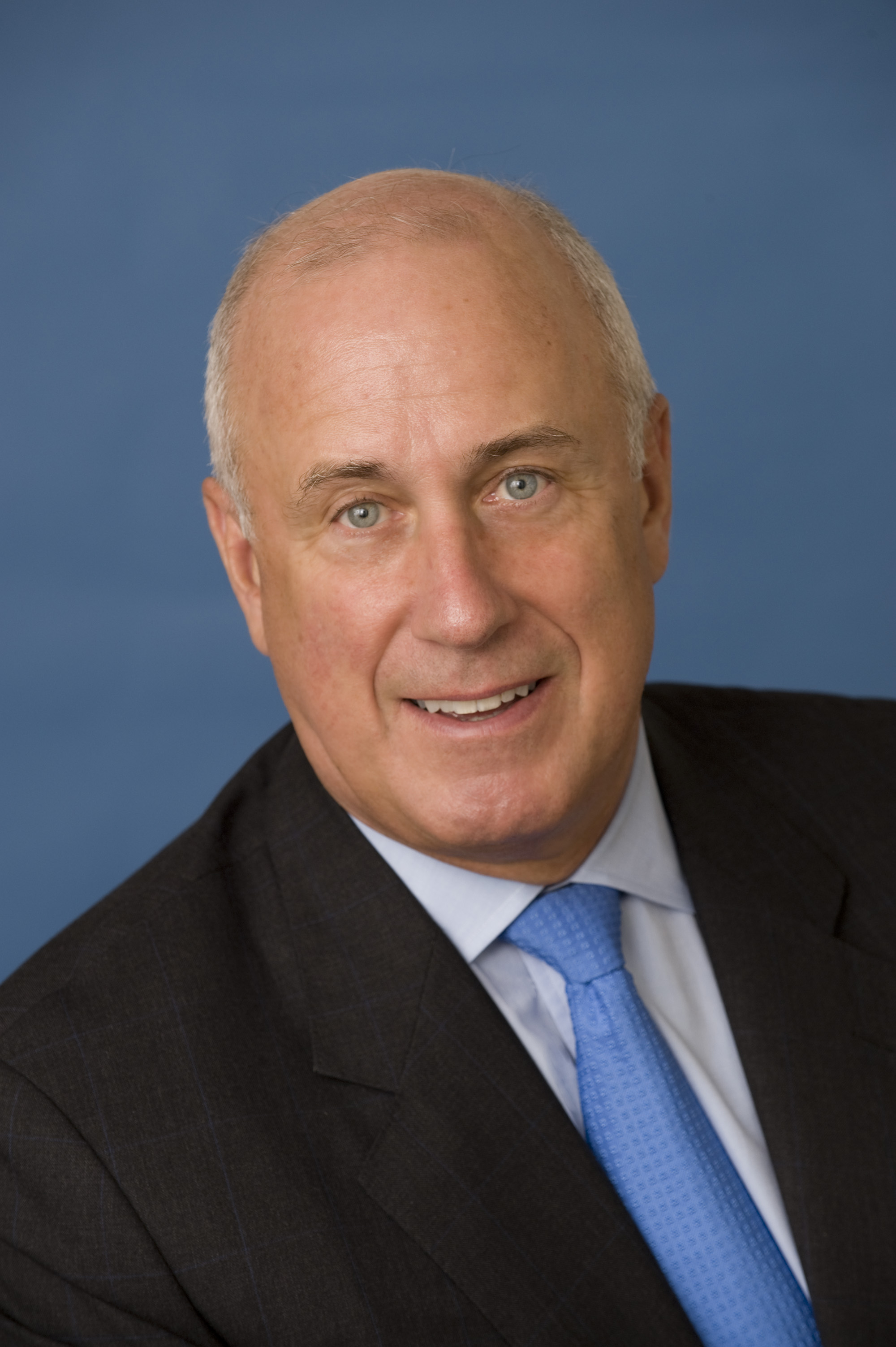
Distinguished Fellow, Asia Program
Paal previously served as vice chairman of JPMorgan Chase International and as unofficial U.S. representative to Taiwan as director of the American Institute in Taiwan.
Recent Work
Douglas H. Paal

Douglas H. Paal, Tong Zhao, Chen Qi, …

The Plaza Accord was not an externally imposed punishment of Japan but part of a broader restructuring that Japanese economists and policymakers themselves recognized was necessary. Its effects were undermined, however, when Tokyo responded to the resulting slowdown with policies that exacerbated investment, credit expansion, and the very imbalances the adjustment was intended to resolve.

Michael Pettis

The nuclear relationship between China and the United States is increasingly shaped by widening perception gaps rather than deliberate strategic design.
Tong Zhao
China’s banking crisis in the 2000s was resolved by transferring the costs to households through financial repression—a decision that recapitalized the banks while exacerbating the structural imbalances that continue to shape the Chinese economy today.
Michael Pettis

Chinese biotech companies have been on the receiving end of U.S. economic coercion. Yet their responses have differed significantly because firm and state interests are not uniformly aligned. For Washington, treating all Chinese tech firms the same, irrespective of their actual interests, risks pushing them farther into Beijing’s corner.

Xue Gong

China’s latest energy plan explicitly calls for integrating data centers into the electricity system, particularly connecting them to green energy. It appears Beijing wants to use compute as a source of domestic demand to absorb renewables excess capacity.

Damien Ma