

Q&A
Raluca Csernatoni, Sinan Ülgen
Source: Getty
The EU, which has worked for decades on North Africa’s development, must step up its efforts to bolster the region’s private sector and dismantle its own agricultural protectionism.
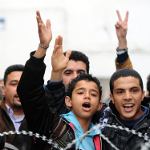
For decades, the European Union (EU) has focused its policy in North Africa1 on economic and political development, driven by immigration and security concerns. However, the Jasmine Revolution—the series of protests in Tunisia sparked by economic concerns that brought down the country's president—make clear that many fundamental challenges remain unaddressed in the Arab world, even in a country previously considered by many to be the region’s most advanced.
Tunisia’s uprising—as well as the possibility that such unrest will spread to other countries, such as Egypt—has focused international attention on the issues of social inclusion and economic development in the region. Much of the work required must be done by the North African countries themselves, but the EU can make a difference by developing North Africa’s private sector and accelerating the dismantling of its own agricultural protectionism.
North Africa has always been a special region for the EU not only because of colonial ties, but also because of concerns that people from the region would migrate to Europe. As a result, since the early days of integration, EU policy toward North Africa has focused on encouraging political and economic development.
The official relationship—encompassed in the Euro-Mediterranean Partnership (Euromed)2—began in 1995 with the Barcelona Process, which hoped to establish a space of stability and security, economic prosperity (underpinned by the gradual establishment of a free trade zone), and joint culture in the Euro-Mediterranean region. It also substantially raised the amount of European funding available to North Africa. In 2004, the European Neighborhood Policy (ENP) imposed a new institutional structure on and introduced an element of bilateralism into the relationship through individually-tailored “Action Plans”—long lists of priorities for short- and medium-term security, migration, human rights, and political reform objectives, as well as economic reform and market liberalization goals. In 2007, the relationship was relaunched as the Union for the Mediterranean (UfM).
Today, the EU aspires to anchor the political and economic evolution of North Africa. To that end, it has allocated approximately $3.4 billion to implementing the Action Plans of the nine North African economies over the next three years.
| EU Financial Assistance to North Africa | ||||
|---|---|---|---|---|
| 2011-2013 budget ($million) | Increase over 2007-2010 (%) | Population (million) | Aid/cap per year ($) | |
| Morocco | 783 | 18.2 | 31 | 8.4 |
| Algeria | 232 | 4.2 | 34 | 2.3 |
| Tunisia | 324 | 6.7 | 10 | 10.8 |
| Egypt | 606 | 7.2 | 82 | 2.5 |
| Palestinian Authority | 680 | 6.3 | 4.5 | 50.4 |
| Jordan | 301 | 12.2 | 6 | 16.7 |
| Lebanon | 203 | 7 | 4 | 16.9 |
| Syria | 174 | 32.3 | 21 | 2.8 |
| Libya | 81 | 1000 | 6 | 4.5 |
| Med Arab states | 3384 | 12.8 | 198.5 | 5.7 |
| Source: Larabi Jaidi and Ivan Martin. “Comment faire avancer le statut avance UE-Maroc?”. Documents IEMED No5, Barcelona, March 2010. | ||||
Though not insignificant, this assistance amounts to only 75 percent of the amount the EU earmarked for its Eastern Euromed partners in per-capita terms. Furthermore, it represents only a 12.8 percent increase from the previous three years, compared to a 48 percent increase for its Eastern partners.
More importantly, the EU’s sustained engagement has not significantly improved growth in North Africa, nor has it moved the region closer to EU income levels. Since the Barcelona process was launched fifteen years ago, the income gap between each North African economy and the EU15 has barely narrowed. Interestingly, Tunisia has exhibited the best performance.
| Relative Incomes, North Africa and EU15 | ||||||||
|---|---|---|---|---|---|---|---|---|
| 1995 | 2000 | 2005 | 2009 | |||||
| GNI/cap PPP | % EU | GNI/cap PPP | % EU | GNI/cap PPP | % EU | GNI/cap PPP | % EU | |
| Morocco | 2020 | 10% | 2510 | 9% | 3450 | 10% | 4400 | 12% |
| Algeria | 4350 | 21% | 5130 | 19% | 6820 | 20% | 8110 | 23% |
| Tunisia | 3430 | 16% | 4600 | 17% | 6080 | 18% | 7810 | 22% |
| Egypt | 2780 | 13% | 3570 | 13% | 4310 | 13% | 5680 | 16% |
| Jordan | 2740 | 13% | 3220 | 12% | 4450 | 13% | 5730 | 16% |
| Lebanon | 7320 | 35% | 7730 | 29% | 9440 | 28% | 13400 | 37% |
| Syria | 3120 | 15% | 3150 | 12% | 3830 | 12% | 4620 | 13% |
| EU15 | 20872 | 100% | 27013 | 100% | 33271 | 100% | 35895 | 100% |
| Source: Eurostat, World Bank World Development Indicators Database | ||||||||
Despite a well-developed institutional framework and relatively robust financial cooperation, two major shortcomings have handicapped the EU’s approach to economic development in North Africa: a failure to focus on private-sector development and a refusal to open its markets to agricultural exports from the region.
Failure to Focus on Private-Sector Development
In their influential study, “From privilege to competition: unlocking private led growth in the Middle East and North Africa,” a team of World Bank economists examined the region’s lack of private-sector development. They highlighted the prevalence of two obstacles—patronage networks and connected lending, which limits access to capital to regime-friendly enterprise owners.
However, EU policy has failed to address this issue and instead continues to rely on the North African states as the agents for change. In his assessment of the first ten years of the Barcelona Process, Kienle3 similarly underscores this failure, contending that the economic liberalization supported by the Barcelona Process has prevented private economic actors from emerging: “Nowhere has [the Barcelona Process] yet involved the development of institutions … which could favor the emergence of [private] power centers. Nor has it, of course, … empower[ed] weaker actors such as entrepreneurs without regime connections….” The most recent EU initiative—the UfM—represents an even starker failure than the Barcelona Process in this regard, as it excludes the latter’s focus on economic restructuring and grassroots economic activity and is therefore even more state-focused.4
The low growth of new export capacity in North Africa makes the weakness of its private sector clear, particularly when compared to that of other emerging markets. An analysis of the export structures of North African and emerging market economies to the EU15 in 1996 and 20095 shows that North African countries are clearly lagging behind. Egypt, the region’s top performer, created 514 new export categories over that period, compared to 865 new categories in China, 714 categories in Turkey, and 619 categories in Thailand. Every emerging market economy outperformed the North African countries.
A review of new exports’ share of total exports yields a similar conclusion. With the exception of the small Mashreq economies—Jordan and Lebanon, where export figures are low and small absolute changes therefore translate into high relative change—new exports accounted for only 0.4 percent (Algeria) to 15 percent (Tunisia) in North Africa, compared to approximately 20 percent in the benchmark emerging countries, again highlighting their more dynamic performance.
| Evolution of Exports to the EU15 North Africa and Emerging Markets | ||||
|---|---|---|---|---|
| 1996 Exports ($million) | 2009 Exports ($million) | New Export Categories | New Exports/Total Exports | |
| North Africa | ||||
| Algeria | 6784 | 25673 | 205 | 0.4%* |
| Egypt | 3408 | 8800 | 514 | 10.7%* |
| Jordan | 194 | 241 | 238 | 29.4% |
| Lebanon | 151 | 332 | 410 | 22.3% |
| Morocco | 5190 | 9480 | 368 | 9.7% |
| Syria | 2491 | 3347 | 461 | 6.2% |
| Tunisia | 4469 | 11621 | 449 | 15.2% |
| Emerging Markets | ||||
| Turkey | 12494 | 46547 | 714 | 20.7% |
| China | 36874 | 290661 | 865 | 21.2% |
| Mexico | 3809 | 14463 | 455 | 20.0% |
| Thailand | 9140 | 19341 | 619 | 18.5% |
| *excluding LPG exports | ||||
Refusal to Open Agricultural Markets
Given the reliance of some North African countries on exports of agricultural and processed goods—they account for more than one-fifth of Egypt’s, Morocco’s, and Syria’s non-energy exports to the EU15—the protectionism embedded in the EU’s agricultural policy also significantly impedes its efforts to assist the region.
| Share of Agricultural and Processed Products in Non-Energy Exports to the EU15 North Africa and Emerging Markets, 2009 | |
|---|---|
| North Africa | |
| Algeria | 10.1% |
| Egypt | 20.6% |
| Jordan | 4.7% |
| Lebanon | 16.7% |
| Morocco | 31.0% |
| Syria | 20.5% |
| Tunisia | 6.3% |
| Emerging Markets | |
| Turkey | 8.7% |
| China | 2.0% |
| Mexico | 8.7% |
| Thailand | 17.9% |
| Source: Eurostat | |
Despite rhetoric about the importance of helping development—which, incidentally, is now enshrined in the Lisbon Treaty6—the EU has maintained the inherent protectionism of its agricultural policies. As late as November, Trade Commissioner Karel de Gucht failed to even mention agricultural liberalization when presenting the European Commission’s new “Trade, Growth and World Affairs” policy in Brussels.
The EU has conditioned its agricultural trade liberalization with North Africa on progress made at the Doha Round of World Trade Organization (WTO) negotiations. Given Doha’s visible lack of progress, however, the EU needs to revisit this policy and should instead introduce a new initiative for dismantling its agricultural trade barriers, including the lowering of tariffs, the elimination of export subsidies, and the gradual elimination of tariff quotas.
As long as Brussels refuses to open its large domestic market to food exports from the rest of the world—and North Africa in particular—its development efforts will remain handicapped.
The rising number of disenfranchised youths across North Africa growing impatient with an economic situation that gives them little hope for a better future—one of the main causes of Tunisia’s unrest—is a serious predicament not only for Arab regimes but also for Europe. Such a backdrop will continue to nurture domestic instability in North Africa and fuel immigration concerns in the EU. Obviously, many governance problems need to be tackled before the growth pattern can become more sustainable and inclusive. Nonetheless, the EU can start to make concrete progress on the ground by refocusing its reform agenda on private-sector development and by delinking the dismantling of its own agricultural protectionism from the fate of the Doha Round.
Sinan Ülgen is a visiting scholar at Carnegie Europe in Brussels.
1. Used here to refer to the nine Southern Mediterranean, African, and Middle Eastern economies tied to the EU through the Euromed/UfM partnership. These include Algeria, Egypt, Jordan, Lebanon, Libya, Morocco, the Palestinian Authority, Syria, and Tunisia.
2. Along with the 27 EU member states, and the nine “North African” countries listed above, the partnership also includes Albania, Bosnia and Herzegovina, Croatia, Israel, Mauritania, Monaco, Montenegro, and Turkey.
3. Eberhard Kienle. “Political reform through economic reform? Southern Mediterranean States ten years after Barcelona” in Haizam Emrah Fernandez and Richard Younds edt “The Euro-Mediterranean Partnership : Assessing the first decade”, Real Institute Elcano and FRIDE, Madrid, 2005.
4. Kristina Kauch and Richard Youngs. “The end of the Mediterranean vision”. International Affairs 85:5 (2009) 963-975.
5. The analysis was carried out on the basis of 7074 product categories covering the whole of 6 digit CN codes.
6. The treaty states that EU policies should support development objectives.

Senior Fellow, Carnegie Europe
Sinan Ülgen is a senior fellow at Carnegie Europe in Brussels, where his research focuses on Turkish foreign policy, transatlantic relations, international trade, economic security, and digital policy.
Recent Work

Raluca Csernatoni, Sinan Ülgen

Catherine Hoeffler, Sinan Ülgen
Carnegie does not take institutional positions on public policy issues; the views represented herein are those of the author(s) and do not necessarily reflect the views of Carnegie, its staff, or its trustees.

Malaysia’s chairmanship sought to fend off short-term challenges while laying the groundwork for minimizing ASEAN’s longer-term exposure to external stresses.

Elina Noor

For Malaysia, the conjunction that works is “and” not “or” when it comes to the United States and China.
Elina Noor
In July 2025, Vietnam and China held their first joint army drill, a modest but symbolic move reflecting Hanoi’s strategic hedging amid U.S.–China rivalry.

Nguyễn Khắc Giang
Rather than climate ambitions, compatibility with investment and exports is why China supports both green and high-emission technologies.

Mathias Larsen
“Involution” is a new word for an old problem, and without a very different set of policies to rein it in, it is a problem that is likely to persist.

Michael Pettis