Outward direct investment is a key component of China’s national strategy to support its rapid industrialization, bolster domestic industry, and deepen cooperation with other countries. Over the past decade, Beijing has encouraged homegrown Chinese companies to make strategic investments in industries abroad, such as modern manufacturing and clean energy. And the United States, which remains the world’s superpower with state-of-the-art high technologies and first-class modern service assets, is the most important market for many Chinese companies.
China’s investment in the United States is likely to soar over the next several years, but the road will be very bumpy. Chinese enterprises will have to overcome both American stereotypes and a relative lack of competitive advantage, except for their ample funds, compared to established multinationals. But at base, Chinese companies need to better understand the U.S. market and to learn quickly.
Chinese decisionmakers have made the country’s overseas investment a priority. The 12th Five Year Plan (2011–2015) proclaims that China will advance the development of international energy resources; support investments in technological research and development abroad; and encourage leading enterprises to conduct foreign investment that will create internationalized marketing and sales channels as well as famous brands. As a testament to the plan’s success, Chinese nonfinancial outward direct investment grew by 28.6 percent between 2011 and 2012 to reach $77.22 billion. In the first quarter of 2013, the growth momentum continued, with Chinese nonfinancial outward direct investment surging by 44 percent to $23.8 billion.
Much of this investment has been in the European Union, which has generated excitement across international economic and political spheres. In recent years, Chinese investors have seized commercial opportunities arising from the European sovereign-debt crisis. And as more and more Chinese private enterprises are participating in outbound mergers and acquisitions, the targets of foreign investment are expanding to Southeast Asia, Africa, and Latin America.
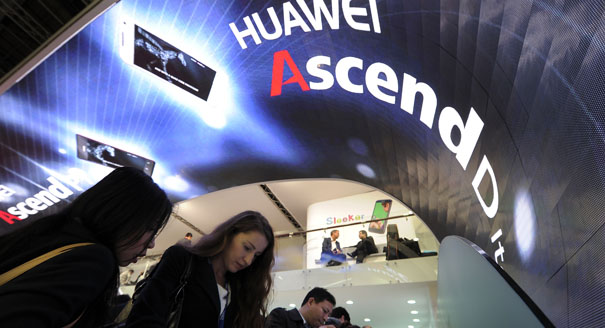
Still, the United States remains the primary target for Chinese outward direct investment. Yet many Chinese companies’ attempts at investing in the United States have been ill-fated, even though Chinese enterprises usually offer a much higher price than the normal market value. The attempted mergers of the China National Offshore Oil Corporation with U.S. oil group Unocal in 2005 and of China’s communications-equipment manufacturer Huawei Technologies with U.S. server technology firm 3Leaf in 2011 both failed, as did Chinese manufacturing company Sany Group’s 2012 “greenfield” (start-up) investment in a wind-farm project in Oregon.
One stumbling block for Chinese companies, according to Chen Deming, the former Chinese minister of commerce, has been the unfavorable regulatory conditions imposed by the U.S. Treasury’s Committee on Foreign Investment in the United States (CFIUS). This is especially true in the high-tech and renewable-energy sectors. Critics stress that the CFIUS review process is not transparent enough and that China needs clearer guidelines on what conditions might violate U.S. security.
Another obstacle is the corporate naïveté of Chinese investors, which sometimes results in the failure of attempted outward investment in the United States. Many of the obstacles facing Chinese companies boil down to basic issues such as language and cultural barriers.
Despite the fact that many more Chinese firms are investing in the United States, both state-owned enterprises and private companies still face a steep learning curve. Their unfamiliarity with American investment and financing methodologies, such as tax equity financing, poses additional business risks.
Over the near and medium term, such inexperienced firms should look to external consultants to find the best expertise to help them navigate the U.S. system. Chinese firms are reluctant to use professional services when acquiring or investing in the United States, and Chinese enterprises in general have not developed a robust business culture of hiring external consultants. Yet, in some extremely tough cases, experts with local connections in the United States can conduct market-intelligence research, help minimize investment risks, and provide guidance on how Chinese companies can present their asset takeovers or start-up investments in a way that is not threatening to U.S. national security.
This could reduce the distrust that U.S. government officials and the American public feel toward Chinese companies. As a former high-level official at the U.S. Department of Treasury pointed out, Chinese companies are hesitant to pay retainer fees. The official explained that they turn to their personal networks for any needed advice. However, many of these “friends,” as the official called them, are not specialists in mergers and acquisitions in the United States and so do not necessarily furnish the best professional advice.
In addition, Chinese investors ought to maintain constant communication with the relevant U.S. government bodies and local communities. They should proactively engage and communicate with the White House, key government officials working on CFIUS, as well as workers’ unions in a transparent and candid manner. Getting the relationships right at the local level, where these companies are making their investments, is the most important step. Moreover, Chinese firms need to avoid heated contract-bidding battles with other firms and not politicize these investment deals.
A strategy of establishing alliances or partnerships with key stakeholders is a long-term option. It is inevitable that some members of the U.S. Congress and private interest groups will oppose China’s outward direct investment deals. Having strong partners that can help balance out Chinese companies’ inexperience in the U.S. environment and counter any distrust will benefit Chinese investors.
Take Chinese auto parts manufacturer and clean technology investor Wanxiang Group’s acquisition of the U.S. battery maker A123 Systems’ assets. Due in part to misperceptions of Wanxiang’s intentions, American defense lobbyists decried the sensitive nature of the asset takeover. Dennis Blair, former director of U.S. national intelligence, wrote an article in Politico arguing that “the Wanxiang/A123 deal will provide a needed lifeline to a struggling American company and its employees . . . and allow them to continue American innovation in an industry dominated by Japanese and South Korean conglomerates.” Such support, to some extent, offsets the negative impacts incurred by the opposing voices.
Chinese investors need a level playing field and a more favorable investment environment, and CFIUS and other U.S. regulations are certainly obstacles. But success depends in large part on Chinese companies themselves. They need to understand and follow the rules of outward direct investment and convince American regulators and audiences through openness, transparency, and strategic approaches. Ultimately, deepening investment ties in this way will benefit both China and the United States.
Lin Shi is a graduate of Columbia University’s School of International and Public Affairs and currently works for a renewable energy company based in Houston, Texas.
Yuhan Zhang is an energy and economic analyst and former researcher at the Carnegie Endowment for International Peace. He focuses on mergers and acquisitions, shadow banking systems, energy strategies, and U.S.-China relations.
This article was published as part of the Window into China series