


ASEAN needs to determine how to balance perpetuating the benefits of technology cooperation with China while mitigating the risks of getting caught in the crosshairs of U.S.-China gamesmanship.
Elina Noor
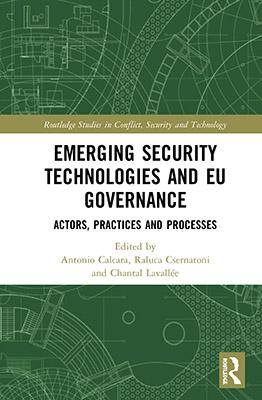
Using the concept of ‘governance’ as an analytical framework, this book investigates how new and emerging security technologies are governed within the European Union, emphasizing relations among different state and non-state actors.
Source: Routledge
The emergence of technologies such as drones, autonomous robotics, artificial intelligence, cyber and biotechnologies has stimulated worldwide debates on their use, risks and benefits in both the civilian and the security-related fields.
This volume examines the concept of ‘governance’ as an analytical framework and tool to investigate how new and emerging security technologies are governed in practice within the European Union (EU), emphasising the relational configurations among different state and non-state actors. With reference to European governance, it addresses the complex interplay of power relations, interests and framings surrounding the development of policies and strategies for the use of new security technologies. The work examines varied conceptual tools to shed light on the way diverse technologies are embedded in EU policy frameworks.
Each contribution identifies actors involved in the governance of a specific technology sector, their multilevel institutional and corporate configurations, and the conflicting forces, values, ethical and legal concerns, as well as security imperatives and economic interests.
Fellow, Carnegie Europe
Csernatoni is a fellow at Carnegie Europe, where she specializes on European security and defense, as well as emerging disruptive technologies.
Antonio Calcara
Vesalius College
Calcara is Adjunct Professor at the Vesalius College, Belgium, and Postdoctoral Researcher at LUISS Guido Carli, Italy.
Chantal Lavallée
Royal Military College
Chantal Lavallée is an assistant professor at the Royal Military College Saint-Jean in Canada.
Carnegie does not take institutional positions on public policy issues; the views represented herein are those of the author(s) and do not necessarily reflect the views of Carnegie, its staff, or its trustees.
ASEAN needs to determine how to balance perpetuating the benefits of technology cooperation with China while mitigating the risks of getting caught in the crosshairs of U.S.-China gamesmanship.
Elina Noor
The Thai-Cambodian conflict highlights the limits to China's peacemaker ambition and the significance of this role on Southeast Asia’s balance of power.
Pongphisoot (Paul) Busbarat
Beijing believes that Washington is overestimating its own leverage and its ability to handle the trade war’s impacts.
Rick Waters, Sheena Chestnut Greitens
Tapping our network of China experts in the region, Carnegie China offers this latest “China Through a Southeast Asian Lens” report to offer preliminary assessments of whether the U.S. effort to reshape the global trading order will lead countries in the region to tilt toward Beijing.
Selina Ho, Khin Khin Kyaw Kyee, Joseph Ching Velasco, …
As tech competition moves into the biotech sector, China is increasingly shifting its focus to nearby regions to alleviate U.S.-induced supply chain pressures. As part of this transition, Southeast Asia has emerged as a favored destination.
Xue Gong