

Commentary
Beirut and Baghdad are both watching how the other seeks to give the state a monopoly of weapons.
Hasan Hamra
{
  "authors": [
    "Harith Hasan"
  ],
  "type": "commentary",
  "blog": "Diwan",
  "centerAffiliationAll": "",
  "centers": [
    "Carnegie Endowment for International Peace",
    "Malcolm H. Kerr Carnegie Middle East Center"
  ],
  "collections": [],
  "englishNewsletterAll": "",
  "nonEnglishNewsletterAll": "",
  "primaryCenter": "Malcolm H. Kerr Carnegie Middle East Center",
  "programAffiliation": "",
  "programs": [
    "Middle East"
  ],
  "projects": [
    "X-Border Local Research Network"
  ],
  "regions": [
    "Iraq",
    "Middle East"
  ],
  "topics": []
}
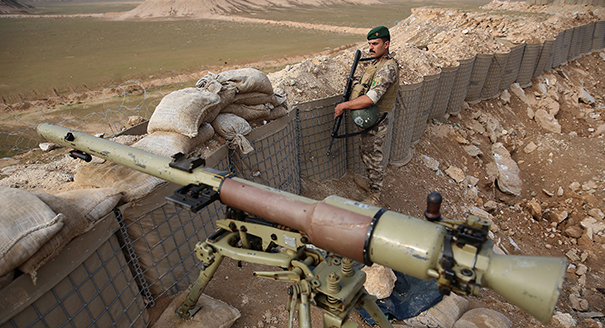
As its authority has weakened, the Iraqi central government’s control over its borders has also eroded.
Last August the Iraqi government decided to shut down the Mandali border crossing between Iraq and Iran in Diyala Governorate. In justifying the move, it described Mandali as an informal crossing that had been used for illicit trade and for the unauthorized movement of people and goods.
According to Iraqi media outlets, criminal organizations had smuggled narcotics into Iraq through there. The area is heavily controlled by Shi‘a militias, who have moved personnel and weapons with relative freedom. Diyala has gained strategic significance for paramilitary groups backed by Iran’s Islamic Revolutionary Guard Corps, given its location between the Iranian border and Baghdad, a region segmented by ethnic and sectarian fault lines.
Since the fall of the Ba‘th regime in 2003, the Iraqi state’s control over borderlands and border crossings has been considerably weakened. As the fragile state directed its resources and manpower toward securing central areas of Iraq and other strategically vital locations, several border areas and geographic peripheries became places of lawlessness and contestation by local groups, foreign powers, criminal organizations, and insurgents.
For example, at one time the areas of western ‘Anbar and Nineveh Governorates were strongholds for Al-Qa‘eda in Mesopotamia and its later incarnation, the Islamic State. Similarly, the two main Kurdish parties, the Kurdistan Democratic Party (KDP) and the Patriotic Union of Kurdistan, have de facto control over Kurdistan’s border crossings with Turkey and Iran. Even Iraq’s ports in the south have been deeply infiltrated by militias and informal networks, with some docking zones having fallen under the control of political parties, militias, and nonstate actors.
The state’s inability to impose control over Iraq’s western border helped the Islamic State to control territory in both Iraq and Syria. The group moved from these peripheries into major cities such as Mosul and Raqqa. The Islamic State formed what it called Wilayat al-Furat, or Euphrates Province, combining the Iraqi town of Qaim and the Syrian town of Albukamal into a single administrative unit. The geographic and cultural proximity of the two towns tempted the Islamic State to make this newly established province a place where it would eliminate the border and in that way create its supranational state. Indeed, for a few years the border ceased to exist in that location and people traveled between Qaim, Albukamal, and Deir Ezzor relatively freely.

However, even after the end of the Islamic State’s caliphate, Iraq’s borderlands continued to be contested or subjected to new forms of hybrid control. The Iraqi military and border guards are present in these border zones, but they are not the only ones. In several locations between the Walid, or Tanf, border crossing between Iraq and Syria, and Sinjar in the north, Shi‘a militias have also deployed their forces. Groups such as Kataib al-Imam ‘Ali, Kataib Hezbollah, Liwa al-Tuffuf, and Saraya al-Khurassani cross the border regularly to secure the route connecting IRGC-backed groups in Iraq and Syria.
Recently, Qais al-Khaz‘ali, the leader of the ‘Asaib Ahl al-Haq militia, stated that the deployment of the Popular Mobilization Forces in western ‘Anbar was necessary to face a purported U.S. and Israeli attempt to infiltrate the area. Iraq’s western border zone has turned into a geopolitical battleground, as manifested by the recent attacks against members of Shi‘a militias in Qaim and Albukamal that are believed to have been carried out by Israeli aircraft.
The United States has a large military base in the area, whose key purpose, according to President Donald Trump, is to “watch the Iranians.” One manifestation of the U.S.-Iran rivalry in western ‘Anbar is a project to renovate and protect the highways connecting Baghdad to the Iraqi-Jordanian-Syrian border triangle. According to several Iraqi officials, the United States convinced the former government of Haidar al-‘Abadi to agree with American companies to manage and protect the highways. However, the project was blocked by the Iranians and their Iraqi allies, who feared that such arrangements would maximize U.S. influence over western ‘Anbar.
In Sinjar the contestation has been even more complicated. The mountainous area where a majority of Iraq’s Yazidi population resided continues to be disputed between the Kurdistan Regional Government and the Iraqi federal government. Recently, a new actor, the Kurdistan Workers Party (PKK), became involved in this competition by forming a local militia known as the Sinjar Resistance Units. In 2014, the PKK played a major role in helping a majority of Yazidis to escape the Islamic State by providing them with a safe route through Syria to Kurdistan. For the PKK, influence in Sinjar has become vital for sustaining its transnational operations and building its appeal in both Iraq and Syria. The group is facing increasing pressure from the Turkish military, which occasionally attacks PKK strongholds in Iraq, as well as an escalating rivalry with Iraq’s main Kurdish party, the KDP.
The presence of nonstate armed actors in border areas, along with new hybrid governance arrangements, has led to the opening of more than a dozen informal border crossings. These are not recognized by the government and have no official customs controls. Among these are Smelka, which connects Kurdistan with areas in Syria under the control of the Kurdish-dominated Democratic Union Party, as well as Faw and Um Jereis in western Nineveh Governorate.
Even some formal border crossings are identified today with certain militias or political parties. The Ibrahim al-Khalil crossing on the border with Turkey is controlled by the KDP. The Haj ‘Omran crossing between Erbil Governorate and Iran is also controlled by the KDP. And the Badr Organization and Kataib Hezbollah have a strong presence at the Shalamja crossing between Basra and Iran.
Iraq’s borders are not merely lines delineating the country’s territorial sovereignty. They have become places where local and foreign actors seek to create alternative power centers and establish different boundaries that are not necessarily in harmony with Iraq’s internationally recognized borders. This is an inevitable consequence of the power vacuum resulting from the decline in the authority of the central government, which motivated multiple actors to challenge the formal arrangements of border and borderland management.
Carnegie does not take institutional positions on public policy issues; the views represented herein are those of the author(s) and do not necessarily reflect the views of Carnegie, its staff, or its trustees.
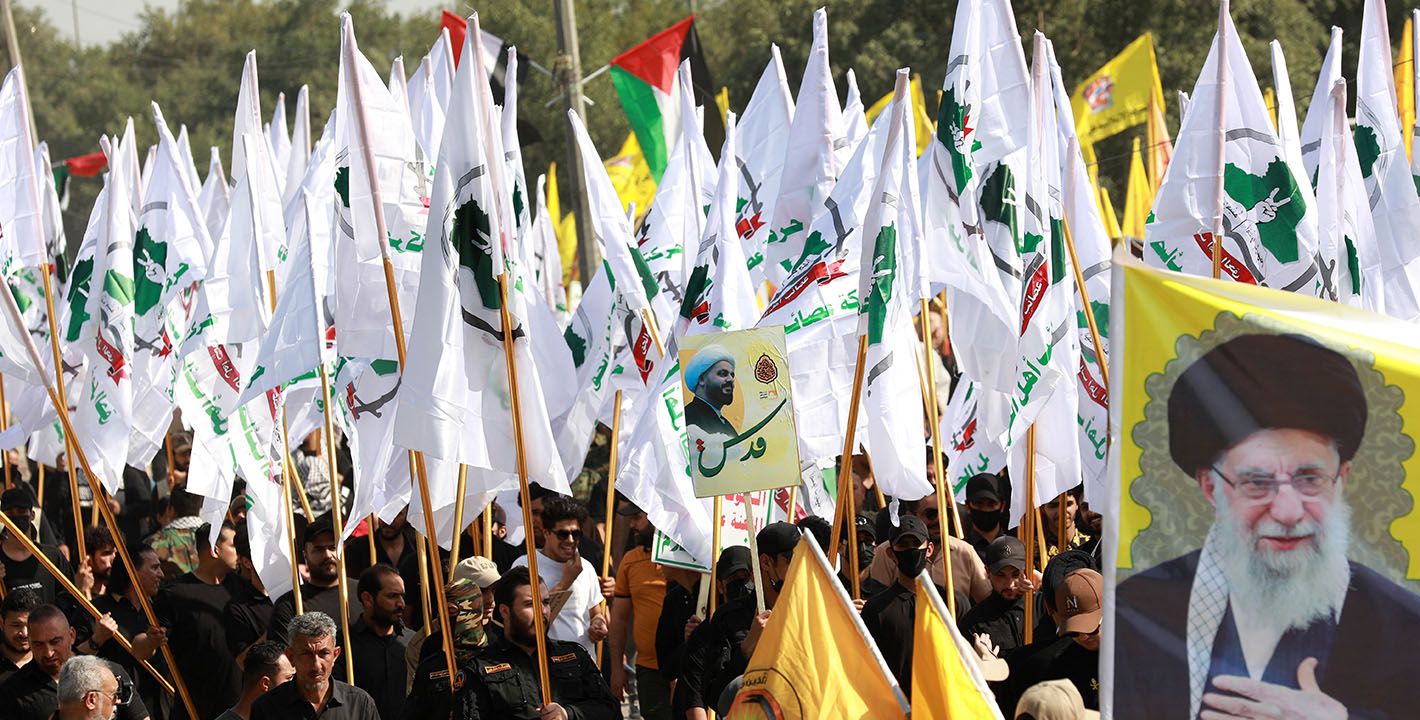
Beirut and Baghdad are both watching how the other seeks to give the state a monopoly of weapons.
Hasan Hamra
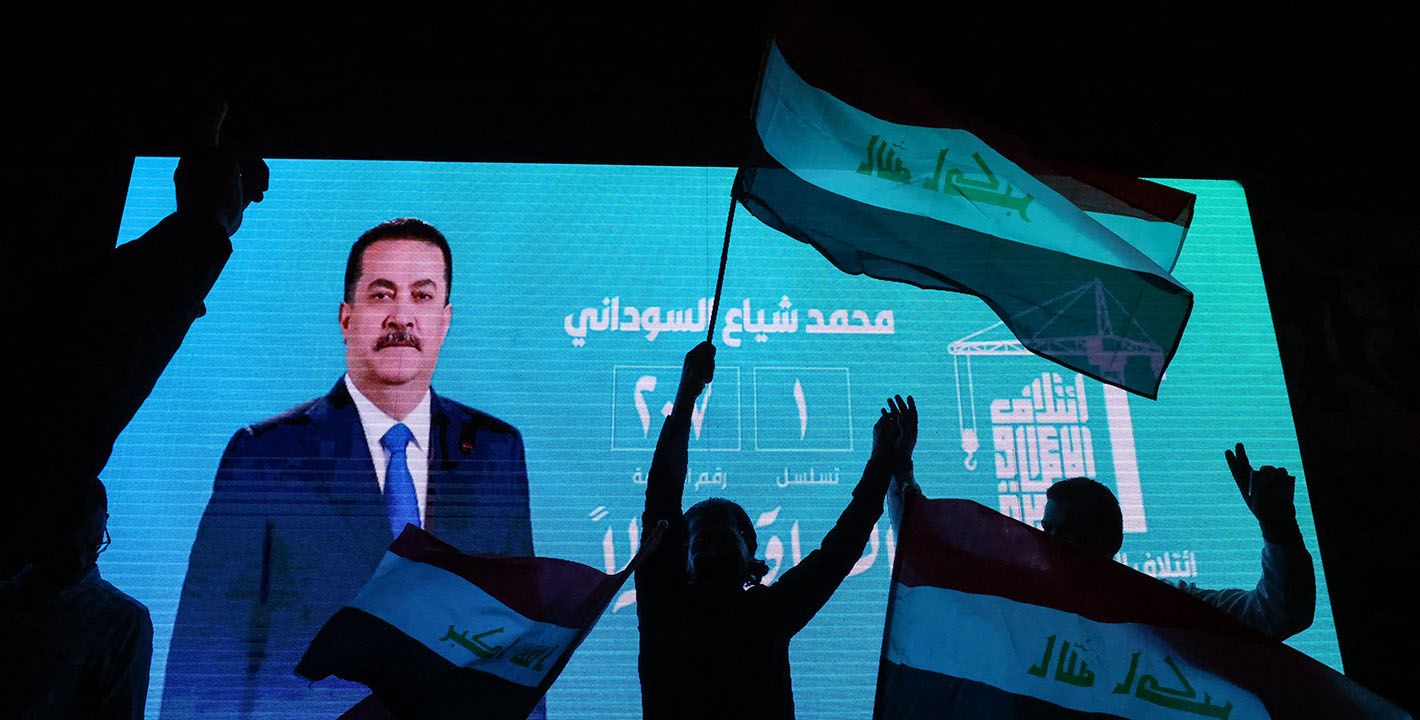
In an interview, Shahla al-Kli discusses the country’s parliamentary elections and what they reveal.
Rayyan Al-Shawaf
Ankara may seek to annul a maritime deal with Cyprus and expand its influence in the next parliament.
Mohanad Hage Ali
Recent election results have placed Nouri al-Maliki in a strong position to name the next prime minister.
Wladimir van Wilgenburg
A regular survey of experts on matters relating to Middle Eastern and North African politics and security.
Michael Young