

Commentary
Implementing Phase 2 of Trump’s plan for the territory only makes sense if all in Phase 1 is implemented.
Yezid Sayigh
{
  "authors": [
    "Ashley J. Tellis"
  ],
  "type": "legacyinthemedia",
  "centerAffiliationAll": "",
  "centers": [
    "Carnegie Endowment for International Peace"
  ],
  "collections": [],
  "englishNewsletterAll": "",
  "nonEnglishNewsletterAll": "",
  "primaryCenter": "Carnegie Endowment for International Peace",
  "programAffiliation": "",
  "programs": [
    "South Asia"
  ],
  "projects": [],
  "regions": [
    "North America",
    "United States",
    "South Asia",
    "India"
  ],
  "topics": [
    "Foreign Policy",
    "Nuclear Policy",
    "Nuclear Energy"
  ]
}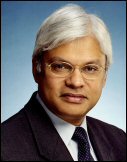
The U.S.-India Civil Nuclear Agreement is a recognition of India’s rise as a global player, and its strategic importance to the United States. This is part of a transforming world order, which the U.S. wants to shape to its advantage, says Ashley J. Tellis in an interview with Mint - Wall Street Journal.
Source: Mint - Wall Street Journal

I think at the US end there’s only good news. The House is expected to vote on the Bill sometime today (Friday) in the US and I expect once that happens it will be reported to the Senate. I think we will cross that hurdle before Congress adjourns. So I am very optimistic about it.
So we are going to have a 123 agreement?
Absolutely.
What does the Indo-US nuclear agreement really mean for India?
I would say it means three things. (One) It is a changing of a very powerful set of global rules to accommodate India; it is a recognition of India’s responsibility and its rising capabilities; and the importance of the US-India partnership. Two, it gives India access to something it has never had for the last 30-odd years, and that is nuclear energy cooperation with a whole range of countries, which is going to be vital if India is going to meet its developmental goals. The third is more symbolic, in that it means the end of the nuclear apartheid regime to use (former external affairs minister) Jaswant Singh’s famous phrase, that kept India out of the group of elite countries. I think it is truly a transformative event and when historians write about in the coming decades, I have absolutely no doubt in my mind that this will have been one of those turning points in India’s march towards becoming a great power.
This new world order that you are outlining — what is in it for the US?
That is a hard question to answer satisfactorily, because the honest answer is that in part, it depended greatly on the President’s (George W. Bush) own instincts. It’s an unsatisfying answer because it’s a complex policy
question. But the President had an instinct about India and a desire to make this relationship work, to put it on new foundations and he drove this initiative really as an act of will… It starts actually not in 2005, but goes back to his first term...
Carnegie does not take institutional positions on public policy issues; the views represented herein are those of the author(s) and do not necessarily reflect the views of Carnegie, its staff, or its trustees.
Implementing Phase 2 of Trump’s plan for the territory only makes sense if all in Phase 1 is implemented.
Yezid Sayigh
Israeli-Lebanese talks have stalled, and the reason is that the United States and Israel want to impose normalization.
Michael Young
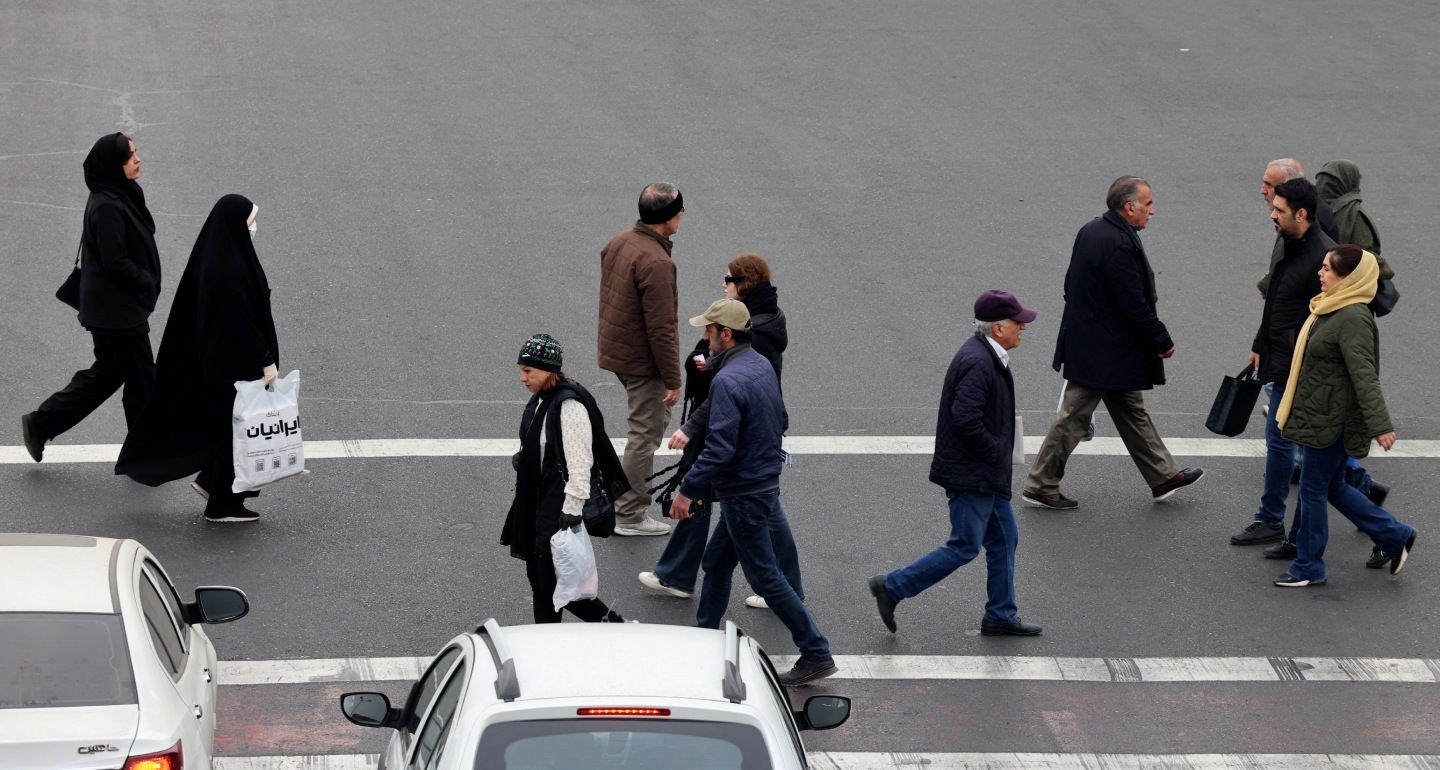
Baku may allow radical nationalists to publicly discuss “reunification” with Azeri Iranians, but the president and key officials prefer not to comment publicly on the protests in Iran.

Bashir Kitachaev
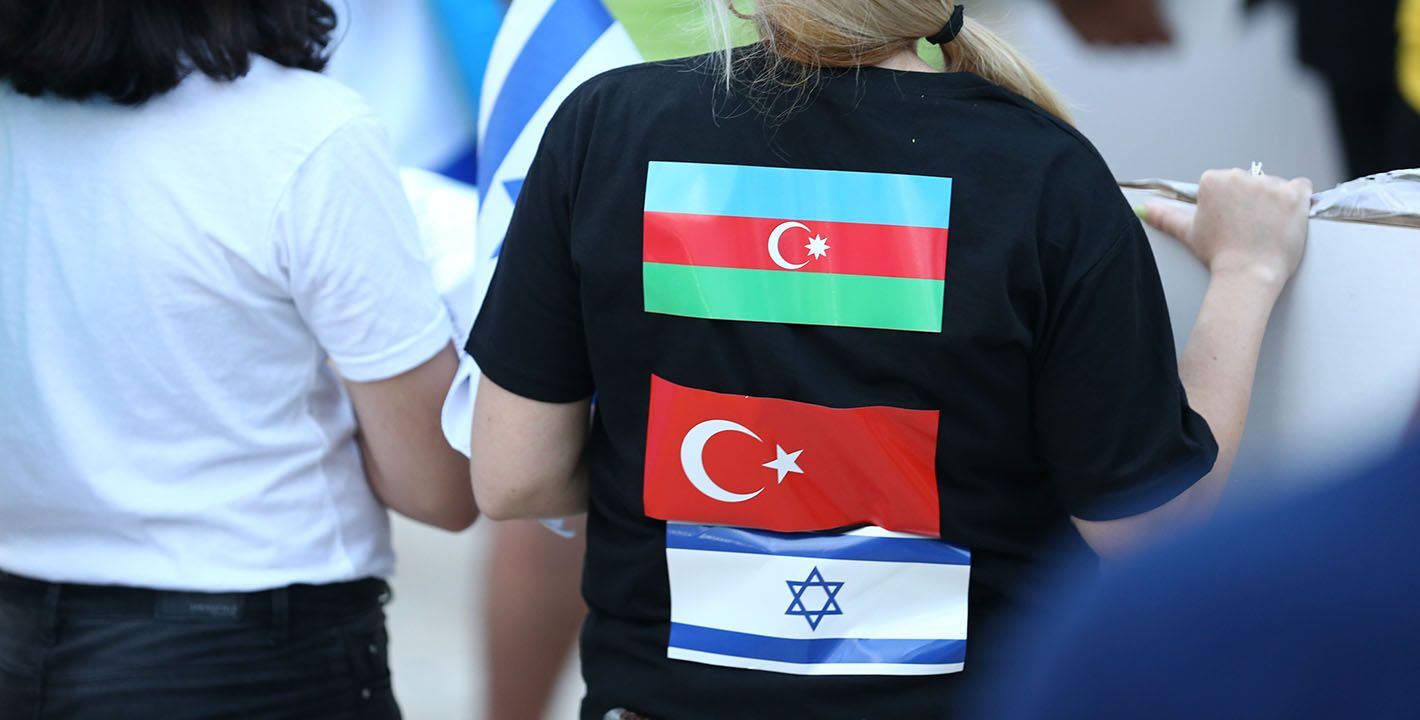
The country’s leadership is increasingly uneasy about multiple challenges from the Levant to the South Caucasus.
Armenak Tokmajyan
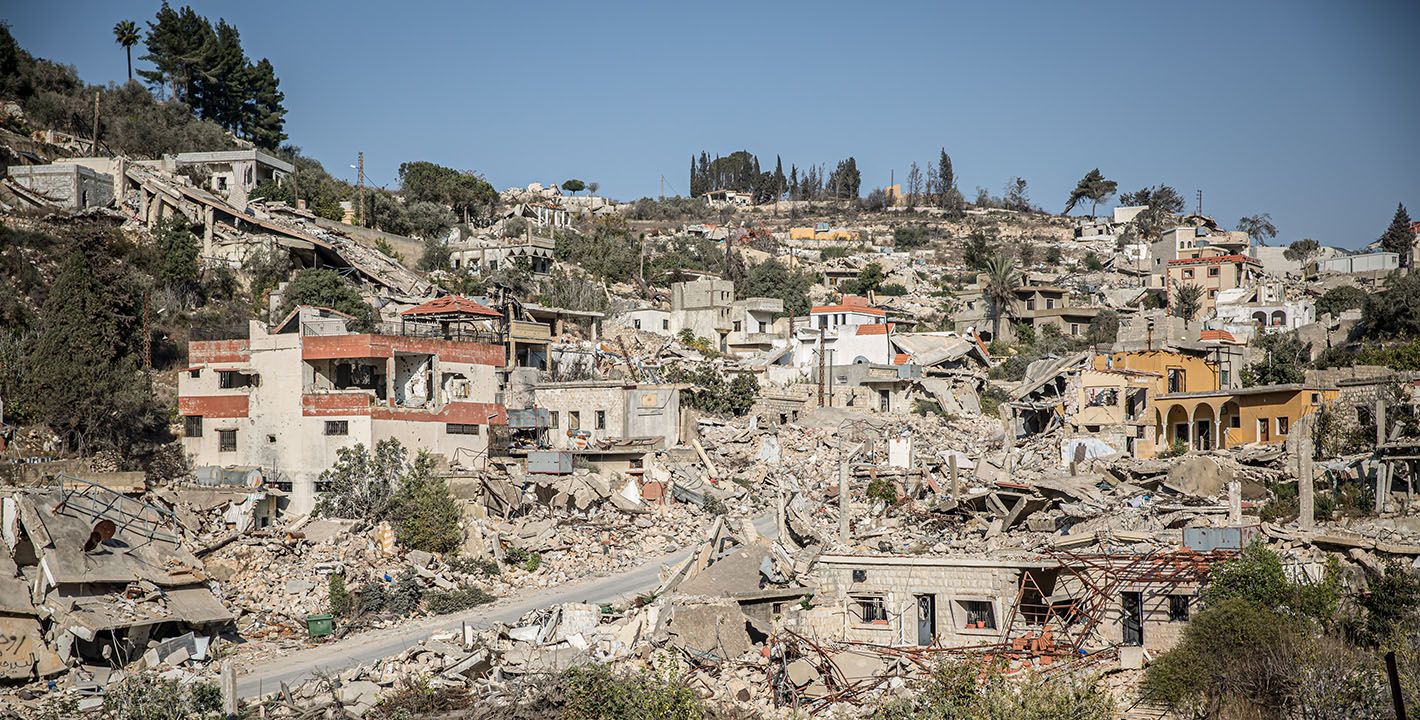
The U.S. is trying to force Lebanon and Syria to normalize with Israel, but neither country sees an advantage in this.
Michael Young