

Commentary
Baku may allow radical nationalists to publicly discuss “reunification” with Azeri Iranians, but the president and key officials prefer not to comment publicly on the protests in Iran.
Bashir Kitachaev
{
  "authors": [
    "C. Raja Mohan"
  ],
  "type": "legacyinthemedia",
  "centerAffiliationAll": "",
  "centers": [
    "Carnegie Endowment for International Peace",
    "Carnegie India",
    "Carnegie Russia Eurasia Center"
  ],
  "collections": [],
  "englishNewsletterAll": "",
  "nonEnglishNewsletterAll": "",
  "primaryCenter": "Carnegie India",
  "programAffiliation": "",
  "programs": [
    "South Asia"
  ],
  "projects": [],
  "regions": [
    "South Asia",
    "India"
  ],
  "topics": [
    "Foreign Policy"
  ]
}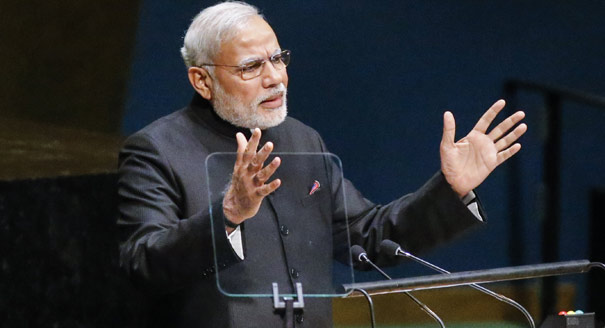
Having recast key bilateral ties, Modi now has a chance to end Delhi’s defensiveness in approaching the world.
Source: Indian Express
As Prime Minister Narendra Modi heads to the United States this week for engagements ranging from the United Nations in New York to Silicon Valley in California, the demands of multilateralism have begun to loom larger on India’s diplomacy. New Delhi’s challenge is not just about reforming the UN and winning a permanent seat at the UN Security Council. For, a seat at the high table is of no consequence if India does not modernise its multilateralism.
Whether it is Modi’s meetings with US President Barack Obama in New York or Facebook’s Mark Zuckerberg in Silicon Valley, India’s approach to critical issues like climate change and internet governance is likely to figure at the top of the agenda. At the UN itself, the challenges of sustainable development and reforming international peacekeeping are being taken up for special discussion this year.
Having recast many of India’s key bilateral relations, Modi now has an opportunity to end the defensiveness that had crept into India’s multilateralism in recent decades. India, under Jawaharlal Nehru, punched way above its international weight at the UN on issues ranging from human rights to nuclear arms control. India was not a permanent member of the UNSC, but it had big ideas on governing the world. By the 1960s though, India’s multilateralism had degenerated into what Shashi Tharoor called a “moralistic running commentary” on world affairs.As India’s “third worldism” reached its peak in the 1970s, Delhi’s multilateralism became increasingly dysfunctional. As Delhi set more ambitious global goals — such as the New International Economic Order — India’s voice became less effective. Some of its campaigns — notably the one for the New International Information Order — ran headlong into India’s core political values like democracy. It was no coincidence that Delhi’s rhetoric on the New International Information Order coincided with the imposition of Emergency at home four decades ago.
Worse still, India often acted against its own interests on the world stage. In the 1970s and 1980s, Delhi opposed the very technologies that would empower its people and improve its international leverage — for example, direct broadcast satellites and transborder information flows — all in the name of territorial sovereignty.
Delhi’s dysfunctional multilateralism was made more acute by the relative decline of India’s economic weight. The situation was only reversed in the 1990s, when India began to post higher growth rates. That India’s reform era coincided with the end of the Cold War, however, created political complications. The new hubris in the West, that history had come to an end, was matched by the conviction that supra-national institutions could replace the traditional sovereign units of the global system and fix all problems in the world through effective interventions.
If the new Western rhetoric made India nervous about the internationalisation of the Kashmir question, Delhi was constantly torn between the imperatives of economic reform demanded by the new era of globalisation and limited domestic support for structural change. The adaptation, therefore, was grudging and incremental.
The new realism guiding Indian diplomacy after the Cold War recognised that an improved relationship with America was one instrument to fend off various multilateral pressures. It rightly saw that Delhi could not end the atomic apartheid against India through pious rhetoric on nuclear disarmament and the claim that it had an “impeccable record” on non-proliferation. The change in India’s position in the global nuclear order would only come through a political deal with the dominant power in the international system. That precisely was the meaning of the historic civil nuclear initiative of 2005 signed by then PM Manmohan Singh and then President George W. Bush.
But entrenched opposition to reform, barely concealed xenophobia on the left and right of the political spectrum, and deep-rooted suspicion of the West meant it was very difficult to overcome India’s defensive approach to globalisation. As elsewhere on foreign policy, Modi has signalled some interesting shifts in India’s multilateralism.
After initially rejecting the Bali accord on food security, Modi worked with Obama to find a mutually acceptable compromise. On climate change, Modi has hinted at greater flexibility by underlining the urgency of mitigating climate change and India’s commitment to constructive outcomes at the Paris talks later this year. On internet governance, Modi has moved India from an excessive state-centric approach to “multistakeholderism” that recognises the role of the private sector and civil society.
These changes fit into Modi’s ambition of making India a “leading power” on the global stage. Any substantive reorientation of India’s multilateralism, however, must rest on three broad principles.
The first is the recognition that multilateralism really matters for India’s future growth and national security. India’s expanding economic interdependence — trade is now nearly 50 per cent of the GDP — demands that Delhi must actively shape the international environment by becoming a rule-maker. Being a conscientious objector might have been politically cute once, but it could be rather costly at the current juncture.
Second, India cannot treat multilateral diplomacy as a boutique corner of the foreign office dispensing moral platitudes. It must be a tool for the pursuit of India’s national interests as well as the expression of its universalist ideals. Finding a better balance between the two imperatives is the key to successful multilateralism.
Third, Delhi cannot forget that multilateral negotiations are deeply influenced by the nature of international power hierarchies. While it must bargain hard, Delhi must also have the flexibility to make reasonable compromises. Unlike in the past, India today has the economic weight and the market size to negotiate effectively and generate sensible outcomes that are in tune with its national interest as well as global public good.
The world is probably ready to accommodate India’s special interests on such global issues as climate change and internet governance if Modi moves Delhi down the path of pragmatic multilateralism. For the PM though, the challenge is really at home, where getting the system to reform itself or discard the inherited defensiveness has not been easy.
Carnegie does not take institutional positions on public policy issues; the views represented herein are those of the author(s) and do not necessarily reflect the views of Carnegie, its staff, or its trustees.
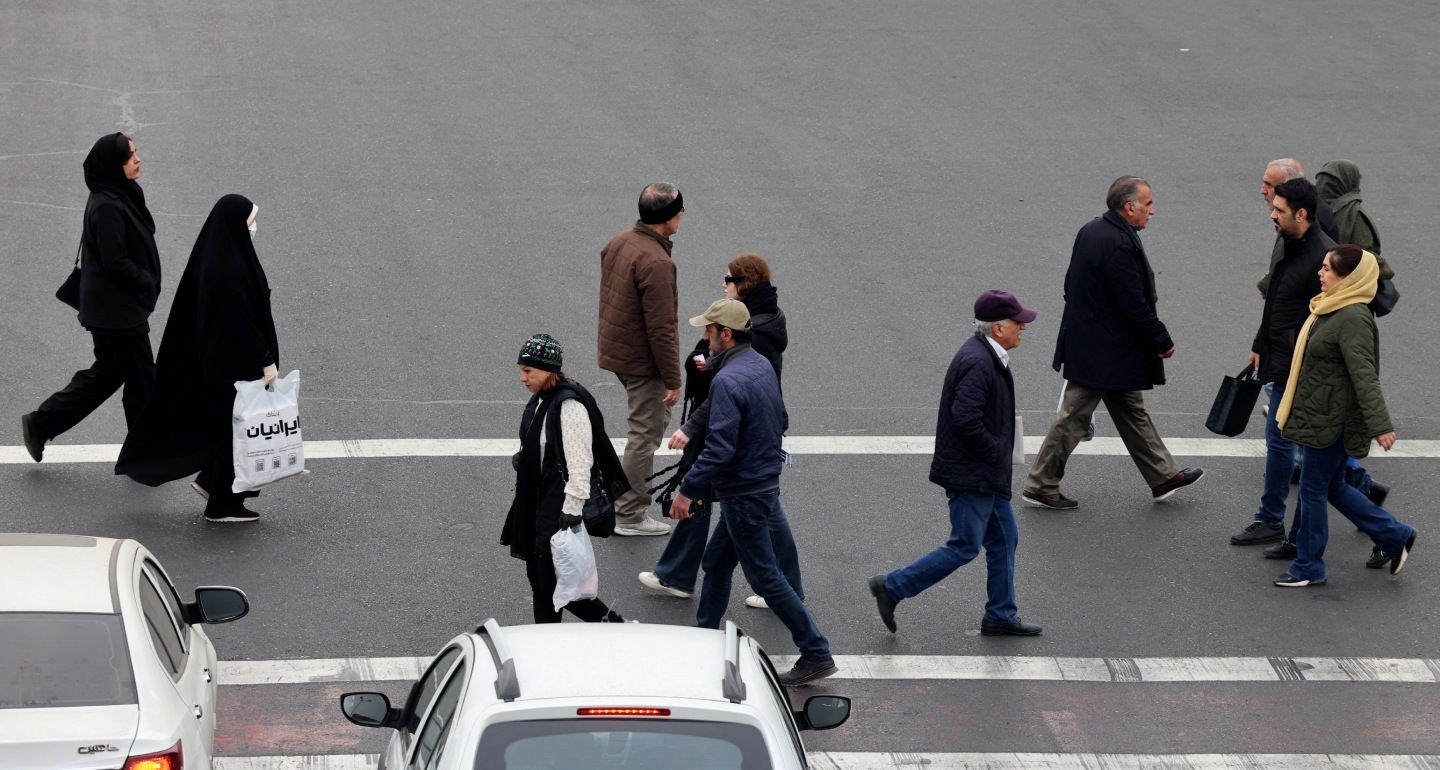
Baku may allow radical nationalists to publicly discuss “reunification” with Azeri Iranians, but the president and key officials prefer not to comment publicly on the protests in Iran.

Bashir Kitachaev
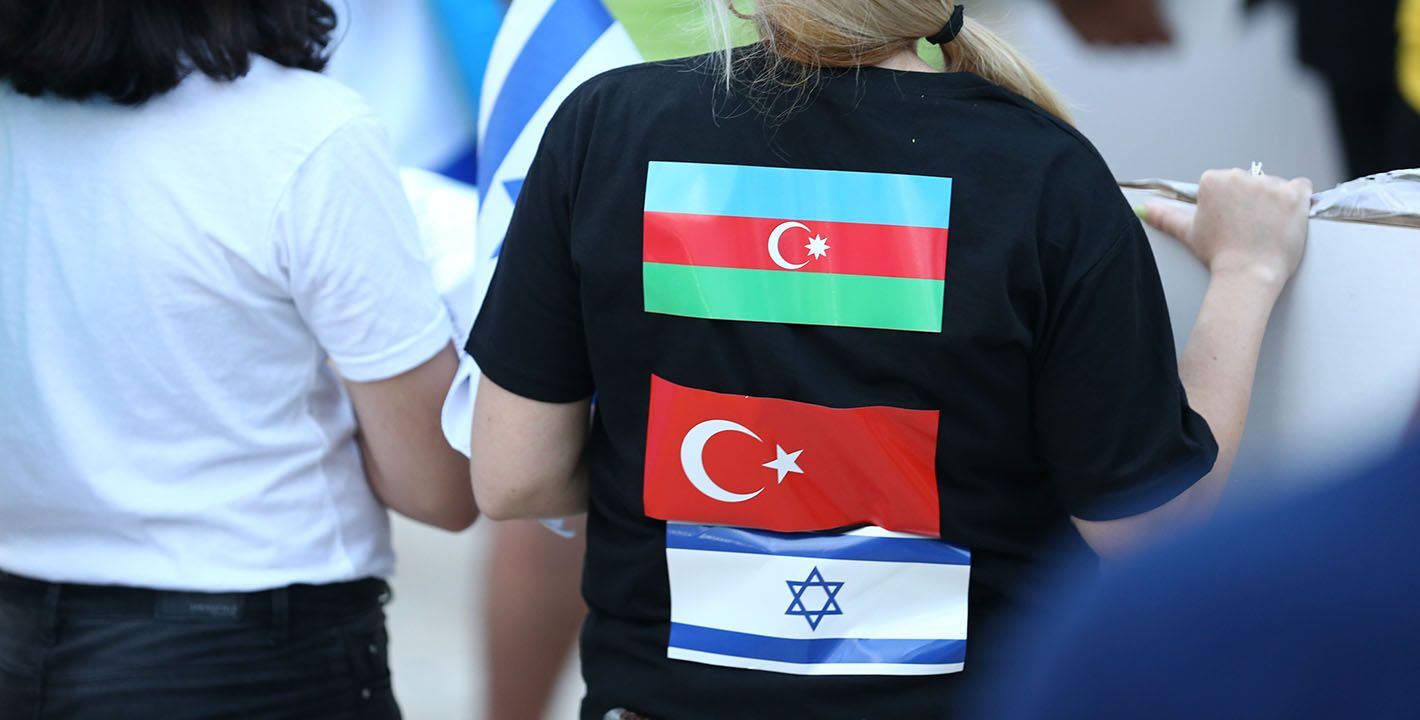
The country’s leadership is increasingly uneasy about multiple challenges from the Levant to the South Caucasus.
Armenak Tokmajyan
The countries of the region have engaged in sustained competition that has tested their capacities and limitations, while resisting domination by rivals. Can a more stable order emerge from this maelstrom, and what would it require?
Hamza Meddeb, Mohamed Ali Adraoui
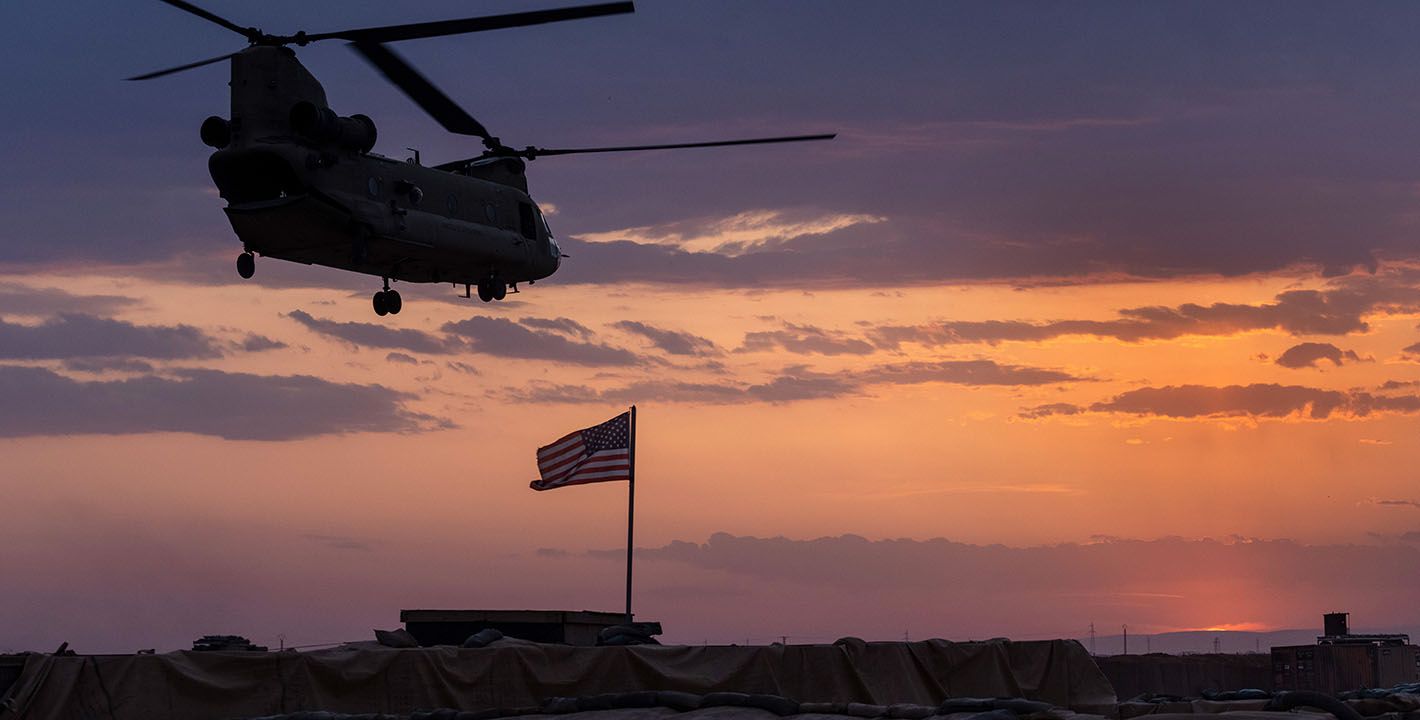
As Washington reduces its presence in the country, the success of its withdrawal and continued containment of the Islamic State will hinge on adopting an approach of flexible oversight built around three priorities, as well as balancing Turkish and Israeli red lines.
Kheder Khaddour, Issam Kayssi
Largely characterized thus far by a single-minded focus on extractivism, Riyadh must commit to greater equitability in its approach to investment and development deals with Sudan, Ethiopia, and Eritrea.
Hesham Alghannam