

Commentary
Most of Moscow’s military resources are tied up in Ukraine, while Beijing’s foreign policy prioritizes economic ties and avoids direct conflict.
Alexander Gabuev, Temur Umarov
{
  "authors": [
    "Alena Epifanova"
  ],
  "type": "commentary",
  "blog": "Carnegie Politika",
  "centerAffiliationAll": "",
  "centers": [
    "Carnegie Endowment for International Peace",
    "Carnegie Russia Eurasia Center"
  ],
  "collections": [
    "Politika: The Best of 2025"
  ],
  "englishNewsletterAll": "",
  "nonEnglishNewsletterAll": "",
  "primaryCenter": "Carnegie Russia Eurasia Center",
  "programAffiliation": "",
  "programs": [],
  "projects": [],
  "regions": [
    "Russia"
  ],
  "topics": [
    "Technology",
    "Domestic Politics",
    "Security"
  ]
}
Фото: Chris McGrath / Getty Images
Russia’s throttling of YouTube is a milestone in the country’s long-running battle over internet control. As governments worldwide embrace digital sovereignty and the global internet fragments, the space for Russia’s critical voices is ever shrinking.
When the Kremlin moved to block major foreign social media platforms—including Facebook, Instagram, and Twitter—shortly after Russia invaded Ukraine in February 2022, it left YouTube untouched. But last year, the popular video-sharing platform’s relative freedom finally came to an end when the Russian authorities turned their attention to it.
The importance of YouTube for Russian society is hard to overestimate. In the last two decades of state media censorship and the crushing of the opposition, it has become the country’s most popular video platform. With more than 90 million monthly users—including many dissident voices—it was a key source of non-censored information for Russians.
It is not only its huge popularity that makes YouTube a hard target and protects it from being blocked. Since YouTube is a subsidiary of Google and part of its digital ecosystem, blocking the platform could cause widespread disruption of other services such as maps, cloud storage, and—most importantly—Android, the dominant mobile operating system in Russia. Accordingly, instead of shutting down YouTube, Roskomnadzor (Russia’s federal agency for monitoring and censoring internet media) has drastically throttled its speed, making the platform practically unusable and discouraging users from opening it.
After the first slowdown in July 2024, YouTube’s traffic nearly halved from its normal levels. In December, it halved again due to Roskomnadzor’s expanded curb. In January 2025, YouTube traffic slumped to record low shares of 6–12 percent of Russian internet traffic, compared with 43 percent before the throttling began.
Still, not everyone gave up on the popular platform, as evidenced by other numbers. Traffic passing through the largest Russian internet traffic exchange point in Moscow, MSK-IX, started to increase from the end of July and the beginning of August 2024, exactly when YouTube was being throttled. Total web traffic in Russia almost tripled in volume during 2024, breaking a historical record in November. This growth clearly points to the fact that people in Russia have turned to virtual private network (VPN) services to continue watching videos from foreign YouTube servers.
By slowing down YouTube, Roskomnadzor effectively hindered access to the infrastructure of Google’s caching servers installed on the networks of the country’s internet service providers (such as Rostelecom, MTS, and Megafon). This system, named Google Global Cache (GGC), enables fast and reliable streaming, as videos are loaded on servers that are geographically close to users. Once this becomes unavailable, users start looking—with the help of VPNs—for information via YouTube servers abroad, which leads to an increase in the total volume of traffic.
VPNs have become free information lifelines for people in Russia, allowing them to circumvent the increasingly censored RuNet. Of course, Roskomnadzor is aware of this workaround, and has been advancing its technical capabilities to be able to block not only undesired information and foreign platforms, but also censorship circumvention technologies: VPNs, mirror sites, and the Tor anonymity network. Although Russia started censoring tools allowing access to blocked websites back in 2017, Roskomnadzor ramped up its restrictions once the demand for VPNs sharply increased.
In 2022, following the massive blocking of independent media, Facebook, and Instagram in the early days of the full-scale invasion of Ukraine, people in Russia downloaded VPN services more than 33 million times: nearly three times more than the previous year. Since then, Roskomnadzor has responded with a more sophisticated ban: as well as blocking about 200 VPN services, it has also started to block several widely used protocols (operating rules governing how data is transmitted between a VPN server and a device): OpenVPN, IKEv2, and WireGuard. This last method is particularly lethal, since when protocols are blocked, users cannot simply switch to another VPN and bypass censorship.
For now, the censor’s technical resources are limited and cannot target all protocols, leaving a small window of internet freedom in Russia open. But that might change soon: Roskomnadzor plans to spend almost 60 billion rubles (about $600 million) on modernizing its censorship system for more efficient VPN blocking. Meanwhile, Apple is cooperating with Roskomnadzor, having removed more than 100 VPN services since July 2024 from the Russian App Store. To further discourage VPN usage, the mere sharing of information about ways to circumvent online restrictions is now a criminal offense in Russia. Since March 1, 2024, Roskomnadzor has blocked access to information about VPNs and other means of bypassing blocked websites.
While Russia has not yet achieved total control, and despite the growing number of technical outages of the entire RuNet, the state has significantly advanced in implementing the “sovereign internet law” introduced in late 2019. It took Roskomnadzor just five years to erect digital borders around the country, hindering independent media from reaching their audiences, and ordinary people without technical skills from accessing uncensored insights.
In this highly restricted landscape, Telegram has become the new refuge for independent media and bloggers, while the messaging platform’s unrestricted freedom is also exploited by pro-Kremlin propaganda and disinformation. It remains to be seen how long this coexistence will continue. If the state decides to block Telegram, Roskomnadzor will probably succeed, having learned from its failed attempts to block the app back in 2018, and being generally much better equipped nowadays.
Pro-Kremlin voices will move to VK, RuTube, and other controlled websites that the state has been developing for years while eliminating their undesired foreign equivalents. But where—and even whether—independent journalists and critical Russians will find a new online refuge is so far unknown.
Their threatened online existence looks even more precarious in the context of international trends, with the free global internet becoming increasingly contested and fragmented. More and more countries are imposing online regulations and erecting digital borders, either for censorship purposes or to fight disinformation. The quest for digital sovereignty has taken root in authoritarian and democratic countries alike. With even the United States—the birth country of the internet and the strongest advocate for a global and borderless information exchange—wanting to block TikTok over national security concerns, the future of the open internet that the world has known looks grim. Not only does Roskomnadzor see such efforts as further evidence its blocking policy is correct, even more states will say: “If the United States is doing it, why can’t we?”

Alena Epifanova
Research Fellow exploring digital policy, international order and democracy at German Council on Foreign Relations (DGAP), Berlin
Carnegie does not take institutional positions on public policy issues; the views represented herein are those of the author(s) and do not necessarily reflect the views of Carnegie, its staff, or its trustees.
Most of Moscow’s military resources are tied up in Ukraine, while Beijing’s foreign policy prioritizes economic ties and avoids direct conflict.


Alexander Gabuev, Temur Umarov
If the regime in Tehran survives, it could be obliged to hand Moscow significant political influence in exchange for supplies of weapons and humanitarian aid.

Nikita Smagin
The interventions in Iran and Venezuela are in keeping with Trump’s strategy of containing China, but also strengthen Russia’s position.

Mikhail Korostikov
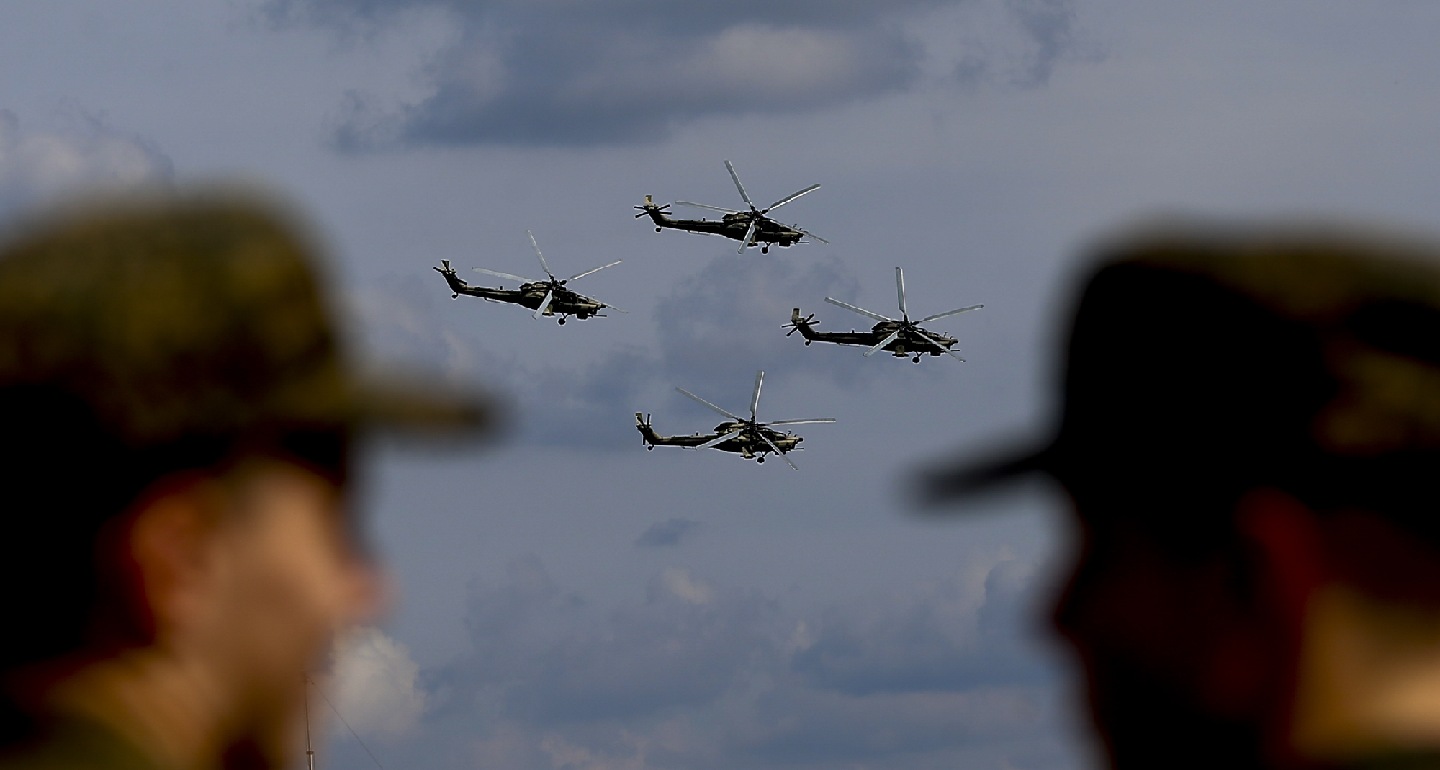
Arms supplies from Russia to Iran will not only continue, but could grow significantly if Russia gets the opportunity.
Nikita Smagin
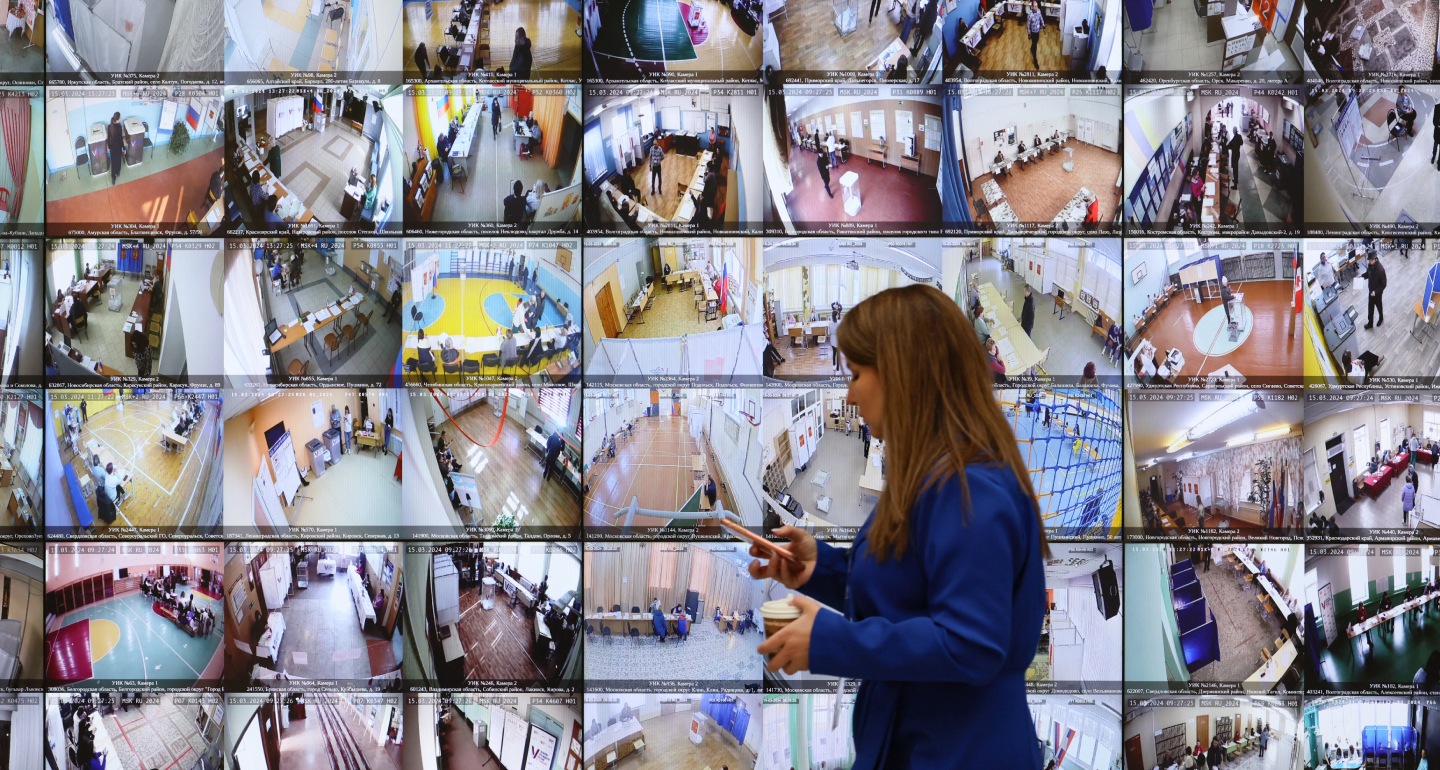
The use of technology to mobilize Russians to vote—a system tied to the relative material well-being of the electorate, its high dependence on the state, and a far-reaching system of digital control—is breaking down.

Andrey Pertsev