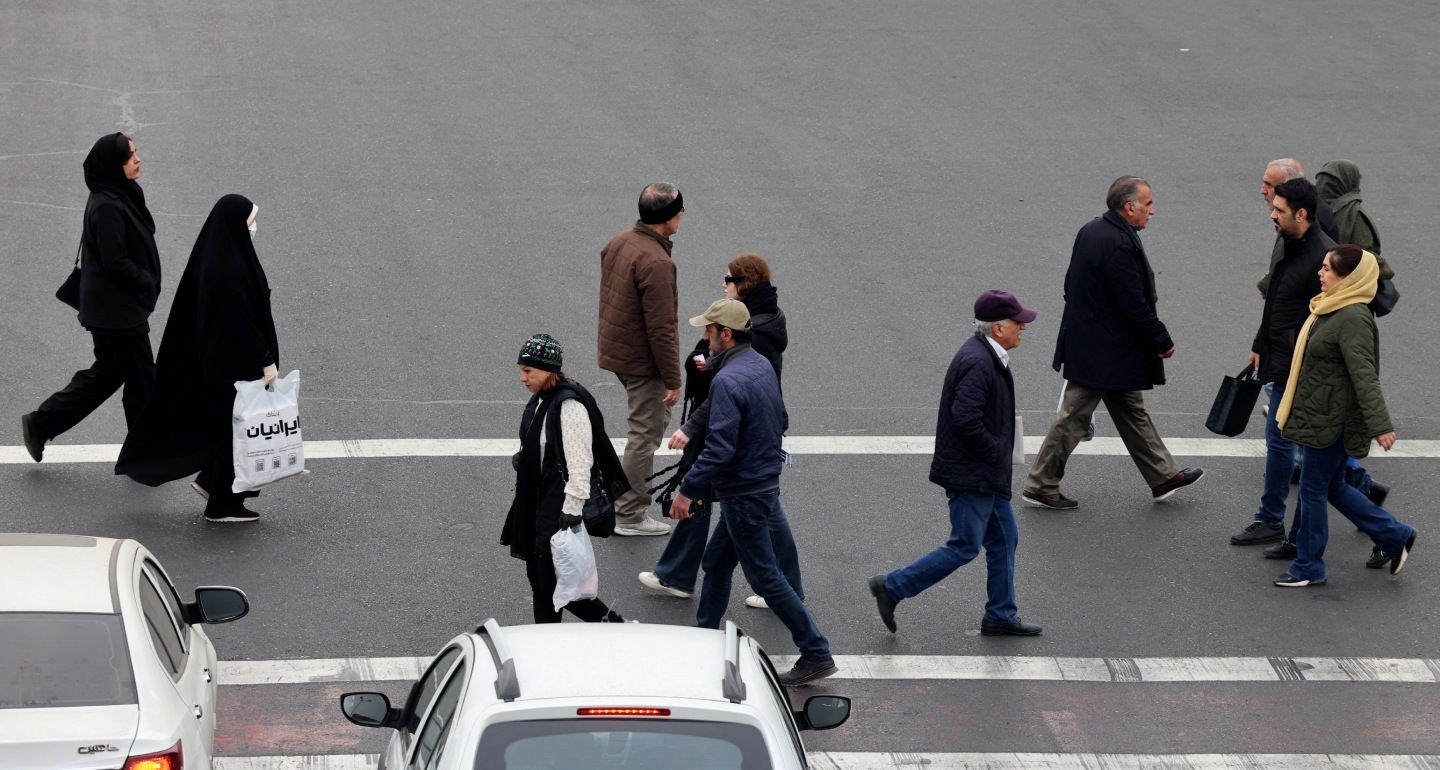
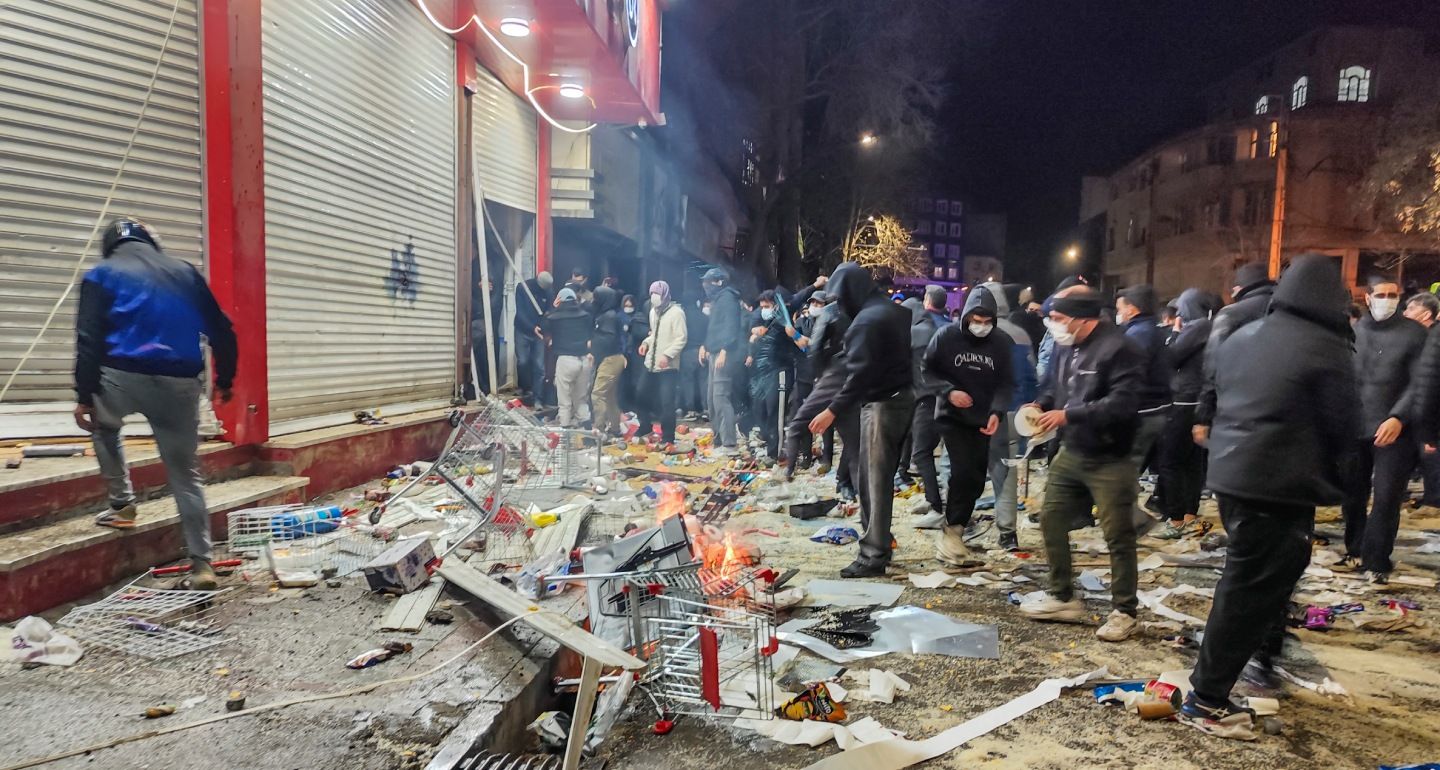
The Iranian protests are a major event for Azerbaijan: not just because they are taking place in a large neighboring country, but also because of the millions of ethnic Azeris living in Iran’s northwestern provinces. Every time those regions are shaken by instability, nationalist circles perceive it as an opportunity for the “reunification” of the Azerbaijani people.
Radical nationalist narratives calling for the “liberation of historical lands” are increasingly creeping into the Azerbaijani government’s rhetoric. During the current crisis, however, Baku’s position has remained markedly cautious. It’s likely that the Azerbaijani leadership fears destabilization along its southern borders and economic upheaval, and is unwilling to jeopardize the limited improvements made in relations with Tehran in recent years.
The Iranian protests have inevitably evoked the specter of what Azerbaijani media refers to as “southern Azerbaijan”: Iran’s northwestern provinces populated by ethnic Azeris. This isn’t the first time that the situation in the neighboring country has become destabilized, and Azerbaijani nationalists see it as an opportunity to “reunite with their compatriots” on the southern side of the border.
Narratives about persecuted compatriots living practically under Iranian occupation follow on logically from Baku’s overall rhetoric about Azerbaijan being a besieged fortress, surrounded by enemies who have unfairly acquired the country’s “historical lands.” For many years, Azerbaijani President Ilham Aliyev’s regime has exploited revanchist sentiment to mobilize society and distract it from other problems. Amid the current unrest in Iran, the Azerbaijani authorities—who are typically quick to crack down on any rallies—have allowed a protest to be held outside the Iranian embassy in Baku under the slogan “Let Azerbaijan be united.”
However, this image of compatriots yearning for reunification, while convenient for the national myth, is not supported by the demands of Azeri Iranians themselves. That is not to say that there is no discrimination against national minorities in Iran. The government restricts the use of the Azerbaijani language for teaching in schools, and impedes cultural expression and the expansion of linguistic rights. But there is no evidence of serious separatist sentiment among the parts of Iran populated by ethnic Azeris.
Certainly, protests are taking place there, too, but the complaints generally align with those of the rest of the nation: dissatisfaction with corruption, the economic crisis, and repression. Separatist slogans or calls for secession from Iran have not been observed during past protests or at the current ones.
If anything, Azeri Iranians are more reserved in their demands, as they don’t always support calls for the restoration of the monarchy. The Pahlavi dynasty (1925–1979), often portrayed as an era of freedom and prosperity, is associated by Azeri Iranians with policies of discrimination and forced assimilation. Today, however, Iran’s Azeri community is widely represented within the political and security elites. Suffice to say that Supreme Leader Ali Khamenei and President Masoud Pezeshkian are ethnic Azeris.
Finally, the Aliyev regime is hardly such an appealing alternative to that of Iran’s ayatollahs, despite all the shortcomings of the latter. In many respects, Azerbaijan today is even less free than Iran, as confirmed by reports from human rights organizations such as Freedom House. There is still competition in Iranian politics between conservatives and reformists, elections are freer, and there is no cult of the ruling family like in Azerbaijan, among other things.
The Azerbaijani leadership also understands that notions of reunification are a utopian fantasy. Therefore, while official Baku allows radical nationalists to publicly discuss reunification, the president and key officials prefer not to comment publicly on the protests.
Baku fears losing even the modest progress it has made in relations with Tehran in recent years. The Iranian leadership is very sensitive to the decline of its influence in the South Caucasus, and views the growing role of the EU and the United States there, Armenia’s rapprochement with the West, and the Israeli presence in Azerbaijan as growing threats.
As a result, relations between Azerbaijan and Iran in recent years have fluctuated between periods of pragmatic rapprochement and sudden downturns, mutual accusations, and harsh rhetoric. Tehran has repeatedly accused Baku of collaborating with Israel—including in intelligence and sabotage activities—and of allowing the South Caucasus to be exploited by external forces. During the Twelve-Day War between Iran and Israel last summer, Iran accused Azerbaijan of allowing Israeli aircraft to use its airspace to carry out airstrikes against Iran.
These accusations are sometimes accompanied by diplomatic pressure, territorial claims, threats such as military exercises near the border, and arrests. The largest group of political prisoners in Azerbaijan are Muslim activists. A significant number of them were arrested during the escalation between Baku and Tehran.
Still, so far, these regular diplomatic conflicts have not led to any truly serious crises in relations between Baku and Tehran. Iran’s real leverage over the South Caucasus is currently limited, which means it is mostly obliged to satisfy itself by making critical statements. Baku understands that and is trying not to push Tehran toward any harsher steps.
After each spike in tensions, Baku prefers to de-escalate the conflict and return dialogue to a pragmatic focus. Recent contact between the two leaders has taken place in a markedly friendly atmosphere. Azerbaijan’s calculation is clear: a conflict with its large neighbor promises no strategic benefits, while the consequences are unpredictable.
Destabilization in Iran is equally fraught with unpredictable risks. The prospect of its southern neighbor turning into another Syria or Libya would deprive Azerbaijan of a vital trading partner, and the disruption of economic ties would be a painful blow to many sectors of Azerbaijan’s economy.
A major crisis in Iran would also spark uncontrollable processes on Azerbaijan’s southern border, including possible immigration flows. Despite all the talk of protecting “compatriots” in Iran, even a limited influx of refugees from the country would pose a serious social and economic challenge for Baku.
Finally, the government reasons that mass protests in a neighboring country could serve as inspiration. If Azeris are protesting en masse against economic problems and arbitrary rule on the southern side of the border, why shouldn’t they do the same to the north of it—especially since there is no shortage of economic and political difficulties there too. A stable Iran, even if relations are sometimes strained, is preferable to its chaotic transformation as far as the Azerbaijani leadership is concerned.
Baku is well aware that these are not the first major protests to sweep Iran, and that the ayatollahs have always found ways to suppress them. There are no signs of the Iranian system’s imminent collapse, and harsh or provocative rhetoric directed at Tehran would appear not only premature, but also dangerous. Accordingly, Azerbaijan is not seeking to use the Iranian protests to gain leverage. Its strategy is one of biding its time, diplomatic restraint, and minimizing risks, rather than staking its bets on nebulous nationalist or geopolitical gains.