• Research
  • Politika
  • About
Carnegie Russia Eurasia center logoCarnegie lettermark logo
  • Donate
{
  "authors": [
    "Matt Ferchen"
  ],
  "type": "legacyinthemedia",
  "centerAffiliationAll": "",
  "centers": [
    "Carnegie Endowment for International Peace",
    "Carnegie China"
  ],
  "collections": [
    "China and the Developing World",
    "China’s Foreign Relations"
  ],
  "englishNewsletterAll": "",
  "nonEnglishNewsletterAll": "",
  "primaryCenter": "Carnegie China",
  "programAffiliation": "",
  "programs": [],
  "projects": [],
  "regions": [
    "North Africa",
    "Southern, Eastern, and Western Africa",
    "East Asia",
    "China"
  ],
  "topics": [
    "Economy"
  ]
}
In The Media
Carnegie China

Is China A Partner or Predator in Africa (Or Both)?

China’s relationship with Africa is becoming increasingly more complex as the country continues to invest and send workers across 54 countries on the continent.

Link Copied
By Matt Ferchen
Published on Feb 18, 2017

Source: China-Africa Project

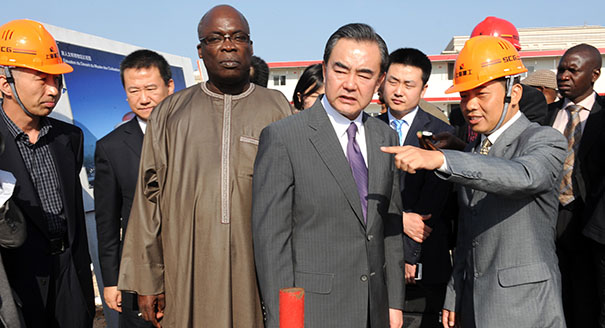
Depending on who you speak with, China’s engagement in Africa is often described in extreme terms as either the best thing to happen to the continent in the post-colonial era or just the latest foreign predator coming to pillage Africa of its resources. With China’s presence in Africa now stretching across nearly all 54 countries where an estimated one million Chinese immigrants now live and hundreds of billions of dollars in annual trade/investment, the relationship between these two regions is extremely complicated.

Beijing’s commitment to African infrastructure development is a central part of the government’s “win-win development” agenda, also a key message in its propaganda campaign that emphasizes China’s “peaceful rise” to superpower status.

So is China’s a partner or predator? The short answer, according to numerous leading Sino-African scholars, is that this vast complex relationship is not binary and cannot be reduced to either “good” or “bad.” It is the same in Africa as it is for China’s relations with other regions: “Both approaches offer oversimplified understandings of the complex interaction among the economic, geopolitical, and security dimensions of China’s relations with the rest of the world,” said Dr. Matt Ferchen from the Beijing-based Carnegie-Tsinghua Center for Global Policy in a new paper on the perception gaps surrounding China’s economic and military rise.

Matt joins Eric and Cobus to explain why he thinks views about the Chinese are so polarized in Africa and elsewhere and what impact the Trump revolution in the United States will have on China’s engagement in Africa.

This podcast was originally published by the China-Africa Project.

Matt Ferchen
Former Nonresident Scholar, Carnegie-Tsinghua Center for Global Policy
Matt Ferchen
EconomyNorth AfricaSouthern, Eastern, and Western AfricaEast AsiaChina

Carnegie does not take institutional positions on public policy issues; the views represented herein are those of the author(s) and do not necessarily reflect the views of Carnegie, its staff, or its trustees.

More Work from Carnegie Russia Eurasia Center

  • Commentary
    Carnegie Politika
    Including Russia on the EU Financial Blacklist Will Hurt Ordinary People, Not the Kremlin

    The paradox of the European Commission’s decision is that the main victims will not be those it formally targets. Major Russian businesses associated with the Putin regime have long adapted to sanctions with the help of complex schemes involving third countries, offshore companies, and nonpublic entities.

      Alexandra Prokopenko
  • Commentary
    Carnegie Politika
    Why Didn’t the Ukraine War Turn Russia’s Ruling Class Against Putin?

    A new book by Alexandra Prokopenko looks at why the Russian ruling class became the regime’s willing servants—and how they might fare in a post-Putin world.

      Vladislav Gorin

  • Commentary
    Carnegie Politika
    Collateral Damage: The Frozen Foreign Assets of Middle-Class Russians

    The volume of frozen private assets might seem insignificant compared with Russia’s sovereign reserves, but these are the savings of millions of people who believed that foreign securities were a safe investment and in the institution of private property.

      Yulia Starostina

  • Commentary
    Carnegie Politika
    The Kremlin Has Weaponized Western Financial Checks to Punish Russian Dissidents

    International compliance and anti-money laundering standards are currently formulated in such a way that the Western financial system does not differentiate between Russian political prisoners and ISIS militants.

      Alexandra Prokopenko

  • Commentary
    Carnegie Politika
    Russia’s Oligarchs Must Walk a Wartime Tightrope to Keep Their Fortunes

    Caught between problems at home and in the West, Forbes list Russians are resorting to a variety of survival strategies. The end result will be the disappearance of oligarchs from Russia once and for all.

      Arnold Khachaturov

Get more news and analysis from
Carnegie Russia Eurasia Center
Carnegie Russia Eurasia logo, white
  • Research
  • Politika
  • About
  • Experts
  • Events
  • Contact
  • Privacy
Get more news and analysis from
Carnegie Russia Eurasia Center
© 2026 Carnegie Endowment for International Peace. All rights reserved.