

Commentary
Nikita Smagin
{
  "authors": [
    "Nikita Smagin"
  ],
  "type": "commentary",
  "blog": "Carnegie Politika",
  "centerAffiliationAll": "dc",
  "centers": [
    "Carnegie Endowment for International Peace",
    "Carnegie Russia Eurasia Center"
  ],
  "collections": [],
  "englishNewsletterAll": "ctw",
  "nonEnglishNewsletterAll": "",
  "primaryCenter": "Carnegie Russia Eurasia Center",
  "programAffiliation": "russia",
  "programs": [
    "Russia and Eurasia"
  ],
  "projects": [],
  "regions": [
    "Middle East",
    "Iran",
    "Russia",
    "Caucasus"
  ],
  "topics": [
    "Foreign Policy",
    "Economy"
  ]
}
Source: Getty
It might seem that for Iran, the West’s attempt to isolate Russia is a good opportunity to fill the resulting market gaps. In practice, however, it only creates new problems.
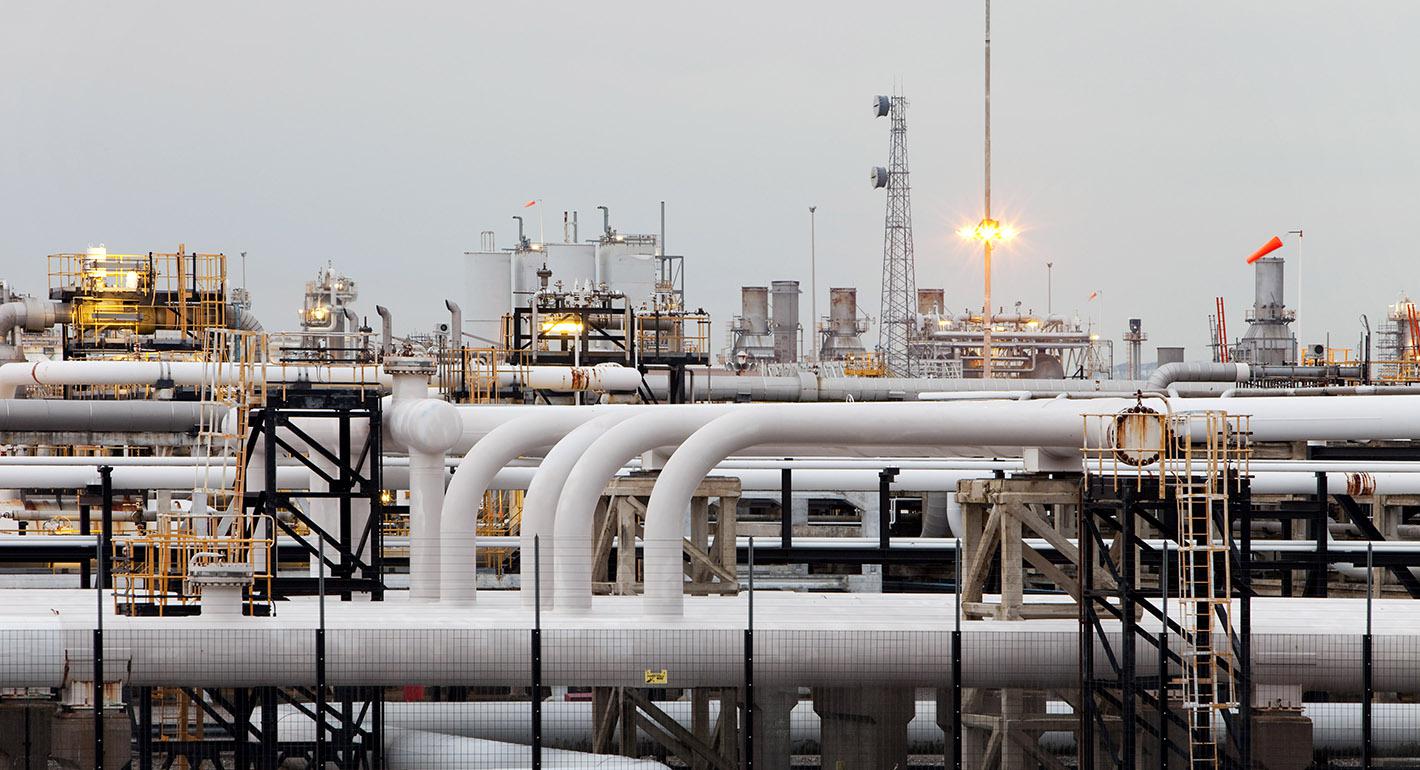
As 2022 draws to a close, both Russia and Iran find themselves in a bitter confrontation with the West, and subject to more and more Western sanctions. It’s not surprising, therefore, that an active rapprochement between Moscow and Tehran is under way: not just in the military sphere, but in the energy sector, too. The two countries have signed a memorandum for $40 billion of Russian investment in Iranian gas projects and have already embarked on its implementation.
Given that Russia and Iran hold the world’s first and second biggest gas resources, respectively, many believe this cooperation threatens to give rise to a “global gas cartel.” In reality, the implementation of these ambitious plans may be thwarted by sanctions and other obstacles.
Just a few months ago, Russia and Iran might have been viewed as rivals rather than collaborators. Almost as soon as Russian gas exports to Europe ran into problems over Russia’s invasion of Ukraine, the Iranian authorities said they were considering the possibility of stepping in to make up for the resulting deficit on the European market.
In practice, however, deliveries of gas from Iran to the EU are out of the question for the foreseeable future. Europe and the United States have spent the last three decades systematically isolating Tehran from any major international energy projects, preferring its seemingly more reliable competitors such as Russia and Qatar to the fiercely anti-Western Islamic republic.
U.S. sanctions preventing the export of LNG technology to Iran and the construction of gas pipelines to Europe were the final nail in the coffin for any chance of Iranian gas supplies reaching the West. As a result, Tehran focused on its own gas requirements, and on inconsequential regional exports, primarily to Turkey and Iraq.
The chances of sanctions being lifted any time are slim, since they are linked to Iran’s nuclear program, and talks over renewing the nuclear deal have hit a dead end. Even if sanctions were to be lifted, it would take Iran years to build LNG terminals, not to mention pipelines.
Technically, the sanctions could be circumvented by exporting gas to Oman, which has spare LNG capacity. European importers could then sign an agreement with Oman, but would in fact be importing Iranian gas. Still, that scheme would require about 400 kilometers of pipelines, which would take at least two years to build.
In these circumstances, Russia looks like a promising partner for the Iranian gas industry. Moscow has expressed interest in the past, and Gazprom opened an office in Tehran, but it was purely symbolic: the Russian gas giant did not want to risk its Western projects for the sake of developing relations with sanctioned Iran.
Now that horse has bolted, and Russia no longer needs to fear Western sanctions. In July, the National Iranian Oil Company and Gazprom signed the $40 billion memorandum, and in November, Iranian deputy foreign minister Mehdi Safari said that $6.5 billion of that sum had already been signed into contracts.
Gazprom announced record profits this year thanks to soaring gas prices, but that may well be temporary, given that gas exports to the enormous European market have plummeted, while the tax burden on the company has grown due to the difficulties experienced by the Russian budget.
In any case, industry analysts have cast doubt on the feasibility of two major Iranian deposits that Russia is due to help develop—South Pars and Kish—due to the type of tubing required: a grade that is not made in either country, and cannot be imported from Europe or Japan due to sanctions.
Iran also plans to build its own LNG terminals with Russia’s help, but that won’t be easy either. Neither Russia nor Iran has yet built a fully functioning LNG terminal of their own, and given their technological isolation, they will struggle to do so.
It might seem that for Iran, the West’s attempt to isolate Russia is a good opportunity to fill the resulting market gaps. In practice, however, it only creates new problems. It’s hard for Tehran to compete with Moscow on price, since as deliveries of Russian gas to the EU peter out, Russian producers are prepared to offer major discounts.
With gas pipelines in place to Turkey from both Iran and Russia, competition will also heat up for the Turkish market. As early as in May, the head of the Iranian Oil, Gas, and Petrochemical Products Exporters’ Union, Seyed Hamid Hosseini, complained that Russian dumping had caused gas prices to fall across the entire region. Even remote markets like Afghanistan are asking Tehran for significant discounts.
The Iranian gas industry was already facing immense problems. Iran has the world’s second largest gas reserves, behind only Russia. Yet in 2021, Tehran only exported 17 billion cubic meters of gas, compared with Moscow’s 241 billion cubic meters.
The Iranian gas industry is loss-making due to inefficient management, a lack of technology, staffing problems, and subsidized prices for Iranians. Income from domestic gas sales does not even cover the cost of building gas distribution networks.
It’s not really in Russia’s interests for Iran to extract itself from its quagmire of gas problems. But at the same time, it’s clear that foreign investment could transform the Iranian gas industry in just a few short years. And so as long as Europe cannot invest in Iran because of sanctions, Moscow will try to take advantage of that and obtain some levers of influence over the Iranian gas sector—not just in terms of gas production, but also in the creation of new routes for its export.
In the grand scheme of Russia’s gas industry as a whole, however, the potential for lucrative cooperation with Iran is doubtful. The announced investment sum of $40 billion is mind-boggling, and at odds with the dire state of both countries’ economies, especially given the lack of guarantees that many of the projects will prove profitable.
Taking into account the historical lack of trust in Russia among the Iranian political elite, this alliance is unlikely to last if relations between Iran and the West start to thaw. In any case, it’s hard to imagine that Tehran will be prepared to resign itself to the role of junior partner for very long. What’s more likely is that current circumstances are forcing the Iranian leadership to seize any opportunity to enter the global market without much thought for potential difficulties further down the line.
The Russian government is counting on cooperation with the world’s other biggest gas reserves holder to give Moscow another way of putting pressure on the world energy market. But given that the world’s main importer of gas, the EU, is still actively introducing new sanctions against both countries, the chances of this potential cartel succeeding look slim.

Expert on Iranian foreign and domestic policies, Islamism, and Russia's policy in the Middle East
Recent Work
Nikita Smagin
Nikita Smagin
Carnegie does not take institutional positions on public policy issues; the views represented herein are those of the author(s) and do not necessarily reflect the views of Carnegie, its staff, or its trustees.

Despite a new textbook, an influx of Russian teachers and managers, and an end to the teaching of Ukrainian, the Kremlin is unlikely to have “reprogrammed” locals.

Konstantin Skorkin

For every ruble allocated to social policy, health, and education in 2027, double that amount is earmarked for the army, the police, and the security services.

Alexandra Prokopenko

Cargo traffic through Russia’s Northern Sea Route has increased because of the disruption caused by the conflict in the Middle East, the Ukraine war, and U.S.-China tensions.

Mikhail Korostikov
An analysis of traffic accident data suggests that Ukrainian drone attacks caused a material but not disastrous fall in Russian gasoline consumption over the summer.

Sergey Vakulenko

Sergei Kiriyenko used Russia’s parliamentary vote to further hone his strategy of corporate mobilization that is designed to maximize votes for United Russia.

Andrey Pertsev