

{
  "authors": [
    "Karim Sadjadpour",
    "Nazila Fathi",
    "Ali Ansari"
  ],
  "type": "event",
  "centerAffiliationAll": "dc",
  "centers": [
    "Carnegie Endowment for International Peace"
  ],
  "collections": [
    "Iranian Proliferation"
  ],
  "englishNewsletterAll": "menaTransitions",
  "nonEnglishNewsletterAll": "",
  "primaryCenter": "Carnegie Endowment for International Peace",
  "programAffiliation": "MEP",
  "programs": [
    "Middle East"
  ],
  "projects": [],
  "regions": [
    "Middle East",
    "Iran"
  ],
  "topics": [
    "Political Reform",
    "Nuclear Policy"
  ]
}
Iran: Lessons from History
Tue, April 28th, 2015
Washington, DC
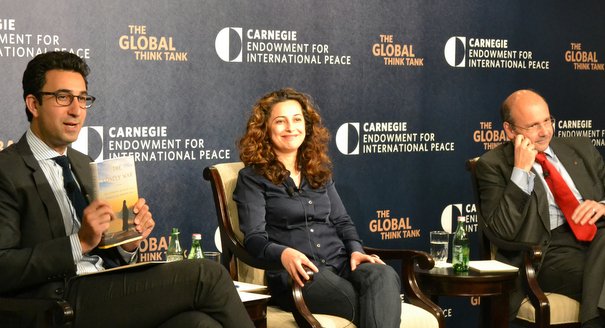
Since Iran’s 1979 revolution the Islamic Republic has at various points appeared to be on the cusp of transformation, only to see positive change stymied. Could a potential nuclear deal strengthen the country’s civil society and private sector and bring about meaningful political reform? Ali Ansari and Nazila Fathi discussed lessons from Iran’s history to try to better ascertain its future. Carnegie’s Karim Sadjadpour moderated.
Ali Ansari
Ali Ansari is one of the foremost historians of Iran. He is currently professor and director of the Institute of Iranian Studies at the University of St. Andrews.
Nazila Fathi
Nazila Fathi is the former New York Times correspondent in Tehran and author of The Lonely War.
Karim Sadjadpour
Karim Sadjadpour is a senior associate at the Carnegie Endowment for International Peace.
Carnegie does not take institutional positions on public policy issues; the views represented herein are those of the author(s) and do not necessarily reflect the views of Carnegie, its staff, or its trustees.
Event Speakers
Senior Fellow, Middle East Program

Karim Sadjadpour is a senior fellow at the Carnegie Endowment for International Peace, where he focuses on Iran and U.S. foreign policy toward the Middle East.
Nazila Fathi
Ali Ansari