

Commentary
European Commission President Ursula von der Leyen is about to give her annual address on the state of the EU. Here’s what she won’t—but should—say.
Rym Momtaz
{
  "authors": [
    "George Perkovich",
    "Patricia Lewis"
  ],
  "type": "legacyinthemedia",
  "centerAffiliationAll": "dc",
  "centers": [
    "Carnegie Endowment for International Peace"
  ],
  "collections": [
    "U.S. Nuclear Policy"
  ],
  "englishNewsletterAll": "ctw",
  "nonEnglishNewsletterAll": "",
  "primaryCenter": "Carnegie Endowment for International Peace",
  "programAffiliation": "NPP",
  "programs": [
    "Nuclear Policy"
  ],
  "projects": [],
  "regions": [
    "North America",
    "United States",
    "East Asia",
    "China",
    "Caucasus",
    "Russia"
  ],
  "topics": [
    "Nuclear Policy"
  ]
}
Source: Getty
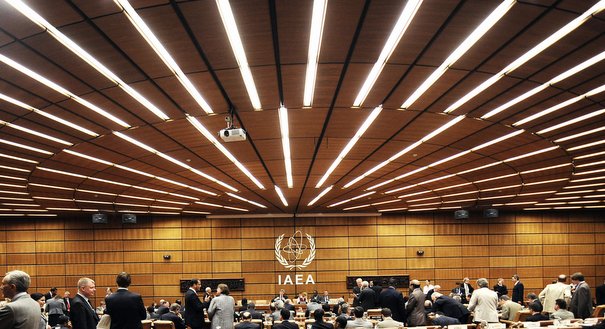
In this paper commissioned by the International Commission on Nuclear Nonproliferation and Disarmament, George Perkovich and Patricia Lewis identify possible nuclear disarmament and nonproliferation steps that could take the world in the mid-term to a position from which the latter steps toward abolition of nuclear weapons could be charted.
Source: ICNND Research Paper

It is also a realistic approach for nuclear disarmament in that a nuclear-weapon-free world would have another set of dangers than the one we now inhabit. In eliminating nuclear weapons, and therefore reducing the likelihood of a nuclear war, we also, at the same time, wish also to reduce the likelihood of war per se. A more stable world, in which conflict resolution mechanisms can be made to work, in which the threat level against states and peoples is reduced, is going to pave the way for nuclear disarmament and war prevention. Power imbalances will have to be addressed as will other types of security assurances—ones that may indeed provide far greater reassurance than the nuclear umbrella—in which faith has been diminishing significantly since the end of the cold war.

Japan Chair for a World Without Nuclear Weapons, Senior Fellow
George Perkovich is the Japan Chair for a World Without Nuclear Weapons and a senior fellow in the Carnegie Endowment for International Peace’s Nuclear Policy Program. He works primarily on nuclear deterrence, nonproliferation, and disarmament issues.
Patricia Lewis
Carnegie does not take institutional positions on public policy issues; the views represented herein are those of the author(s) and do not necessarily reflect the views of Carnegie, its staff, or its trustees.

European Commission President Ursula von der Leyen is about to give her annual address on the state of the EU. Here’s what she won’t—but should—say.

Rym Momtaz

Radical-right parties are expected to do well in upcoming elections in four of the EU's biggest member states. If successful, they could prevent the union from addressing key challenges ahead.

Stefan Lehne

Canadian Prime Minister Mark Carney has twice inspired praise for standing up to U.S. President Donald Trump: at the 2026 World Economic Forum in Davos and on Canada-U.S. trade negotiations. Is Carney showing a third way better than the EU has in dealing with the Trump administration?
Rym Momtaz, ed.

The EU’s responses to two recent incidents expose the gulf between European perceptions and capabilities. Unless the union can bridge that gap, it will never become a real geostrategic power.
Rym Momtaz

European states control several Overseas Countries and Territories around the world that carry strategic, economic, and environmental weight. As great powers challenge the rules-based order, defending them is a geopolitical imperative for Europe.

Marc Pierini