

Commentary
European Commission President Ursula von der Leyen is about to give her annual address on the state of the EU. Here’s what she won’t—but should—say.
Rym Momtaz
{
  "authors": [
    "Godfried van Benthem van den Bergh"
  ],
  "type": "other",
  "centerAffiliationAll": "dc",
  "centers": [
    "Carnegie Endowment for International Peace"
  ],
  "collections": [
    "U.S. Nuclear Policy"
  ],
  "englishNewsletterAll": "ctw",
  "nonEnglishNewsletterAll": "",
  "primaryCenter": "Carnegie Endowment for International Peace",
  "programAffiliation": "NPP",
  "programs": [
    "Nuclear Policy"
  ],
  "projects": [],
  "regions": [
    "North America",
    "United States",
    "East Asia",
    "China",
    "Caucasus",
    "Russia"
  ],
  "topics": [
    "Nuclear Policy"
  ]
}
Source: Getty
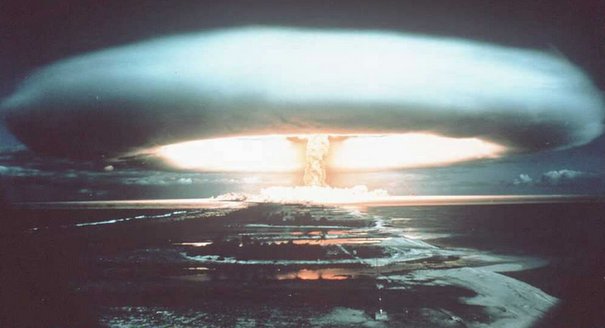
Nuclear weapons have unintended beneficial consequences, argues Godfried van Benthem van den Bergh. They can make the intended development of a more peaceful global and political order possible. The Carnegie Nonproliferation Program presents this paper in hopes of furthering international dialogue and debate on the nuclear order, including the abolition of nuclear weapons.
In this Policy Outlook Godfried van Benthem van den Bergh, an eminent Dutch scholar, argues that nuclear weapons have unintended beneficial consequences. They can make the intended development of a more peaceful global and political order possible. The Carnegie Nonproliferation Program presents this paper in hopes of furthering international dialogue and debate on the nuclear order, including the abolition of nuclear weapons.
Summary
About the Author
Godfried van Benthem van den Bergh was professor of international relations at Erasmus University, Rotterdam, and the Institute of Social Studies, The Hague. He has been a Harkness Fellow at Harvard University and the University of California at Berkeley; chairman of the Board of the Netherlands Association for International Affairs; and member of the Advisory Council for International Affairs of the Dutch Ministries of Foreign Affairs and Defense. Among his publications are The Nuclear Revolution and the End of the Cold War: Forced Restraint (Basingstoke and London, 1992) and Naar een Nucleaire Wereldorde (Amsterdam, 2008).
Godfried van Benthem van den Bergh
Carnegie does not take institutional positions on public policy issues; the views represented herein are those of the author(s) and do not necessarily reflect the views of Carnegie, its staff, or its trustees.

European Commission President Ursula von der Leyen is about to give her annual address on the state of the EU. Here’s what she won’t—but should—say.

Rym Momtaz

Radical-right parties are expected to do well in upcoming elections in four of the EU's biggest member states. If successful, they could prevent the union from addressing key challenges ahead.

Stefan Lehne

Canadian Prime Minister Mark Carney has twice inspired praise for standing up to U.S. President Donald Trump: at the 2026 World Economic Forum in Davos and on Canada-U.S. trade negotiations. Is Carney showing a third way better than the EU has in dealing with the Trump administration?
Rym Momtaz, ed.

The EU’s responses to two recent incidents expose the gulf between European perceptions and capabilities. Unless the union can bridge that gap, it will never become a real geostrategic power.
Rym Momtaz

European states control several Overseas Countries and Territories around the world that carry strategic, economic, and environmental weight. As great powers challenge the rules-based order, defending them is a geopolitical imperative for Europe.

Marc Pierini