

In The Media
David Rothkopf
{
  "authors": [
    "David Rothkopf"
  ],
  "type": "legacyinthemedia",
  "centerAffiliationAll": "",
  "centers": [
    "Carnegie Endowment for International Peace",
    "Carnegie Europe"
  ],
  "collections": [],
  "englishNewsletterAll": "",
  "nonEnglishNewsletterAll": "",
  "primaryCenter": "Carnegie Endowment for International Peace",
  "programAffiliation": "",
  "programs": [],
  "projects": [],
  "regions": [
    "North America",
    "United States"
  ],
  "topics": [
    "Economy"
  ]
}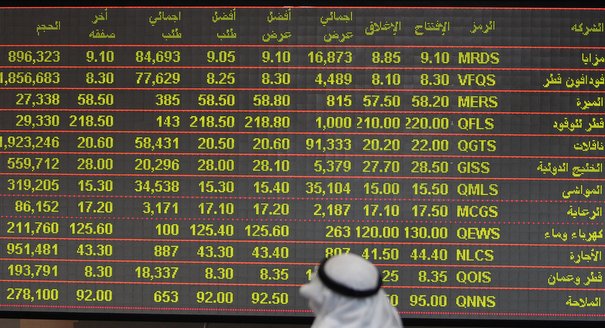
Source: Getty
In the world of modern, interconnected markets, implied liabilities are everywhere that assets or countries or industries are seen as having a shared fate. In order to assess financial risks accurately, implied liabilities must be taken into consideration.
Source: Financial Times

Later, as we grew more sophisticated, we learnt that the balance sheet did not tell all. Thanks to financial “innovators”, a new category of risks was accumulating “off” balance sheet. These risks – such as some of the derivatives deals that banks structured for Greece so it could “borrow” without impacting indicators of fiscal health such as its debt-to-GDP ratios – required analysts to do more detective work and were essentially opaque to average investors.
That made risk assessment and, therefore, risk management much more challenging. And the degree to which Greece’s off-balance sheet predicament – or the similarly hard to track risks borne by financial institutions associated with their derivative exposure – came as a shock to some of the most sophisticated investors and regulators in the world suggests that we still had a long way to go before we could appropriately manage this new reality.
Nonetheless, the problem has become more complicated. Even as markets reeled from the consequences of one set of “innovation”-induced complexities, we have discovered that for countries, at least, there are three balance sheets with which we need to deal in order to assess financial risks accurately. This third might be called the “phantom balance sheet”.
Unlike the official balance sheet and the off-balance sheet-balance sheet, which would count up legally contracted liabilities, the phantom balance sheet carries implied obligations. For example, few investors when weighing the financial obligations of, say, Germany, prior to the Greece crisis would have listed “bailing out Greece” as a national liability for which Berlin was on the hook. But markets concluded otherwise: they would it turned out slam Germany hard – its currency, national debt, economic growth – if it did not step in and provide part of the safety net for Athens. Investors did not think of Greek profligacy as a problem for better managed economies to the north – and investors were wrong.
In the world of modern, interconnected markets, implied liabilities are everywhere that assets or countries or industries are seen as having a shared fate. (We are still in search of offsetting implied assets to offset these new, often huge liabilities.)
AIG and General Motors were not carried on the books as US government liabilities, but if they were too big to fail that meant that the government had an obligation to bail them out. You could argue that this was a political choice, not an obligation. But there are times when the political pressures are so great – when global financial cataclysm is, for example, the perceived alternative – that such a notion is, well, purely notional.
Some might argue this should not be so. But recent experience suggests that is an academic argument. Markets, not theorists or ideologues, will determine where such liabilities lie. For investors, for regulators and for government financial officials, it is time our risk assessment tools corresponded to the real risks that exist.
Further, this latest “balance sheet” invites the creation of an almost endless supply of further risks. If markets continue to believe there are entire classes of assets that governments just will not have the guts to cut loose, this third balance sheet has infinite expansion possibilities. All it will take is for the markets to send a message that a faltering major bank or company or country would produce massive repercussions were there to be to a big sell-off and the governments will be expected to act. This in turn creates huge burdens on the governments that most can ill-afford.
Realistically, the third balance sheet is here to stay. Investors must recognise this and assess the obligations that federal treasuries must bear in a way that takes all three types of obligation into account. But we must also acknowledge the third balance sheet reeks of moral hazards that may outstrip the risks that policymakers are trying to avoid. The only way to contain those risks will be to demonstrate that some that are “too big” will actually be allowed to fail and that we will absorb pain today to avoid worse pain tomorrow.
Otherwise, the third balance sheet will continue to grow until it is the one containing the greatest risks of all.
Originally published in the Financial Times, June 14, 2010
Former Visiting Scholar
David Rothkopf was a visiting scholar at the Carnegie Endowment as well as the former CEO and editor in chief of the FP Group.
Recent Work
David Rothkopf
David Rothkopf
Carnegie does not take institutional positions on public policy issues; the views represented herein are those of the author(s) and do not necessarily reflect the views of Carnegie, its staff, or its trustees.

The EU can impose sanctions but struggles to enforce them without the United States. With Washington increasingly disinterested in backing European interests, the bloc must now fend for itself.


Nicu Popescu, Tiago Antunes

With its public finances in shambles, the far right polling at 35 percent ahead of the 2027 presidential election, and a growing protest movement, is France’s crisis a threat to the EU’s geopolitical awakening?

Rym Momtaz, ed.

Ahead of a tough winter for Ukraine, Donald Trump’s swing back toward Russia bodes ill. But instead of panicking, Kyiv’s European allies are focusing on action.
Rym Momtaz

While the EU and European governments are embracing the much-lauded middle-power moment, this entails three difficult conundrums.

Richard Youngs

Europe is facing rising populism internally as well as external pressures from Russia, China, Turkey, and the United States.

Dimitar Bechev