

Commentary
The EU’s new migration policy is not suited to today’s realities. With climate change increasingly becoming a driver of displacement, Europe needs to rethink its deterrence-focused approach.
Shana Tabak
{
  "authors": [],
  "type": "other",
  "centerAffiliationAll": "",
  "centers": [
    "Carnegie Endowment for International Peace"
  ],
  "collections": [],
  "englishNewsletterAll": "",
  "nonEnglishNewsletterAll": "",
  "primaryCenter": "Carnegie Endowment for International Peace",
  "programAffiliation": "",
  "programs": [],
  "projects": [],
  "regions": [
    "North Africa",
    "Egypt"
  ],
  "topics": []
}
Source: Getty
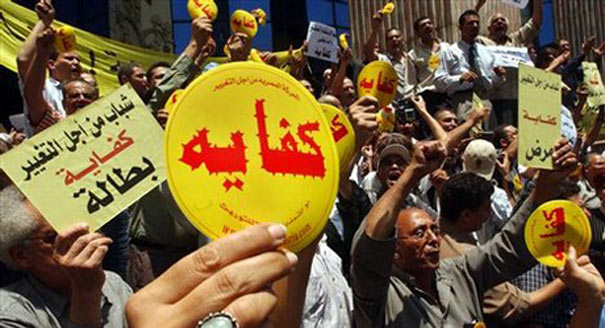
A backgrounder on Kifaya.
This resource was published on 09/22/2010 and is not updated to reflect changing circumstances.
The Egyptian Movement for Change, best known by its slogan “Kifaya” (Enough), played an important role pushing for political reform in Egypt since its founding in 2004 and during the 2005 elections. Its influence decreased significantly thereafter. By the time of the uprising in 2011, the movement had already become obsolete. Although it joined in the protests, it never became an important protagonist. One of the movement’s founders, Abu al-‘Ila Madi, has stated that with the new political realities in Egypt, the movement’s role in the political sphere has ended and the group will not transform itself into a political party.
Kifaya was founded in November 2004 by 300 Egyptian intellectuals from various ideological backgrounds at a meeting in the home of al-Wasat party leader Abu al-‘Ila Madi. The meeting, called to discuss political opportunities in light of the upcoming 2005 parliamentary elections, set up a small committee of seven members, and a conference soon thereafter attended by more than 500 people concluded with the creation of the Kifaya movement. Rather than a political party, Kifaya was a coalition of political forces united only by a shared call for an end to President Hosni Mubarak’s rule.
Using simple but potent slogans, Kifaya called for political reforms and criticized the extension of Mubarak’s presidential term, the possible succession of Gamal Mubarak, government corruption, and Egypt’s emergency law in place since 1981. The movement organized unauthorized demonstrations, directly criticizing Mubarak and other members of the ruling elite. Following an initial protest by approximately 300 political activists outside the High Court in downtown Cairo in December 2004, Kifaya organized protests in many locations, including the Cairo Book Fair, university campuses, and downtown in Tahrir Square. By April 2005 protest spread outside Cairo, with anti-regime demonstrations held simultaneously in fourteen cities.
Kifaya received attention from the international media as a force for change, yet its achievements were few in the Mubarak era. The number of participants tended to be low, although demonstrations were held constantly. The Mubarak regime resorted to violent measures to contain Kifaya, including physical assault, arrests, and detainment without charges or trials, torture, and even sexual harassment and rape of female demonstrators. The regime also utilized the state-controlled media to discredit Kifaya. Another key obstacle to Kifaya’s success was its inability to forge a broad, cross-ideological coalition; the withdrawal of Islamist actors from the coalition significantly weakened its momentum. Finally, Kifaya was viewed as an elitist movement and failed to penetrate grassroots Egyptian society, operating instead in circles of intellectuals and political activists. By 2006, the organization had lost much of its drive.
Although Kifaya did not achieve any of the sweeping political reforms envisioned in its platform, it did establish a new and important precedent by challenging the incumbent regime directly.and by encouraging the formation of other groups, including the March 9 movement for university independence, Workers for Change, Youth for Change, Doctors for Change, Writers and Artists for Change, the Egyptian judges movement. It also was the first political initiative in Egypt to truly explore and capitalize on new social media and digital technology as its main means of communication and mobilization.
Carnegie does not take institutional positions on public policy issues; the views represented herein are those of the author(s) and do not necessarily reflect the views of Carnegie, its staff, or its trustees.

The EU’s new migration policy is not suited to today’s realities. With climate change increasingly becoming a driver of displacement, Europe needs to rethink its deterrence-focused approach.

Shana Tabak
2026 has started in crisis, as the actions of unpredictable leaders shape an increasingly volatile global environment. To shift from crisis response to strategic foresight, what under-the-radar issues should the EU prepare for in the coming year?

Thomas de Waal
Despite the strategic importance of relations between the EU and the African Union, deep divisions remain between the blocs. At their upcoming summit, both partners should strive to build a mutually beneficial cooperation.

Marta Martinelli
The EU’s new Pact for the Mediterranean aims to reshape the bloc’s relations with its Southern neighborhood. But the initiative lacks concrete measures to address societal divides and the region’s pressing challenges.

Richard Youngs
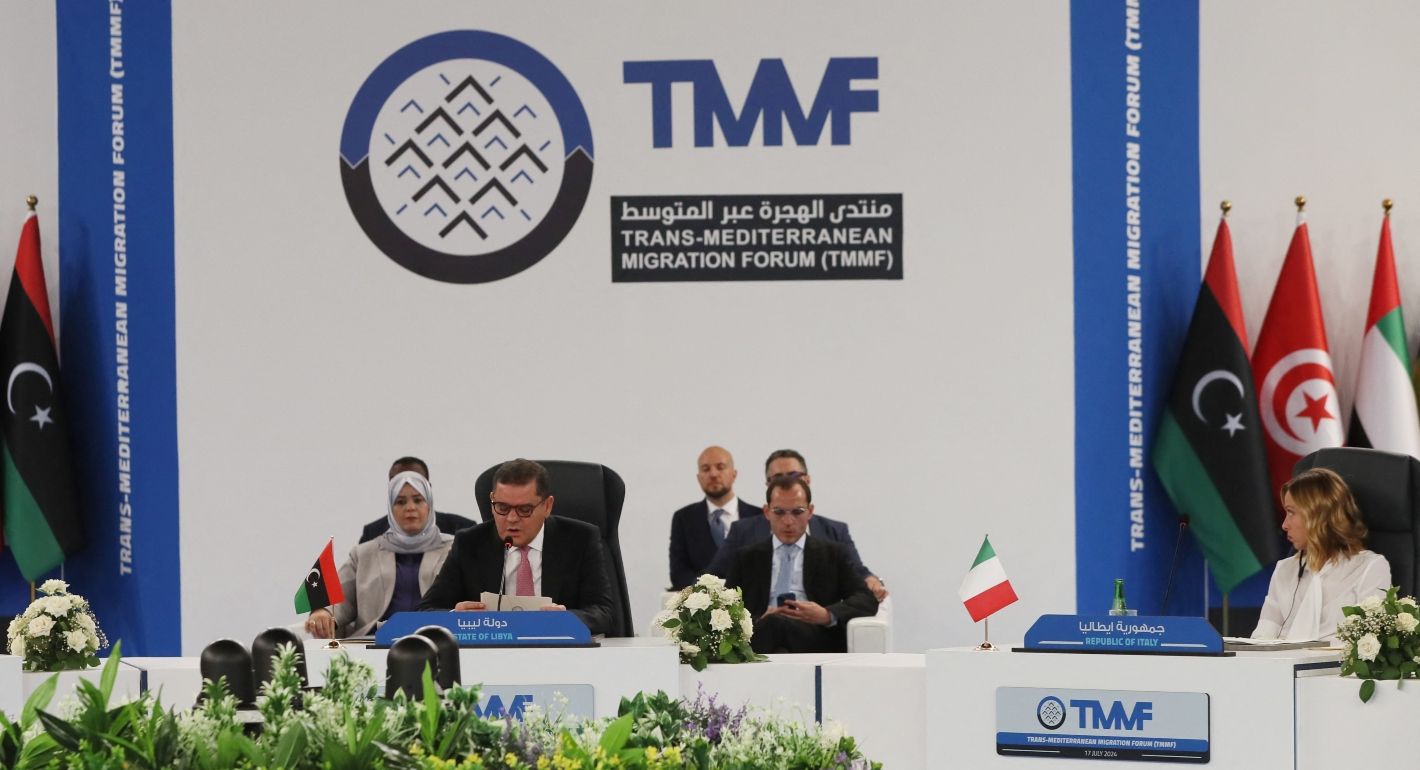
As the EU prepares a new pact for its Southern neighborhood, the union should balance economic and security interests with support for civil society, political reforms, and inclusive governance.
Hussein Baoumi