

Paper
James M. Acton, Ankit Panda
{
  "authors": [
    "James M. Acton"
  ],
  "type": "legacyinthemedia",
  "centerAffiliationAll": "dc",
  "centers": [
    "Carnegie Endowment for International Peace"
  ],
  "collections": [],
  "englishNewsletterAll": "ctw",
  "nonEnglishNewsletterAll": "",
  "primaryCenter": "Carnegie Endowment for International Peace",
  "programAffiliation": "NPP",
  "programs": [
    "Nuclear Policy"
  ],
  "projects": [],
  "regions": [
    "East Asia",
    "Japan"
  ],
  "topics": [
    "Nuclear Policy",
    "Nuclear Energy"
  ]
}
Source: Getty
While substantial core melting in the Japanese nuclear reactors damaged by the earthquake and following tsunami may create the risk of a large release of radiation into the environment, it is also possible that any amounts of radiation released would be relatively small.
Source: NBC
BRIAN WILLIAMS, Anchor: And we have more now on this nuclear risk. And beyond the immediate area in Japan, a lot of Americans are asking a lot of questions. To that end, with us here in our New York studio tonight, physicist James Acton with the Carnegie Endowment.
Thank you very much for being with us. Let's talk about the risks and consequences, because we are starting to throw around terms like meltdown. What does that mean in terms of danger to humans, both in the area and a great distance away?
JAMES ACTON, Carnegie Endowment for International Peace: Well, good evening, Brian. And when Americans have been looking at the wind maps over the Pacific and they see that the wind blows from Japan to the United States, it's understandable that they get worried. But what they have to remember is two things.
Firstly, as the radiation gets taken and blown out, it gets more and more dilute. And secondly, we are also subject to radiation the whole time. It's in the air, it's in the rocks around us. So whereas this is a very serious situation, the White House has announced today that based on its modeling it doesn't believe there's a threat to people in the United States, and I have no reason to doubt that conclusion.
WILLIAMS: And when you hear they're pouring seawater on a core to cool it down, that's obviously the last resort. They've decided this is just going to become a hot tomb. For how long does that just have to stay inert, untouched?
ACTON: Well, a lot is going to depend on the scale of damage in the core. But you see, as soon as the reactors were shut off, they continued to produce heat. And over the last three days, the engineers running the plant have been in a desperate race to cool those reactors down. And the news for reactors one and three looks like they might, and I stress might, be coming through. But reactor two still appears to be in significant trouble.
WILLIAMS: So a worst-case scenario here, if we lose one, two or, God forbid, all three of these, this remains a deeply local crisis; but thankfully, in a hyper-prepared nation where people have gotten away from the immediate area and now must stay away for a long period of time, I'm guessing.
ACTON: I think that's right. I mean, if there is--if there is substantial core melting, then there is the risk of a large release of radiation into the environment. There's no certainty of a large release of radiation. At Three Mile Island there was extensive core melting and relatively small release of radiation into the environment.
But if there is a large release of radiation into the environment, then the Japanese really have done everything they can. Everybody has been evacuated from around the site, so the immediate injuries due to radiation should be relatively low. The real long-term problem, if there is a large release of radiation, is in long-term illnesses, particularly cancers.
WILLIAMS: All right, James Acton with Carnegie, thank you very much for answering our questions tonight.
ACTON: Thank you.

Jessica T. Mathews Chair, Co-director, Nuclear Policy Program
Acton holds the Jessica T. Mathews Chair and is co-director of the Nuclear Policy Program at the Carnegie Endowment for International Peace.
Recent Work

James M. Acton, Ankit Panda
James M. Acton
Carnegie does not take institutional positions on public policy issues; the views represented herein are those of the author(s) and do not necessarily reflect the views of Carnegie, its staff, or its trustees.

When the U.S.-Iran memorandum of understanding was announced, the UK, France, Germany, and Italy declared their readiness to help demine the Strait of Hormuz and lift nuclear sanctions on Tehran. But does Europe need new tools to recover a diplomatic role?

Rym Momtaz, ed.
Amid uncertainty caused by the Iran war, the global drive for nonproliferation has stalled. With Europe diplomatically marginalized and countries reassessing their nuclear options, efforts to curb the spread of nuclear weapons risk becoming irrelevant.

Jane Darby Menton
French President Emmanuel Macron has unveiled his country’s new nuclear doctrine. Are the changes he has made enough to reassure France’s European partners in the current geopolitical context?
Rym Momtaz, ed.
For years, the United States anchored global cyber diplomacy. As Washington rethinks its leadership role, the launch of the UN’s Cyber Global Mechanism may test how allies adjust their engagement.

Patryk Pawlak, Chris Painter
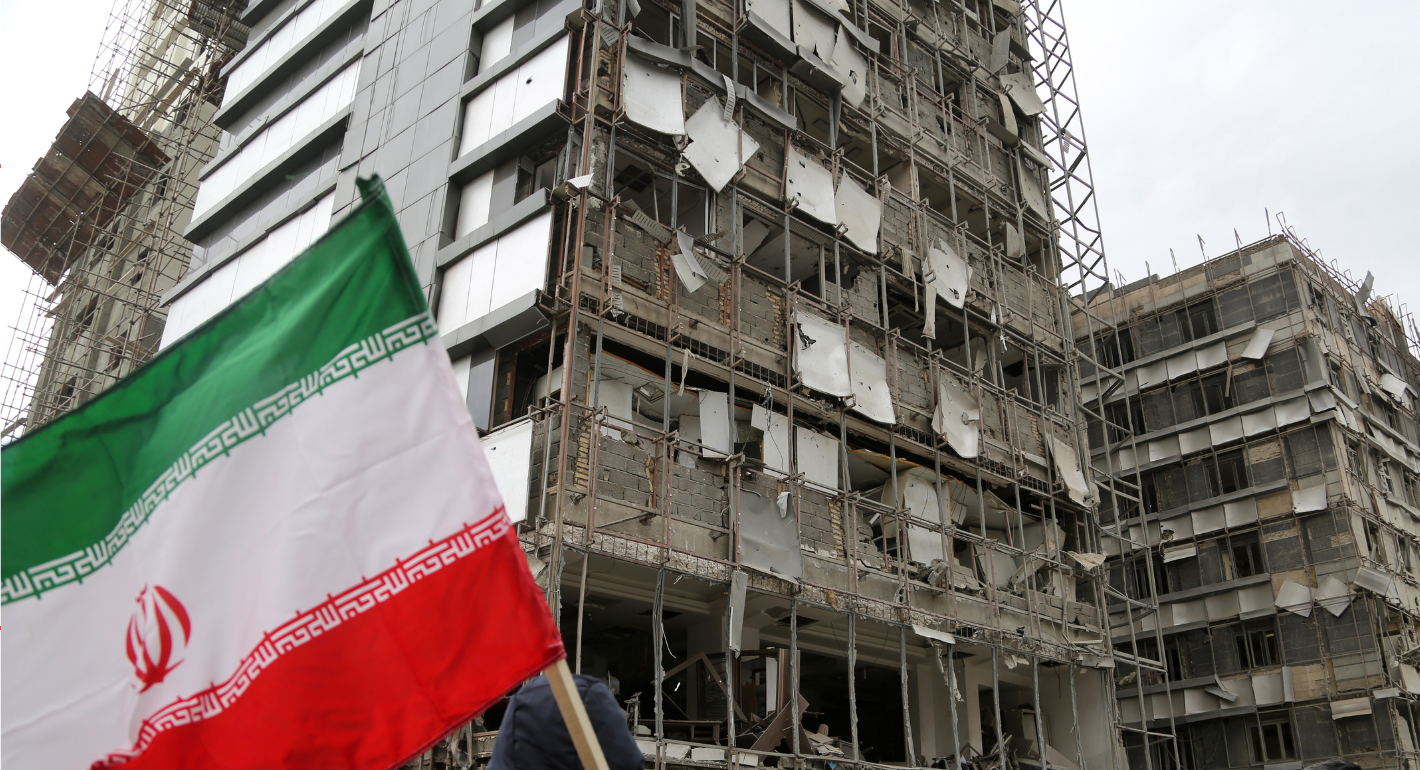
Europe’s reaction to the war in Iran has been disunited and meek, a far cry from its previously leading role in diplomacy with Tehran. To avoid being condemned to the sidelines while escalation continues, Brussels needs to stand up for international law.

Pierre Vimont