

Commentary
Nikolay Petrov
{
  "authors": [
    "Nikolay Petrov"
  ],
  "type": "legacyinthemedia",
  "centerAffiliationAll": "",
  "centers": [
    "Carnegie Endowment for International Peace",
    "Carnegie Russia Eurasia Center"
  ],
  "collections": [],
  "englishNewsletterAll": "",
  "nonEnglishNewsletterAll": "",
  "primaryCenter": "Carnegie Russia Eurasia Center",
  "programAffiliation": "",
  "programs": [],
  "projects": [],
  "regions": [],
  "topics": []
}
Source: Getty
While the proposals put forward by President Dmitry Medvedev in a recent speech were new and original, the speech also reinforced his image as a president who makes bold statements but takes little action.
Source: The Moscow Times

In the speech, Medvedev tried to position himself as a leader, but he spoke more in the future tense than the present. Thus, he reinforced his image as a president who postures a lot but takes little action.
Just to be on the safe side and to not feed the rumor mill of a “schism” in the tandem, Medvedev was shown several days before the forum in a special voiceless photoshoot smiling and riding a bicycle with Prime Minister Vladimir Putin. Needless to say, they didn’t ride tandem.
As is customary among Russian leaders, Medvedev used his speech to make a number of important statements directed primarily at the forum’s foreign guests and less at the Russian audience whom he already addressed during an expanded news conference in May.
With less than one year of his term remaining, the proposals Medvedev put forward in his speech were new and original. Perhaps the most interesting proposal was to expand the Moscow city limits by creating a new Capital Federal District. Medvedev also proposed relocating many of the federal agencies that are located in Moscow to areas outside of the Moscow Ring Road.
This proposal caught the media’s attention and eclipsed other initiatives proposed at the forum that would affect many more Russians. Take, for example, a proposal to rapidly increase excise taxes on tobacco and alcohol. The media are focused on discussing the extremely high costs of creating the Capital Federal District while ignoring the fact that the majority of Russian adults would be paying significantly higher prices for cigarettes, beer and vodka.
The real purpose seems to be not so much to extend Moscow’s boundaries and relocate federal agencies as to reduce the autonomy of the largest and wealthiest region of the country. If this is the case, then the mission of Mayor Sergei Sobyanin is not simply to replace his disgraced predecessor, Yury Luzhkov, but to dismantle the entire political machine that Luzhkov built.
In other words, Medvedev wants to put more power in the hands of the federal government so that no future mayor could ever pose a threat to the Kremlin. In this way, future Moscow mayors will be relegated to the status of functionaries rather than true political heavyweights.
To be sure, the physical relocation of government agencies is a long-term project at best that will extend beyond not just Medvedev’s current term, but even the six-year term of the next president. Just consider how long it has taken Moskva-City — Luzhkov’s pet project to develop a large financial district 4 kilometers west of the Kremlin — to get off the ground and how long it has taken to put up the buildings to house the government of the Moscow region.
By contrast, the creation of the Capital Federal District can be carried out very quickly — at least on paper. As always, projects backed by large business and political groups are always the first to be implemented.
What’s more, the creation of this new district is a way to generate enormous sums of money out of thin air. This is accomplished not only by constructing new expensive federal buildings — from which Putin’s friends in the construction business have much to gain — but also by bestowing federal status on a significant chunk of the country’s most expensive real estate.
It is noteworthy that Medvedev introduced the Capital Federal District proposal at the same time that he promised to decentralize federal powers and reduce the role of government in business. This puts the authorities in a good position to negotiate with the leading political and business clans on the eve of the State Duma and presidential elections.
It could also lead to a shakeup among these clans. Medvedev could come out a big winner from this shakeup if, as result, his latest proposals are brought to fruition.
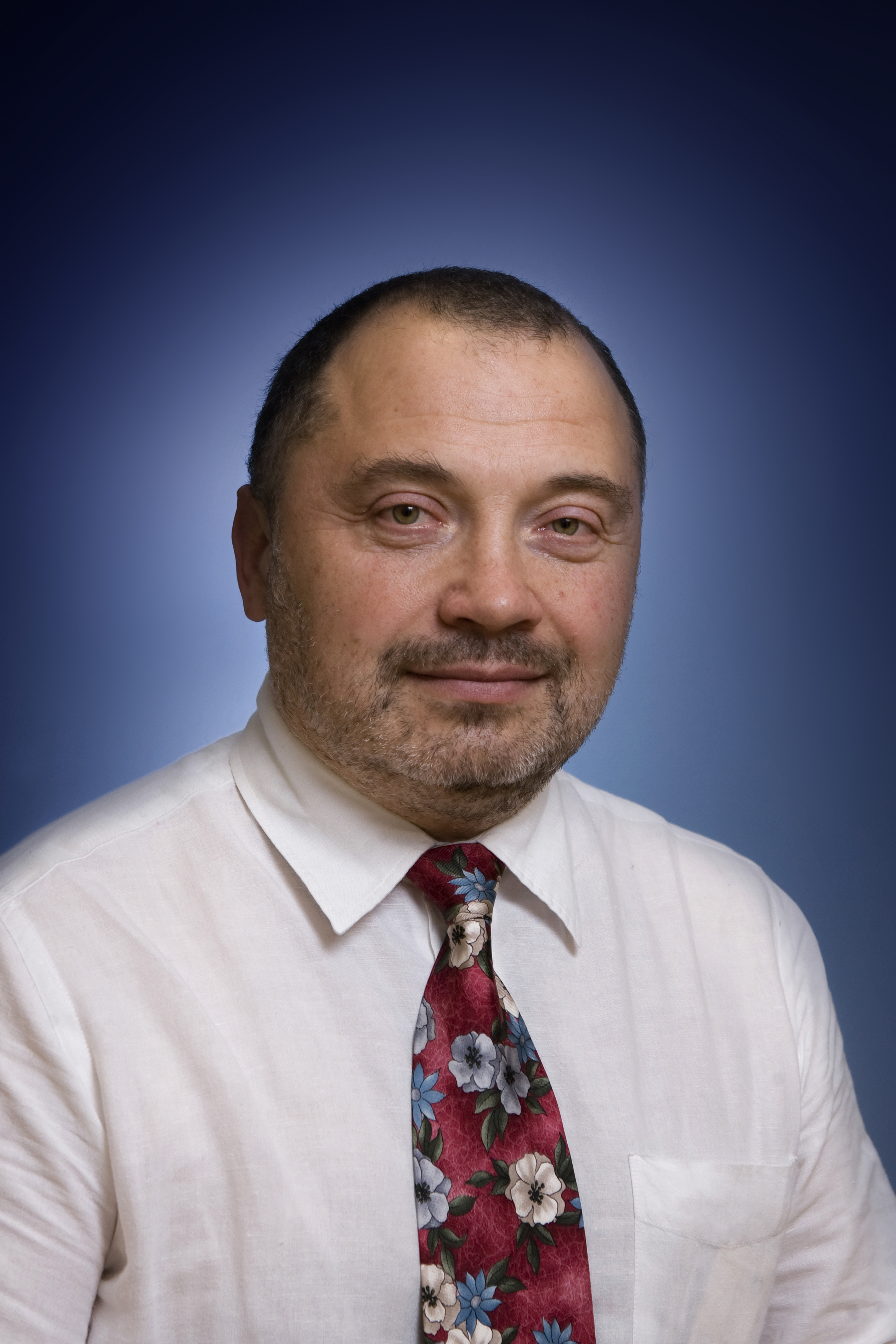
Former Scholar-in-Residence, Society and Regions Program, Moscow Center
Nikolay Petrov was the chair of the Carnegie Moscow Center’s Society and Regions Program. Until 2006, he also worked at the Institute of Geography at the Russian Academy of Sciences, where he started to work in 1982.
Recent Work
Nikolay Petrov
Nikolay Petrov
Carnegie does not take institutional positions on public policy issues; the views represented herein are those of the author(s) and do not necessarily reflect the views of Carnegie, its staff, or its trustees.