• Research
  • Strategic Europe
  • About
  • Experts
Carnegie Europe logoCarnegie lettermark logo
EUUkraine
  • Donate
{
  "authors": [
    "Lilia Shevtsova",
    "David J. Kramer"
  ],
  "type": "legacyinthemedia",
  "centerAffiliationAll": "",
  "centers": [
    "Carnegie Endowment for International Peace",
    "Carnegie Russia Eurasia Center"
  ],
  "collections": [],
  "englishNewsletterAll": "",
  "nonEnglishNewsletterAll": "",
  "primaryCenter": "Carnegie Russia Eurasia Center",
  "programAffiliation": "",
  "programs": [],
  "projects": [],
  "regions": [],
  "topics": []
}
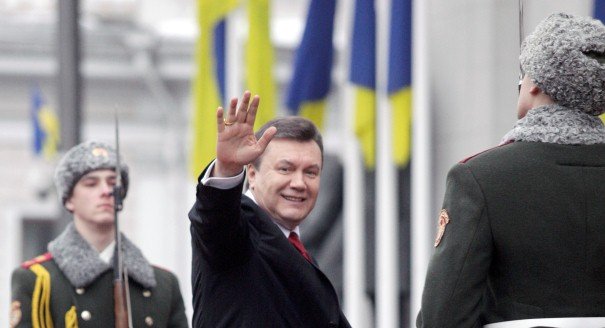
Source: Getty

In The Media
Carnegie Russia Eurasia Center

Ukraine, Russia, and Two Horses

Ukraine is the most important test of the Kremlin’s neo-imperialistic longings and also a test of the West’s interest in expanding its normative principles eastward—however, Ukraine itself should demonstrate a desire for deeper integration based on a democratic path.

Link Copied
By Lilia Shevtsova and David J. Kramer
Published on Aug 21, 2012

Source: American Interest

Nearly twenty years ago, Zbigniew Brzezinski famously said, “Russia can be either an empire or a democracy, but it cannot be both. . . . Without Ukraine, Russia ceases to be an empire, but with Ukraine suborned and then subordinated, Russia automatically becomes an empire.” Uninterested in becoming a democracy, today’s Kremlin has not given up the hope of regaining a facsimile of its old empire, with Ukraine at its core. To be sure, the Kremlin today is pragmatic enough to understand that it can’t revive the corpse of the USSR (though Georgians may beg to differ), but it would like to create the Eurasian Union—a new version of “satellites along its periphery.”

Russia’s leaders sure have a strange way of pursuing this agenda, as illustrated by the most recent meeting in July between the leaders of Russia and Ukraine. Vladimir Putin kept his host, Viktor Yanukovych, waiting three hours—not due to any dramatic circumstances but out of sheer rudeness. Putin left Moscow late, but then, to add insult to injury, after arriving in Crimea he stopped first to meet with a bunch of bikers. Only after that did he make time for an official visit. Such appalling lack of diplomatic etiquette was a direct slap in Yanukovych’s face, an intentional gesture of both impudence and intimidation (albeit one Putin has made to other foreign leaders and CEOs). Big Russia was teaching Yanukovich and Ukraine a lesson—or so the Russian leaders thought!

This incident demonstrated not only the personal animosity between the two leaders but also the mutual suspicion and distrust that plagues the relationship between the two states. Russia’s leaders never hesitate to remind Ukraine who the big boy on the block is—a strange way, to say the least, to win over friends and allies. Indeed, one should not underestimate Moscow’s ability to alienate potential partners through its arrogant, aggressive approach to foreign policy, especially when its immediate neighbors are involved.

Of all the states in Eurasia, Ukraine is the most important test of the Kremlin’s neo-imperialistic longings and of Russia’s readiness (or not) to be a modern state. It is also is a test of the West’s interest in expanding its normative principles eastward, which can best be advanced if Ukraine itself demonstrates a desire for deeper integration based on a democratic path. ...

Read the full text of this article in American Interest.

About the Authors

Lilia Shevtsova

Former Senior Associate, Russian Domestic Politics and Political Institutions Program, Moscow Center

Shevtsova chaired the Russian Domestic Politics and Political Institutions Program at the Carnegie Moscow Center, dividing her time between Carnegie’s offices in Washington, DC, and Moscow. She had been with Carnegie since 1995.

David J. Kramer

David J. Kramer served as assistant aecretary of state for democracy, human rights and labor in the George W. Bush administration and is director of European & Eurasian Studies at Florida International University’s Steven J. Green School of International and Public Affairs.

Authors

Lilia Shevtsova
Former Senior Associate, Russian Domestic Politics and Political Institutions Program, Moscow Center
Lilia Shevtsova
David J. Kramer

David J. Kramer served as assistant aecretary of state for democracy, human rights and labor in the George W. Bush administration and is director of European & Eurasian Studies at Florida International University’s Steven J. Green School of International and Public Affairs.

Carnegie does not take institutional positions on public policy issues; the views represented herein are those of the author(s) and do not necessarily reflect the views of Carnegie, its staff, or its trustees.

More Work from Carnegie Europe

Get more news and analysis from
Carnegie Europe
Carnegie Europe logo, white
Rue du Congrès, 151000 Brussels, Belgium
  • Research
  • Strategic Europe
  • About
  • Experts
  • Projects
  • Events
  • Contact
  • Careers
  • Privacy
  • For Media
  • Gender Equality Plan
Get more news and analysis from
Carnegie Europe
© 2026 Carnegie Endowment for International Peace. All rights reserved.