

In The Media
Petr Topychkanov
{
  "authors": [
    "Petr Topychkanov"
  ],
  "type": "commentary",
  "centerAffiliationAll": "",
  "centers": [
    "Carnegie Endowment for International Peace",
    "Carnegie Russia Eurasia Center"
  ],
  "collections": [],
  "englishNewsletterAll": "",
  "nonEnglishNewsletterAll": "",
  "primaryCenter": "Carnegie Russia Eurasia Center",
  "programAffiliation": "",
  "programs": [],
  "projects": [],
  "regions": [],
  "topics": []
}
Source: Getty
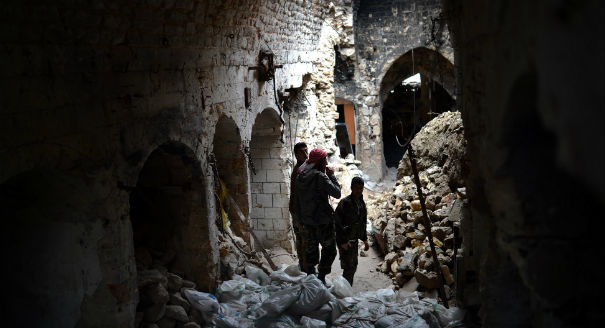
Delivering arms to the conflicting sides, carrying out a unilateral, irresponsible strike, or blocking the work of the UNSC can only multiply the violence in Syria.
The G20 summit was not the perfect place to resolve the Syrian crisis. But it could be useful to develop mutual understanding on an international response to this crisis. The summit could have well served that purpose if world leaders had worked through all possible means to stop the bloodshed. Putin’s decision to host a dinner in the Peterhof Palace on Friday could be seen as an attempt to use the opportunities of G20 toward this end.
Yet that dinner only demonstrated the absence of a common language in the debate on Syria. Some leaders emphasized the horrors of chemical weapon use; others warned of the consequences of military intervention and regime change. As a result, instead of initiating joint action, the key players found themselves stuck in war of words.
The question is, if the key players are unable to urgently find an appropriate solution to the Syrian crisis on the bilateral or multilateral levels, how the international community can deal with this crisis?
Among existing possibilities, the first policy to consider would be that of “laisser faire.” However, inactivity is no longer an option after years of mass killings of civilians. It does not matter by whom and how these people were killed. The fact is that all sides in this conflict are responsible for the deaths of innocent Syrians. The use of chemical weapons has simply brought the crisis to a new level. Yet those previous levels of violence in Syria should not have been tolerated either.
A second approach would be a unilateral response. While in the past some countries have demonstrated a preference for unilateralism, whether in former Yugoslavia, Iraq, or Libya, this is no longer the case. The primary reason for this are the limits of U.S. power, which has been the engine of unilateral action in the post-Cold War era. The second reason is the lack of accountability of an external power in such a crisis. Wikileaks and independent investigations have brought to the world’s attention many instances of human rights violations undertaken in the war against terrorism. Terrorism is an unequivocal evil worth fighting, but irresponsible measures taken against it may simply multiply the harm done. The use of drones in Pakistan is an illustrative example.
The third course of action would be a collective response. The UN Security Council (UNSC) would be the right forum to initiate such a response. However, its inability to promptly react raises serious doubts about its usefulness here. This old organization, with an over-half-a-century structure and processes, has all the necessary means at its disposal, including the authority to start a military intervention against a violator of the international law. Yet given the sheer scale and complexity of violations in Syria, the question is how many days the UNSC will need to take a common decision? The answer depends on the ability of key players to forgo their own political ambitions and stop this war of words. It is clear that delivering arms to the conflicting sides, carrying out a unilateral, irresponsible strike, or blocking the work of the UNSC can only multiply the violence in Syria.
Former Fellow, Nonproliferation Program, Moscow Center
Topychkanov was a fellow in the Carnegie Moscow Center’s Nonproliferation Program.
Recent Work
Petr Topychkanov
Petr Topychkanov
Carnegie does not take institutional positions on public policy issues; the views represented herein are those of the author(s) and do not necessarily reflect the views of Carnegie, its staff, or its trustees.