

Commentary
Evan A. Feigenbaum
{
  "authors": [
    "Evan A. Feigenbaum"
  ],
  "type": "legacyinthemedia",
  "centerAffiliationAll": "dc",
  "centers": [
    "Carnegie Endowment for International Peace"
  ],
  "collections": [],
  "englishNewsletterAll": "asia",
  "nonEnglishNewsletterAll": "",
  "primaryCenter": "Carnegie Endowment for International Peace",
  "programAffiliation": "AP",
  "programs": [
    "Asia"
  ],
  "projects": [],
  "regions": [
    "East Asia",
    "China"
  ],
  "topics": [
    "Economy"
  ]
}
Source: Getty
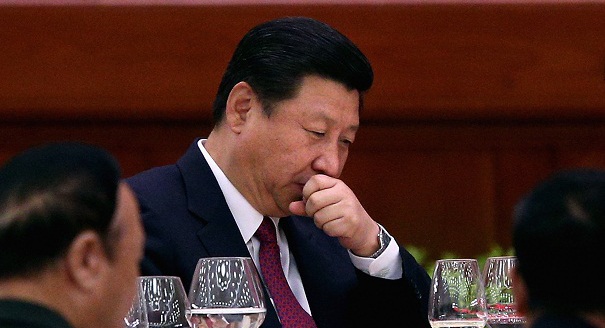
The central issue to be addressed by the Third Plenum is the proper role of the state in China, including the organization of the state and the relations of the state to markets and to citizens.
Source: CNBC
Carnegie’s Evan Feigenbaum appeared on CNBC to discuss what to look for from the Third Plenum of the 18th Chinese Communist Party Congress, which is expected to launch wide-ranging economic reforms. Feigenbaum pointed out that reform is best viewed as a process rather than an event, and that the most important thing to come out of the Plenum will be a sense of the broad direction in which reforms over the coming five years will move. He asserted that the highest priority for the Plenum should be to outline what the role of the state is going to be in the coming years, particularly in three areas: the state's relationship to markets, its relationship to its citizens, and the way in which it is organized. These three areas correspond to three high priority reforms: reducing energy and other factor price distortions, rural land reform to give peasants stronger property rights, and restructuring of the fiscal relationship between the central and local governments. Overall, Feigenbaum said that he sees reason for optimism about the coming reform announcement.

Vice President for Studies
Evan A. Feigenbaum is vice president for studies at the Carnegie Endowment for International Peace, where he oversees work at its offices in Washington, New Delhi, and Singapore on a dynamic region encompassing both East Asia and South Asia. He served twice as Deputy Assistant Secretary of State and advised two Secretaries of State and a former Treasury Secretary on Asia.
Recent Work
Evan A. Feigenbaum
Evan A. Feigenbaum

Europe is facing rising populism internally as well as external pressures from Russia, China, Turkey, and the United States.

Dimitar Bechev

The European Commissioner for Trade is headed to China. But after President Xi’s bridge-building visit to Washington, can a more isolated EU overcome Beijing’s stranglehold on critical raw materials? Who will blink first?

Rym Momtaz, ed.

The domestic impacts of how long it is taking to end the war in Ukraine have pushed the French electorate to the political extremes and compromised the country’s diplomatic capacity.
Rym Momtaz

A summer of escalation in the Black Sea has hurt Ukraine economically and is exacerbating world food security. A truce is needed—as is a broader reframing of Europe’s Ukraine strategy.

Thomas de Waal

The hybrid warfare landscape is evolving rapidly, leaving policymakers without clear strategies. To better inform their work in addressing emerging challenges, governments must dig deeper into the underlying dynamics at play.


Raluca Csernatoni, Alicia Wanless