

Article
- +1
Toby Dalton, Mark Hibbs, Nicole Grajewski, …
{
  "authors": [
    "Mark Hibbs"
  ],
  "type": "other",
  "centerAffiliationAll": "dc",
  "centers": [
    "Carnegie Endowment for International Peace"
  ],
  "collections": [],
  "englishNewsletterAll": "ctw",
  "nonEnglishNewsletterAll": "",
  "primaryCenter": "Carnegie Endowment for International Peace",
  "programAffiliation": "NPP",
  "programs": [
    "Nuclear Policy"
  ],
  "projects": [],
  "regions": [
    "South Asia",
    "India"
  ],
  "topics": [
    "Nuclear Policy"
  ]
}
Source: Getty
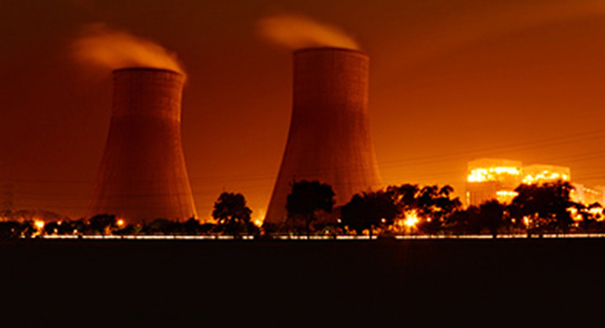
India’s history of hostility to the very mission of the NSG has prompted questions and even suspicion about India’s reasons for wanting to join the arrangement.
Source: Nonproliferation Review
What does India expect to attain by joining the Nuclear Suppliers Group (NSG)? The forty-eight participating governments in the world’s most important multilateral nuclear export control arrangement need to answer that question if they are to confidently judge, before admitting India, whether India is like-minded and shares consensus views on preventing the spread of nuclear weapons by controlling nuclear trade.
Far more than all other states that have joined the NSG during the last four decades, India’s rationales and motives for seeking membership have given rise to questions and even suspicions. This is for two reasons: Unlike all NSG participants, India is not a party to the Treaty on the Non-Proliferation of Nuclear Weapons (NPT); for the greater part of the NSG’s history, India deplored proliferation trade controls as a neo-colonialist, even racist tool of humiliation and discrimination used by other, mostly Western states, to hinder India’s technological development.
Indeed four decades ago nuclear technology-holding countries formed the NSG in direct response to India having detonated a nuclear explosive device. After having thereafter sought to blunt India’s nuclear development for a quarter century, beginning in the 2000s India’s emergence as a high-growth country with sensitive nuclear technology (SNT), including nuclear weapons, and global strategic aspirations led the NSG to reconsider its relationship to India. Pressed forward by the United States, in 2008 the NSG lifted its nuclear trade embargo against India and since 2011 the NSG has actively considered admitting India as a member.
In recent years India has come to view nonproliferation and trade controls in a more positive light. This happened because India’s strategic horizons broadened to include considerations of a nuclear-armed Pakistan that permitted its strategic nuclear assets to proliferate, the threat from terrorists aiming to possess weapons of mass destruction, a more intensive rivalry with China, and closer ties with the West. But the extent of India’s departure from time-honored positions has not been made clear by India because it has not openly articulated a detailed narrative to explain why it seeks NSG membership.
In fact, India has two different kinds of rationales. One follows from India’s rising aspirations for its civilian nuclear power program. The other derives from India’s quest for greater international status, including nuclear status. Some Indians acknowledge that prestige matters in Indian thinking about the NSG, but so long as India is not prepared to openly link the possession of SNT and nuclear arms with international power and status, India will explain its interest in NSG membership instead by focusing on more limited, tangible, and utilitarian grounds.
These include India’s desire to participate in rule making about nuclear commerce, as distinct from India’s current status outside the NSG as a rule-taker. The value of membership has been underlined to New Delhi through its pursuit of another NSG-related interest: to import SNT from suppliers. The NSG guidelines require that recipients of SNT be NPT parties. France this decade therefore denied a request by India to supply it items for uranium enrichment. If admitted to the NSG, India will aim to rescind that consensus rule.
Indian officials argue that without having a seat at the table, the future development of India’s nuclear power industry in partnership with foreign firms and governments remains hostage to the whims of suppliers in the NSG. It is likely that NSG participants understand India’s desire to render its foreign commerce more predictable. But not all would agree that NSG membership would significantly benefit India’s nuclear development; suppliers would point out that the NSG’s 2008 waiver allows India to import all nuclear and dual-use items subject to controls save SNT items. The claim brought forth by some officials that without NSG membership India could not meet climate mitigation targets under the 2015 Paris Agreement is likewise hardly credible. India’s nuclear power program faces major challenges, but most are domestic; lack of NSG membership is not one of them.
Ultimately, the most important rationale for India’s desire for NSG membership may be the perceived international status that this step would bestow upon a more ambitious India. Membership in the NSG recognizes that a country has reached an advanced level of strategic technical development; that it can supply controlled items; that it has attained the governance capacity to administer complex trade controls; and that it is a global rule-maker on strategic technology. Beyond that, India seeks a permanent seat on the United Nations Security Council where all P5 states are NSG members. India’s diplomats have not openly stressed the P5-NSG link but powerful supplier states in the group frame possible Indian NSG membership in geostrategic terms. When beginning in 2015 New Delhi appeared to be making headway in persuading NSG participants that India should be admitted, China pushed back, and today Beijing’s high political calculus—including its opposition to an Indian permanent Security Council seat—appears to stand in India’s way.

Nonresident Senior Fellow, Nuclear Policy Program
Hibbs is a Germany-based nonresident senior fellow in Carnegie’s Nuclear Policy Program. His areas of expertise are nuclear verification and safeguards, multilateral nuclear trade policy, international nuclear cooperation, and nonproliferation arrangements.
Recent Work


Toby Dalton, Mark Hibbs, Nicole Grajewski, …
Mark Hibbs
Carnegie does not take institutional positions on public policy issues; the views represented herein are those of the author(s) and do not necessarily reflect the views of Carnegie, its staff, or its trustees.

When the U.S.-Iran memorandum of understanding was announced, the UK, France, Germany, and Italy declared their readiness to help demine the Strait of Hormuz and lift nuclear sanctions on Tehran. But does Europe need new tools to recover a diplomatic role?

Rym Momtaz, ed.

Amid uncertainty caused by the Iran war, the global drive for nonproliferation has stalled. With Europe diplomatically marginalized and countries reassessing their nuclear options, efforts to curb the spread of nuclear weapons risk becoming irrelevant.

Jane Darby Menton

French President Emmanuel Macron has unveiled his country’s new nuclear doctrine. Are the changes he has made enough to reassure France’s European partners in the current geopolitical context?
Rym Momtaz, ed.

Europe’s reaction to the war in Iran has been disunited and meek, a far cry from its previously leading role in diplomacy with Tehran. To avoid being condemned to the sidelines while escalation continues, Brussels needs to stand up for international law.

Pierre Vimont
France has stopped clinging to notions of being a great power and is embracing the middle power moment. But Emmanuel Macron has his work cut out if he is to secure his country’s global standing before his term in office ends.
Rym Momtaz