

Commentary
Are Germany’s economic, industrial, and political struggles becoming a liability for the EU’s ability to rise to the geopolitical moment?
Rym Momtaz, ed.
{
  "authors": [
    "François Godement",
    "Mathieu Duchâtel"
  ],
  "type": "other",
  "centerAffiliationAll": "dc",
  "centers": [
    "Carnegie Endowment for International Peace"
  ],
  "collections": [],
  "englishNewsletterAll": "asia",
  "nonEnglishNewsletterAll": "",
  "primaryCenter": "Carnegie Endowment for International Peace",
  "programAffiliation": "AP",
  "programs": [
    "Asia"
  ],
  "projects": [],
  "regions": [
    "East Asia",
    "China",
    "Western Europe"
  ],
  "topics": [
    "Technology"
  ]
}
Source: Getty
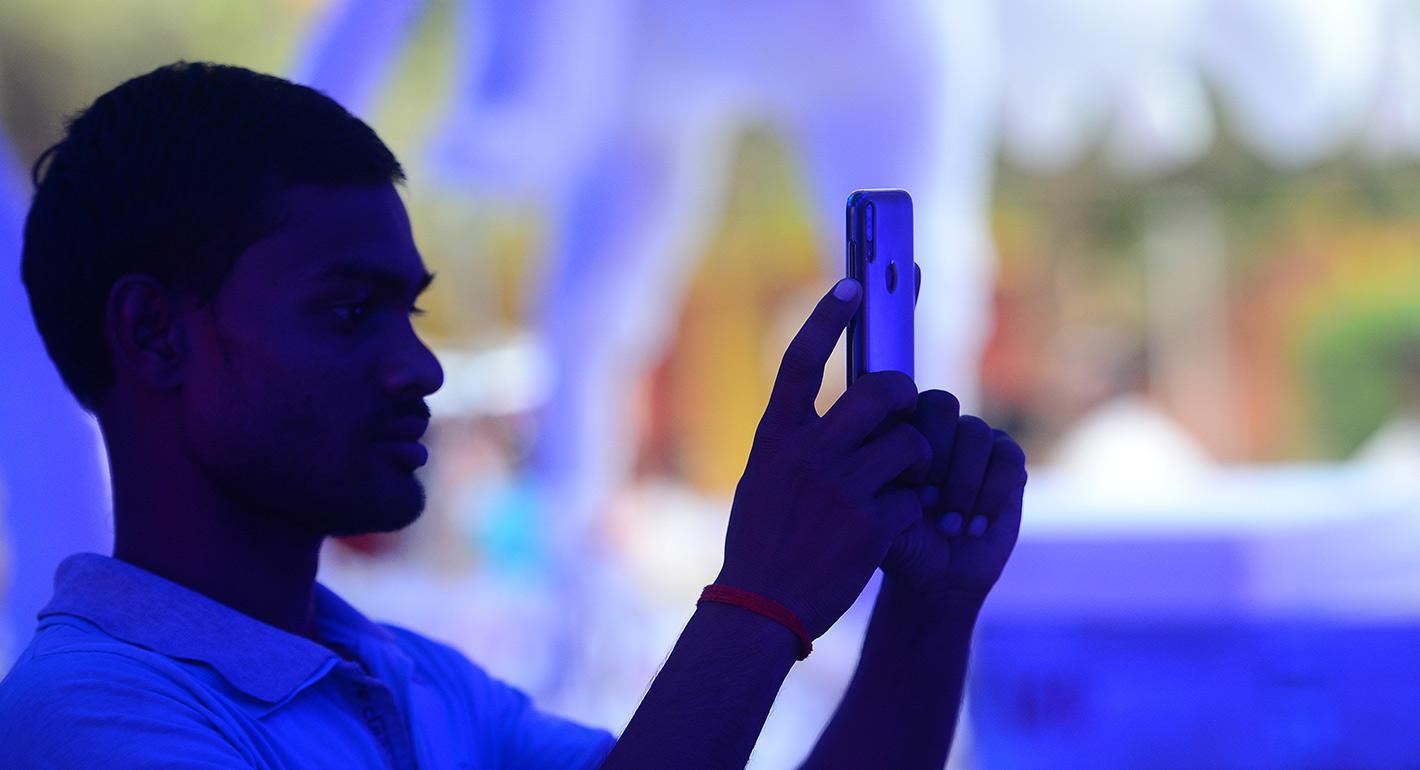
5G brings with it unprecedented possibilities of applications, including healthcare, education, autonomous vehicles, augmented reality, industrial production, public services. But it does come with risks.
Source: Institut Montaigne
Is Huawei paying the price for its high profile? The case serves to create attention to Europe’s hard choices for 5G infrastructure. 5G brings with it unprecedented possibilities of applications, including healthcare, education, autonomous vehicles, augmented reality, industrial production, public services. But it does come with risks.
Donald Trump’s decision to forbid American companies from trading with Huawei is a game changer, with repercussions exceeding by far the US-China confrontation. European companies will inevitably be faced with hard choices, and the Chinese company’s long standing 5G offer suddenly poses a much more critical dilemma.
In its quest for the status of global leader in telecommunications network equipment, Huawei's strong presence in European 3G/4G has compensated for its absence in American networks. Indeed, Huawei is already at the heart of Europe’s telecommunications networks. But will it be able to maintain its offer without its American suppliers?
For the time being, France and several European countries have excluded a ban against Huawei and are opting instead for a regulatory approach aimed at securing sensitive data. Will such an approach be sufficient?
Institut Montaigne has decided to address the issues related to 5G deployment at a European level. The growing dilemma around Huawei sheds light on European weaknesses in digital networks.
This policy paper was originally published by Institut Montaigne.

Former Nonresident Senior Fellow, Asia Program
Godement, an expert on Chinese and East Asian strategic and international affairs, was a nonresident senior fellow in the Asia Program at the Carnegie Endowment for International Peace.
Mathieu Duchâtel
Mathieu Duchâtel is Director of the Asia Program at Institut Montaigne since January 2019.
Carnegie does not take institutional positions on public policy issues; the views represented herein are those of the author(s) and do not necessarily reflect the views of Carnegie, its staff, or its trustees.

Are Germany’s economic, industrial, and political struggles becoming a liability for the EU’s ability to rise to the geopolitical moment?

Rym Momtaz, ed.

In supporting Europe’s far-right, MAGA and Russia both want the same thing: a weaker EU. Europe must defend itself without abandoning the openness these forces exploit.

Armida van Rij

As we close out another season of Strategic Europe, it is worth taking stock of the deep shifts underway.
Rym Momtaz

The hybrid warfare landscape is evolving rapidly, leaving policymakers without clear strategies. To better inform their work in addressing emerging challenges, governments must dig deeper into the underlying dynamics at play.


Raluca Csernatoni, Alicia Wanless

As the EU confronts profound challenges, several leaders have called for fundamental reform to the union’s model—but only modest, superficial changes have resulted. What if Europe really could be reimagined from zero today: What should such a redesigned European order look like?

Richard Youngs, ed.