• Research
  • Strategic Europe
  • About
  • Experts
Carnegie Europe logoCarnegie lettermark logo
EUUkraine
  • Donate
{
  "authors": [
    "Lyu Jinghua"
  ],
  "type": "commentary",
  "centerAffiliationAll": "",
  "centers": [
    "Carnegie Endowment for International Peace",
    "Carnegie China"
  ],
  "collections": [
    "China’s Foreign Relations",
    "China and the Developing World",
    "Carnegie China Commentaries"
  ],
  "englishNewsletterAll": "",
  "nonEnglishNewsletterAll": "",
  "primaryCenter": "Carnegie Endowment for International Peace",
  "programAffiliation": "",
  "programs": [],
  "projects": [],
  "regions": [
    "East Asia",
    "China"
  ],
  "topics": [
    "Economy"
  ]
}
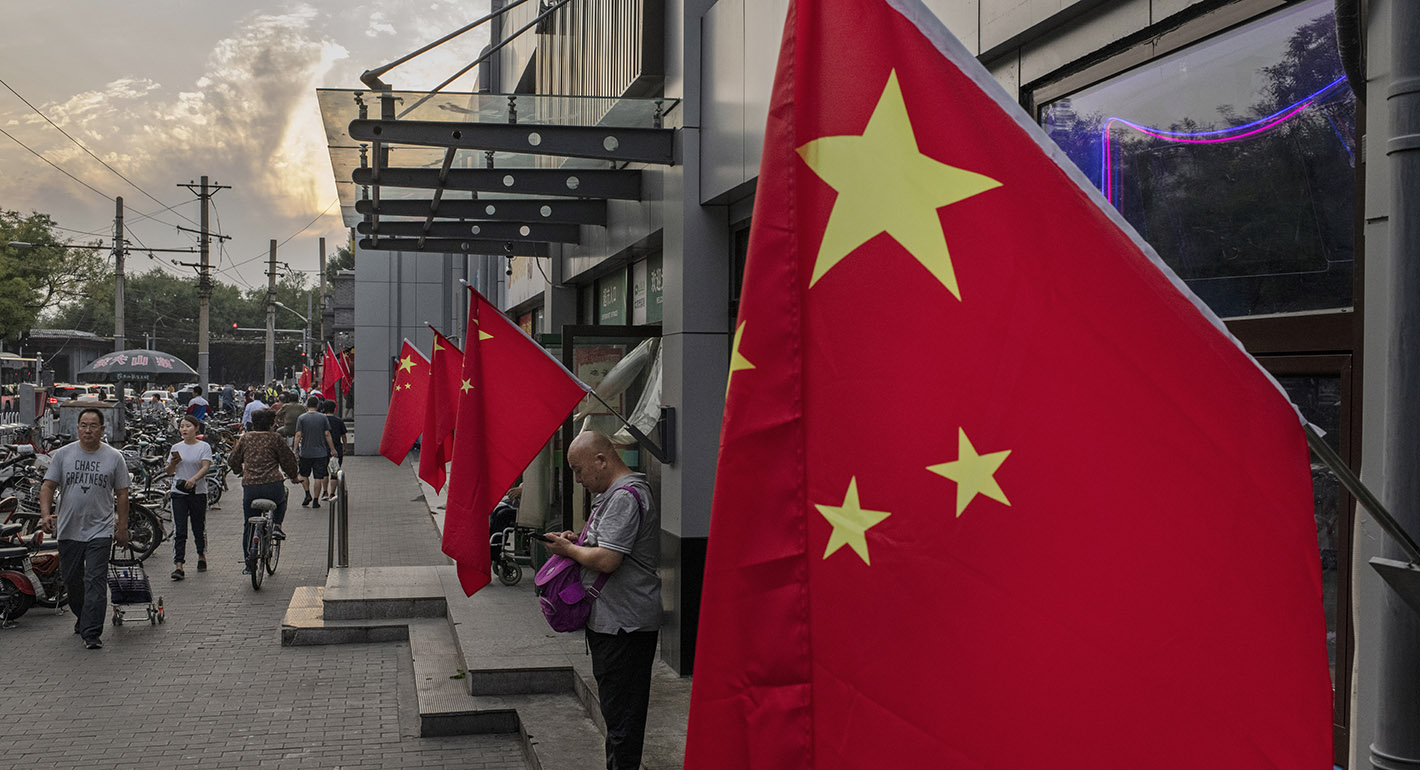
Source: Getty

Commentary

Three Lessons China Has Learned About Global Governance

How has Beijing’s approach to multilateral institutions evolved in the seventy years since the founding of the People’s Republic of China?

Link Copied
By Lyu Jinghua
Published on Sep 25, 2019

During the 70 years since the founding of the People’s Republic of China, Beijing has evolved from a challenger to a contributor to global governance. Such an evolution is the result of the changing international system, China’s growing strength, and the need to accommodate it in the international order.

China’s approach has been influenced by three lessons that it has learned over the past 70 years:

  1. China’s development is closely interconnected with that of the larger global community.

    China believes it is its responsibility to play a more active role in the world as an important stakeholder. But in contrast to the United States, which focuses on maintaining its global leadership role, China attaches more importance to perfecting international mechanisms of global governance.
  2. Almost all of these mechanisms—from the UN to the World Trade Organization and the World Bank—are currently led by Western countries. China cannot and will not benefit from comprehensively changing these institutions.

    Instead, China prefers to improve the international system through evolutionary, rather than revolutionary, means. Rather than challenging the system, China believes the best approach is to reform it incrementally.
  3. Though China has found it difficult to integrate into traditional global and regional political-military arrangements, it has greatly benefited from successfully integrating into economic ones.

    As a result, China’s contributions to global governance focus mainly on economic cooperation. The Belt and Road Initiative, for example, aims to stabilize and improve China’s economic relationship with participating countries.

These lessons have served as the logic behind how China’s global governance has evolved and will continue to develop.

This quick take is part of a series authored by scholars from across the Carnegie Endowment’s global network, in advance of the seventieth anniversary of the founding of the People’s Republic of China.

  • How Has the U.S.-China Relationship Changed Over Seventy Years?
    Paul Haenle
  • How China Became Russia’s Most Important Partner
    Alexander Gabuev
  • How Has Europe’s View of the People’s Republic of China Changed?
    Judy Dempsey
  • How Has China’s Role in the Middle East Evolved?
    Maha Yahya
  • Three Lessons China Has Learned About Global Governance
    Lyu Jinghua
  • A Brief History of India’s Relationship with the People’s Republic of China
    Srinath Raghavan

About the Author

Lyu Jinghua

Former Visiting Scholar, Cyber Policy Initiative

Lyu Jinghua was a visiting scholar with Carnegie’s Cyber Policy Initiative. Her research focuses primarily on cybersecurity and China-U.S. defense relations.

    Recent Work

  • Paper
    China-U.S. Cyber-Nuclear C3 Stability
      • +4

      George Perkovich, Ariel (Eli) Levite, Lyu Jinghua, …

  • Q&A
    What Is the U.S. Ban on TikTok and WeChat All About?
      • Jon Bateman

      Jon Bateman, Lyu Jinghua

Lyu Jinghua
Former Visiting Scholar, Cyber Policy Initiative
EconomyEast AsiaChina

Carnegie does not take institutional positions on public policy issues; the views represented herein are those of the author(s) and do not necessarily reflect the views of Carnegie, its staff, or its trustees.

More Work from Carnegie Europe

  • Commentary
    Strategic Europe
    How Europe Can Survive the AI Labor Transition

    Integrating AI into the workplace will increase job insecurity, fundamentally reshaping labor markets. To anticipate and manage this transition, the EU must build public trust, provide training infrastructures, and establish social protections.

      Amanda Coakley

  • Commentary
    Strategic Europe
    Taking the Pulse: Can the EU Attract Foreign Investment and Reduce Dependencies?

    EU member states clash over how to boost the union’s competitiveness: Some want to favor European industries in public procurement, while others worry this could deter foreign investment. So, can the EU simultaneously attract global capital and reduce dependencies?

      • Rym Momtaz

      Rym Momtaz, ed.

  • Commentary
    Strategic Europe
    Europe Falls Behind in the South Caucasus Connectivity Race

    The EU lacks leadership and strategic planning in the South Caucasus, while the United States is leading the charge. To secure its geopolitical interests, Brussels must invest in new connectivity for the region.

      Zaur Shiriyev

  • Commentary
    Strategic Europe
    The EU and India in Tandem

    As European leadership prepares for the sixteenth EU-India Summit, both sides must reckon with trade-offs in order to secure a mutually beneficial Free Trade Agreement.

      Dinakar Peri

  • Commentary
    Strategic Europe
    Taking the Pulse: What Issue Is Europe Ignoring at Its Peril in 2026?

    2026 has started in crisis, as the actions of unpredictable leaders shape an increasingly volatile global environment. To shift from crisis response to strategic foresight, what under-the-radar issues should the EU prepare for in the coming year?

      Thomas de Waal

Get more news and analysis from
Carnegie Europe
Carnegie Europe logo, white
Rue du Congrès, 151000 Brussels, Belgium
  • Research
  • Strategic Europe
  • About
  • Experts
  • Projects
  • Events
  • Contact
  • Careers
  • Privacy
  • For Media
  • Gender Equality Plan
Get more news and analysis from
Carnegie Europe
© 2026 Carnegie Endowment for International Peace. All rights reserved.









