• Research
  • Strategic Europe
  • About
  • Experts
Carnegie Europe logoCarnegie lettermark logo
EUUkraine
  • Donate
REQUIRED IMAGE

REQUIRED IMAGE

Article

Living with the Bomb: A View from India's Silicon Valley

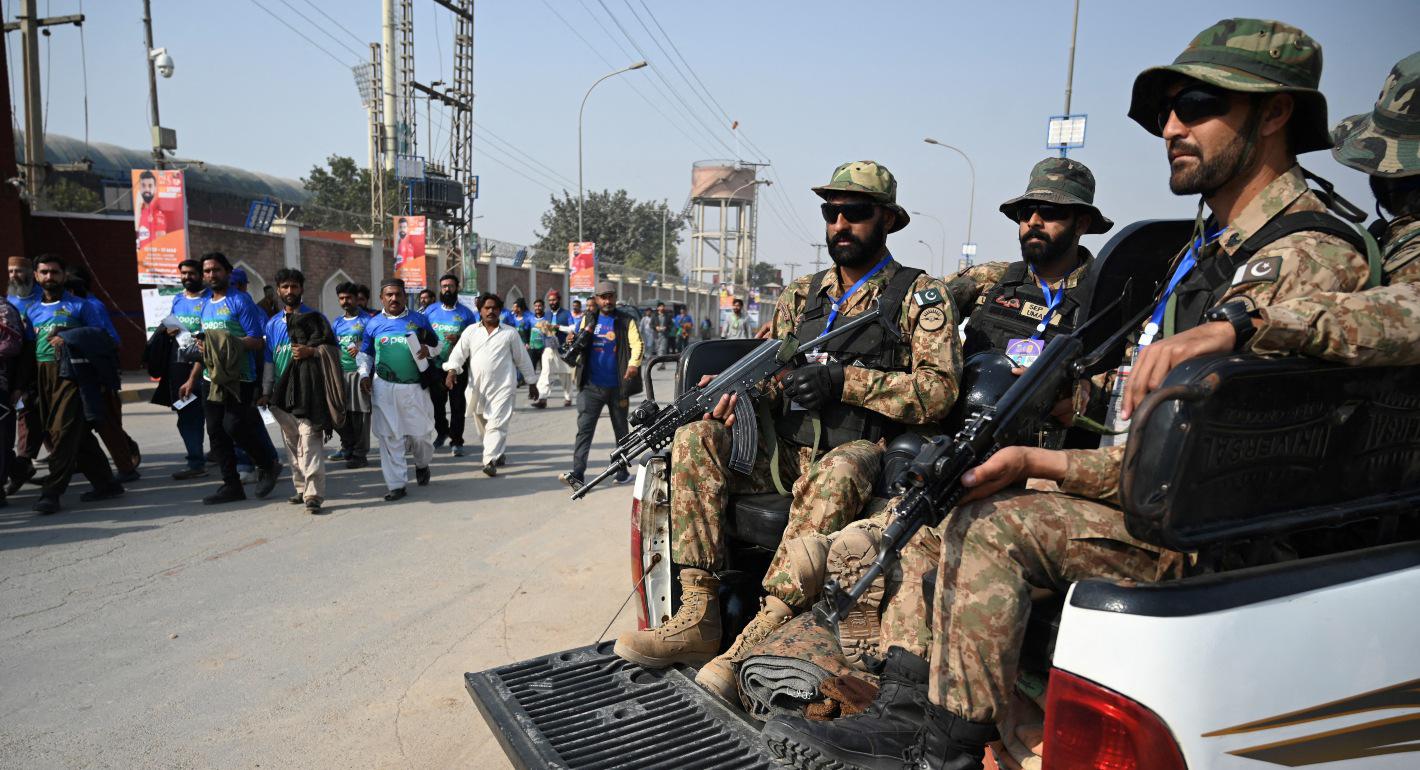
Rhetoric and missile tests may be flying, but for many Indians nuclear war seems a remote prospect. At the height of tensions between India and Pakistan, people in the bustling city of Bangalore, India's answer to California's Silicon Valley, had decided that they were far more concerned about the dismal state of the IT economy than they were concerned about nuclear Armageddon. Fear of nuclear war in this South Indian city is conspicuous in its absence.

Link Copied
Published on Jan 25, 2002

Rhetoric and missile tests may be flying, but for many Indians nuclear war seems a remote prospect. At the height of tensions between India and Pakistan, people in the bustling city of Bangalore, India's answer to California's Silicon Valley, had decided that they were far more concerned about the dismal state of the IT economy than they were concerned about nuclear Armageddon. Fear of nuclear war in this South Indian city is conspicuous in its absence.

I just returned from three weeks in Bangalore and even after the Decemeber 13 terrorist attack on India's Parliament, I found no sense of impending nuclear doom. In part, this is due to the city's geographical distance from the actual tension; in part it is because India- Pakistan bickering is par-for-the-course to South Asian ears; in part it is a consequence of thinking that New Delhi's decisions really have little impact on their lives, and in part it reflects a fatalism that characterizes the people.

The reality of a nuclear-armed South Asia has virtually no impact on the daily lives of people here. The 1998 nuclear tests were popular because of the sense of scientific and military accomplishment they provided. The nukes, however, have long lost their ability to enamour the people. And, in what some may view as dangerous naiveté, the bomb has yet to strike terror in the hearts of people who go on with their lives far removed from New Delhi's political and security wrangling over Kashmir. Thus, even with the military build-up along the Line of Control in Kashmir, even as India cut its staff at the Indian embassy in Islamabad, even in the midst of news reports (denied by Islamabad) that Pakistan had moved its missile force to the border, Banglorians continued their daily life largely unaffected and undaunted.

In public and private conversations people voiced vociferous political opinions, of course. They shared the whole country's sense of outrage at what had been attempted on December 13 - a terrorist strike at the heart of Indian democracy. The foiled attack on India's parliament did change some of this city's nonchalance towards Kashmir and "cross-border terrorism." There was some glib talk of "solving" the Kashmir problem once and for all, drawing inevitable comparisons to the American response to September 11. For the most part, however, the people here recognized the need for restraint. There was consternation that this government could find itself trapped in its own rhetoric, leading the country to war. Numerous editorials expressed this fear and called for restraint both in rhetoric and action.

Meanwhile, as Washington worried about the prospect of nuclear war, many in Bangalore worried about their high-tech job prospects, quite oblivious, it seems, that they were inhabitants of "the most dangerous place in the world."

South Asia

Carnegie does not take institutional positions on public policy issues; the views represented herein are those of the author(s) and do not necessarily reflect the views of Carnegie, its staff, or its trustees.

More Work from Carnegie Europe

  • Article
    Learning to Do No Harm to Democracy in Engagement With Authoritarian States

    The ways in which democracies interact with autocracies can also play a role in sustaining repressive regimes. Democratic governments must adopt more holistic approaches that offset the negative implications of international engagement.

      Nic Cheeseman, Marie-Eve Desrosiers

  • Article
    Development Assistance in Different Political Regime Contexts

    In the last decade, nondemocratic regimes have received more development assistance than democratic countries. This reveals how donors struggle with autocratization despite a rhetorical commitment to democracy.

      Marc de Tollenaere

  • Article
    Democratic Innovations From Around the World: Lessons for the West

    Countries around the world are struggling to bridge the gap between citizens and political elites. Innovative practices outside the West, while far from ideal, should be considered in debates about democratic renewal in Europe.

      Richard Youngs, Ken Godfrey

  • Research
    Rewiring Globalization

    Dissatisfaction with globalization has turned into a powerful force, with unchecked globalism increasingly seen as a threat to the integrity of democratic rule. Policymakers must reframe globalization to mitigate its negative consequences while keeping its core growth-enhancing dynamics intact.

      Sinan Ülgen

  • REQUIRED IMAGE
    Commentary
    Asia, Europe, And Global Democracy: Beyond The Summit For Democracy

    The European democracies might help activate more Asian engagement in the summit process to the extent that they can show this process is not about a uniquely U.S. assault on China. In return, Asian democracies can help re-energize European democracy policies by showing that democracy support is not Western-centric.

      Richard Youngs

Get more news and analysis from
Carnegie Europe
Carnegie Europe logo, white
Rue du Congrès, 151000 Brussels, Belgium
  • Research
  • Strategic Europe
  • About
  • Experts
  • Projects
  • Events
  • Contact
  • Careers
  • Privacy
  • For Media
  • Gender Equality Plan
Get more news and analysis from
Carnegie Europe
© 2026 Carnegie Endowment for International Peace. All rights reserved.