• Research
  • Strategic Europe
  • About
  • Experts
Carnegie Europe logoCarnegie lettermark logo
EUUkraine
  • Donate
REQUIRED IMAGE

REQUIRED IMAGE

Article

India and Pakistan's Nuclear Capabilities

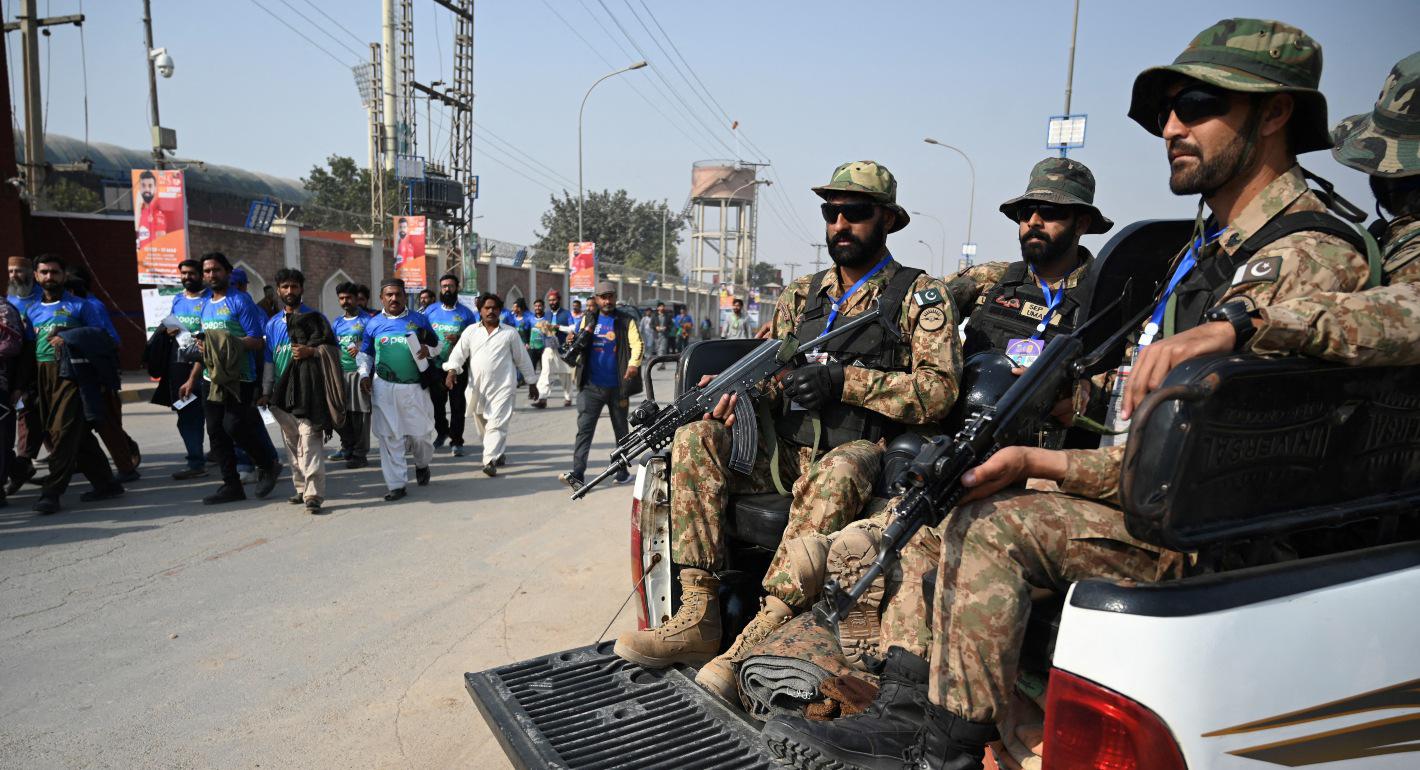
There is great uncertainty over the number, location and operational status of the nuclear weapons held by India and Pakistan. The project has prepared a short overview of the two nations' nuclear capabilities drawn from extensive analysis from the latest Carnegie study, Deadly Arsenals: Tracking Weapons of Mass Destruction.

Link Copied
Published on Jun 7, 2002

There is great uncertainty over the number, location and operational status of the nuclear weapons held by India and Pakistan. The project has prepared a short overview of the two nations' nuclear capabilities drawn from extensive analysis from the latest Carnegie study, Deadly Arsenals: Tracking Weapons of Mass Destruction.

For the Nuclear Overview, Please Click Here

Additional Resources:

  • "Experts Weigh U.S. Role as India-Pakistan Tensions Rise," A Carnegie Event, 6 June 2002- Listen to the Audio From This Event
  • "A New Equation: U.S. Policy Toward India and Pakistan After September 11," Carnegie Working Paper by Lee Feinstein, James C. Clad, Lewis A. Dunn and David Albright, May 2002
  • "Political Tragedy For U.S., Musharraf," Chicago Tribune Op-Ed by George Perkovich, 28 April 2002
  • "Bad-Mouthing as Doctrine," Hindustan Times, 7 June 2002
  • "US Assured Pakistan Will Not Begin War: Musharraf, Armitage Hold Talks," Dawn, 6 June 2002
  • "No Alternative to Peace: Jaswant," Times of India, 6 June 2002
  • "Contradiction in Words," The News, 6 June 2002
  • Carnegie South Asia Resource Page

Click Here to Return to Proliferation News

South Asia

Carnegie does not take institutional positions on public policy issues; the views represented herein are those of the author(s) and do not necessarily reflect the views of Carnegie, its staff, or its trustees.

More Work from Carnegie Europe

  • Article
    Learning to Do No Harm to Democracy in Engagement With Authoritarian States

    The ways in which democracies interact with autocracies can also play a role in sustaining repressive regimes. Democratic governments must adopt more holistic approaches that offset the negative implications of international engagement.

      Nic Cheeseman, Marie-Eve Desrosiers

  • Article
    Development Assistance in Different Political Regime Contexts

    In the last decade, nondemocratic regimes have received more development assistance than democratic countries. This reveals how donors struggle with autocratization despite a rhetorical commitment to democracy.

      Marc de Tollenaere

  • Article
    Democratic Innovations From Around the World: Lessons for the West

    Countries around the world are struggling to bridge the gap between citizens and political elites. Innovative practices outside the West, while far from ideal, should be considered in debates about democratic renewal in Europe.

      Richard Youngs, Ken Godfrey

  • Research
    Rewiring Globalization

    Dissatisfaction with globalization has turned into a powerful force, with unchecked globalism increasingly seen as a threat to the integrity of democratic rule. Policymakers must reframe globalization to mitigate its negative consequences while keeping its core growth-enhancing dynamics intact.

      Sinan Ülgen

  • REQUIRED IMAGE
    Commentary
    Asia, Europe, And Global Democracy: Beyond The Summit For Democracy

    The European democracies might help activate more Asian engagement in the summit process to the extent that they can show this process is not about a uniquely U.S. assault on China. In return, Asian democracies can help re-energize European democracy policies by showing that democracy support is not Western-centric.

      Richard Youngs

Get more news and analysis from
Carnegie Europe
Carnegie Europe logo, white
Rue du Congrès, 151000 Brussels, Belgium
  • Research
  • Strategic Europe
  • About
  • Experts
  • Projects
  • Events
  • Contact
  • Careers
  • Privacy
  • For Media
  • Gender Equality Plan
Get more news and analysis from
Carnegie Europe
© 2026 Carnegie Endowment for International Peace. All rights reserved.