• Research
  • Strategic Europe
  • About
  • Experts
Carnegie Europe logoCarnegie lettermark logo
EUUkraine
  • Donate
REQUIRED IMAGE

REQUIRED IMAGE

Paper

Verifying North Korean Nuclear Disarmament: A Technical Analysis

Link Copied
Published on Jun 11, 2003

Additional Links

Full Text (PDF)

Source: Carnegie

Summary
The nuclear crisis on the Korean peninsula continues to pose the most serious security threat to U.S. interests and friends in East Asia. North Korea's nuclear activities include both an active plutonium production capability and a still-under-construction uranium enrichment capability. This program presents a critical security challenge for the United States, countries in East Asia, and, through North Korea's potential to sell nuclear materials abroad, the entire world. All of the states engaged with North Korea agree that the goal of international efforts should be the complete elimination of North Korea's nuclear program and the firm establishment of a non-nuclear Korean peninsula.

The papers included in this report are meant to spur discussion and exploration of these complex issues, and give support to efforts to negotiate an agreement that ends the potential for North Korea to directly threaten the security of its neighbors and other countries.

Click on link above for full text of this Carnegie Paper.

About the Authors
Seongwhun Cheon
is senior research fellow at the Korea Institute for National Unification (KINU) in Seoul. Before joining KINU in 1991, he served with the Office of Arms Control, Ministry of National Defense, Republic of Korea. He is the author of numberous books including U.S. NCM Initiatives and Security of the Korean Peninsula (Seoul, KINU, 2001).

Fred McGoldrick is principle in the international consulting firm of Bengeslsdorf, McGoldrick and Associates, LLC. He has held senior positions in the U.S. Department of Energy and the U.S. Department of State, where he negotiated U.S. peaceful nuclear cooperation agreements and helped shape U.S. policy to prevent the spread of nuclear weapons.

Jon B. Wolfsthal is deputy director and associate of the Carnegie Endowment's Non-Proliferation Project. Prior to joining the Endowment, he held a number of positions at the U.S. Department of Energy, including service as the U.S. government's on-site monitor at North Korea's nuclear complex at Yongyon. He is the co-author of Deadly Arsenals: Tracking Weapons of Mass Destruction (Carnegie Endowment, 2002).

Click here to read more on issues related to weapons of mass destruction.

A limited number of print copies are also available.
Request a copy

South KoreaMilitaryNuclear Policy

Carnegie does not take institutional positions on public policy issues; the views represented herein are those of the author(s) and do not necessarily reflect the views of Carnegie, its staff, or its trustees.

More Work from Carnegie Europe

  • Commentary
    Strategic Europe
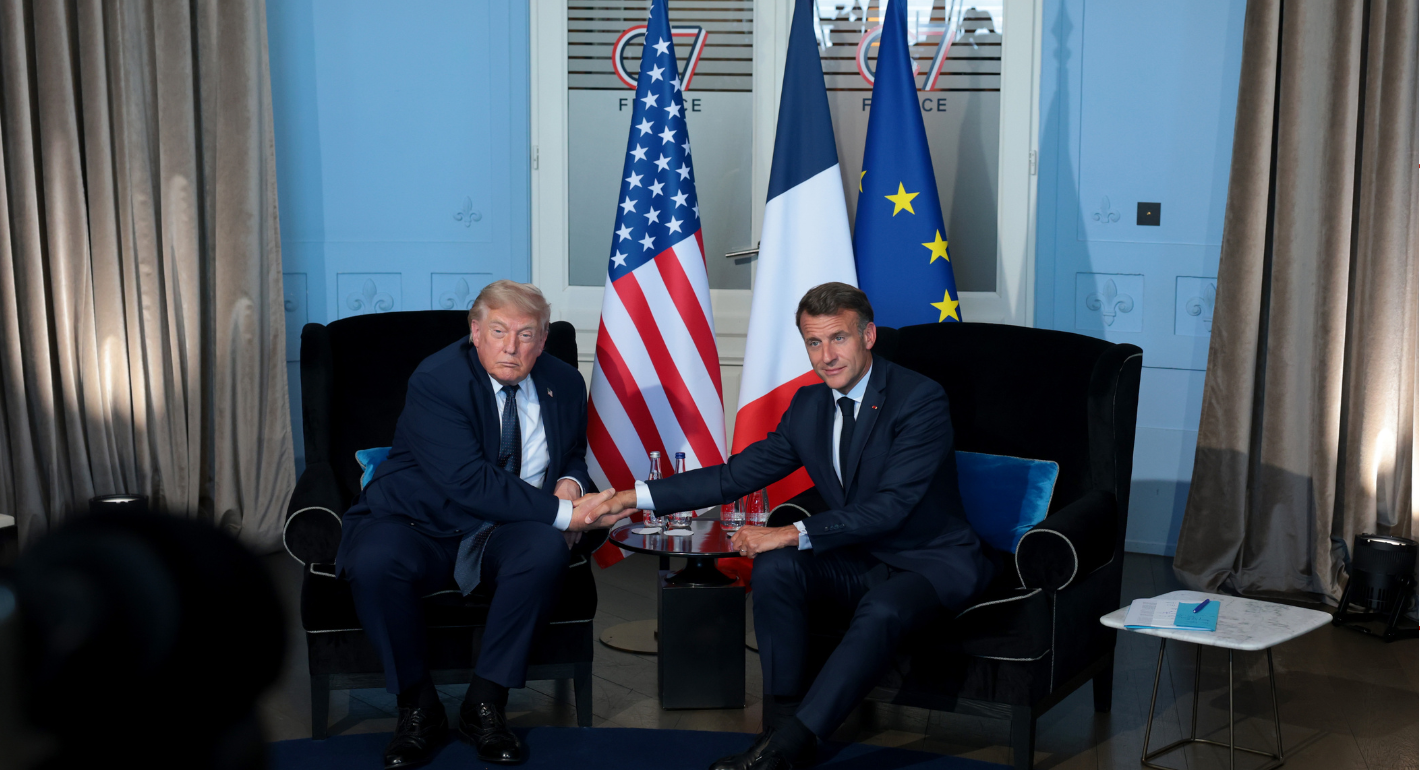
    Taking the Pulse: Is France’s New Nuclear Doctrine Ambitious Enough?

    French President Emmanuel Macron has unveiled his country’s new nuclear doctrine. Are the changes he has made enough to reassure France’s European partners in the current geopolitical context?

      • Rym Momtaz

      Rym Momtaz, ed.

  • Commentary
    Strategic Europe
    Europe on Iran: Gone with the Wind

    Europe’s reaction to the war in Iran has been disunited and meek, a far cry from its previously leading role in diplomacy with Tehran. To avoid being condemned to the sidelines while escalation continues, Brussels needs to stand up for international law.

      Pierre Vimont

  • Commentary
    Strategic Europe
    Macron Makes France a Great Middle Power

    France has stopped clinging to notions of being a great power and is embracing the middle power moment. But Emmanuel Macron has his work cut out if he is to secure his country’s global standing before his term in office ends.

      • Rym Momtaz

      Rym Momtaz

  • Commentary
    Can Europe Trust the United States Again?

    In Donald Trump’s second term in office, the transatlantic relationship that helped define the postwar European project and global order appears broken. Is it time for Brussels to chart its own path?

      Nathalie Tocci, Jan Techau

  • Commentary
    Strategic Europe
    Taking the Pulse: Is the EU Too Weak to Be a Global Player?

    Beset by an increasingly hostile United States, internal divisions, and the threat of Russian aggression, the EU finds itself in a make-or-break moment. U.S. President Donald Trump calls it a decaying group of nations headed by weak leaders. Is Europe able to prove him wrong?

      Thomas de Waal

Get more news and analysis from
Carnegie Europe
Carnegie Europe logo, white
Rue du Congrès, 151000 Brussels, Belgium
  • Research
  • Strategic Europe
  • About
  • Experts
  • Projects
  • Events
  • Contact
  • Careers
  • Privacy
  • For Media
  • Gender Equality Plan
Get more news and analysis from
Carnegie Europe
© 2026 Carnegie Endowment for International Peace. All rights reserved.