• Research
  • Strategic Europe
  • About
  • Experts
Carnegie Europe logoCarnegie lettermark logo
EUUkraine
  • Donate
Rising Tension Between North and South Korea

Source: Getty

Article

Rising Tension Between North and South Korea

While tensions are rising on the Korean Peninsula and forecasting the North Korean leadership’s next steps is difficult, none of the parties involved have any interest in further escalation.

Link Copied
By Vladimir Dvorkin
Published on May 27, 2010

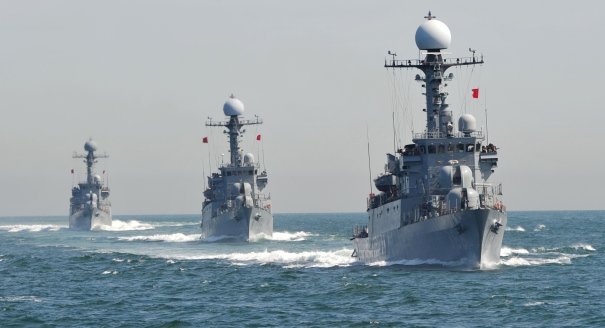
The rising tension on the Korean Peninsula sparked by the torpedoing of a South Korean military vessel, which evidence suggests was committed by North Korea, once more demonstrates the unpredictable nature of Kim Jong Il’s political regime.

The incident makes forecasting the North Korean leadership’s next steps difficult. Are further military provocations likely, or will the situation be limited to belligerent rhetoric? Much will depend on the positions taken by China and Russia. However, the harsh response from the United States, coupled with South Korea’s decision to suspend humanitarian aid to North Korea, leaves little chance for a rapid settlement of the conflict.

It is hard to say what type of sanctions the UN Security Council might impose on North Korea, or how Pyongyang may react. No one has an interest in further escalation, much less outright military conflict—not least North Korea, given its severe economic difficulties.

But the latest crisis deals a heavy blow to the six-party talks on defusing the North Korean nuclear situation and to the nuclear nonproliferation regime in general. No one knows for certain what North Korea has at its disposal: nuclear warheads that could be fitted to its Nodong or other ballistic missiles, or more primitive nuclear devices that could, for example, be delivered by ship to the coast of Japan or South Korea.

But it is impossible to rule out that Kim Jong Il, if backed into a corner, could take extreme measures. Attempts to resolve the conflict must keep this danger in mind. 

Vladimir Dvorkin is a Carnegie Moscow Center expert on nuclear security.

About the Author

Vladimir Dvorkin

Major General Dvorkin (retired) is a chief researcher at the Center for International Security at the Institute of World Economy and International Relations.

Vladimir Dvorkin

Major General Dvorkin (retired) is a chief researcher at the Center for International Security at the Institute of World Economy and International Relations.

East AsiaSouth KoreaNorth KoreaAsiaNuclear Policy

Carnegie does not take institutional positions on public policy issues; the views represented herein are those of the author(s) and do not necessarily reflect the views of Carnegie, its staff, or its trustees.

More Work from Carnegie Europe

  • Commentary
    Strategic Europe
    Taking the Pulse: Is France’s New Nuclear Doctrine Ambitious Enough?

    French President Emmanuel Macron has unveiled his country’s new nuclear doctrine. Are the changes he has made enough to reassure France’s European partners in the current geopolitical context?

      • Rym Momtaz

      Rym Momtaz, ed.

  • Commentary
    Strategic Europe
    Europe on Iran: Gone with the Wind

    Europe’s reaction to the war in Iran has been disunited and meek, a far cry from its previously leading role in diplomacy with Tehran. To avoid being condemned to the sidelines while escalation continues, Brussels needs to stand up for international law.

      Pierre Vimont

  • Commentary
    Strategic Europe
    Macron Makes France a Great Middle Power

    France has stopped clinging to notions of being a great power and is embracing the middle power moment. But Emmanuel Macron has his work cut out if he is to secure his country’s global standing before his term in office ends.

      • Rym Momtaz

      Rym Momtaz

  • Commentary
    Can Europe Trust the United States Again?

    In Donald Trump’s second term in office, the transatlantic relationship that helped define the postwar European project and global order appears broken. Is it time for Brussels to chart its own path?

      Nathalie Tocci, Jan Techau

  • Commentary
    Strategic Europe
    Unpacking Europe’s Deterrence Dilemmas

    The debate on the future of European deterrence has intensified, as NATO allies seek to balance three key aims. Going forward, they will need to cooperate more deeply to craft a coherent strategy for confronting new threats.

      Sophia Besch, Jamie Kwong

Get more news and analysis from
Carnegie Europe
Carnegie Europe logo, white
Rue du Congrès, 151000 Brussels, Belgium
  • Research
  • Strategic Europe
  • About
  • Experts
  • Projects
  • Events
  • Contact
  • Careers
  • Privacy
  • For Media
  • Gender Equality Plan
Get more news and analysis from
Carnegie Europe
© 2026 Carnegie Endowment for International Peace. All rights reserved.