

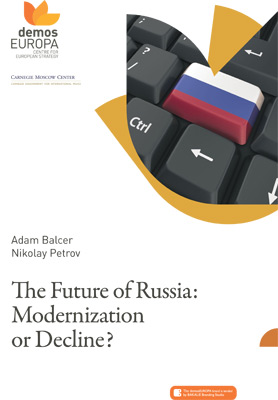
The Future of Russia: Modernization or Decline?
As a permanent member of the UN Security Council and a nuclear power, Russia has substantial leverage in the post-Soviet space and is the EU's most important neighbor. However, in the coming decades Russia will face serious internal and international challenges.
Source: demosEUROPA – Centre for European Strategy and Carnegie Moscow Center Report

This report composed of two articles “The Cat That Walks by Himself: Russian Foreign Policy at the Beginning of the Twenty First Century” written by Adam Balcer, programme director at demosEUROPA, and “Russia’s Uncertain Future: Internal Dynamics and Possible Trajectories” written by Nikolay Petrov, scholar-in-residence at the Carnegie Moscow Center, is trying to find answers to three crucial questions:
- What are the most probable scenarios for Russia’s internal development?
- What implications will have developments in the world and particularly in Eurasia on Russia’s foreign policy and its international position?
- How could the EU in the most efficient way make an impact on internal processes in Russia?
About the Authors
Adam Balcer
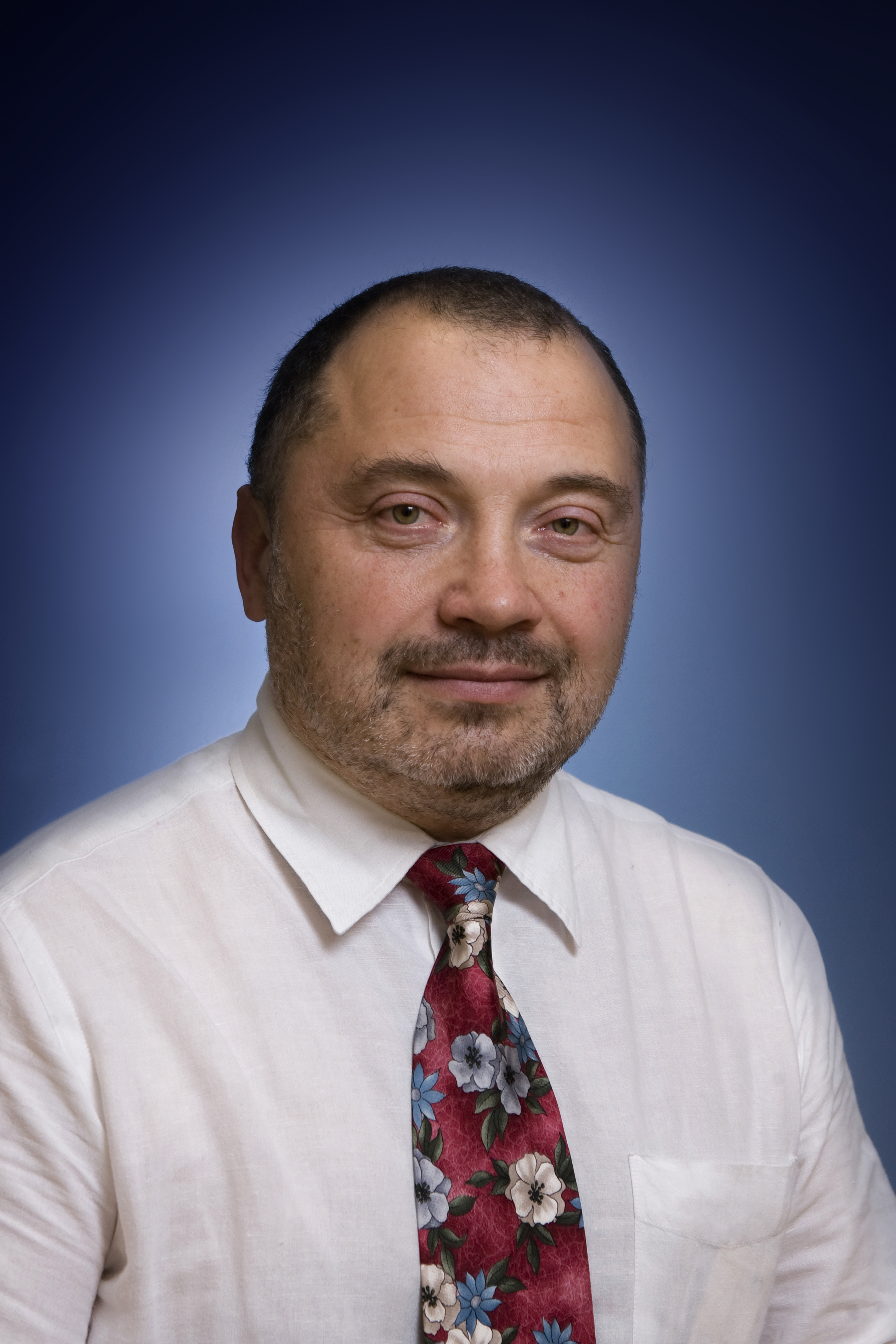
Former Scholar-in-Residence, Society and Regions Program, Moscow Center
Nikolay Petrov was the chair of the Carnegie Moscow Center’s Society and Regions Program. Until 2006, he also worked at the Institute of Geography at the Russian Academy of Sciences, where he started to work in 1982.
Carnegie does not take institutional positions on public policy issues; the views represented herein are those of the author(s) and do not necessarily reflect the views of Carnegie, its staff, or its trustees.