

{
  "authors": [
    "Sarah Yerkes",
    "A.Kadir Yildirim",
    "Shaun Casey",
    "Nathan J. Brown",
    "Courtney Freer",
    "Annelle Sheline",
    "Scott Williamson",
    "Sharan Grewal",
    "Mirjam Künkler",
    "Tarek Masoud",
    "Yusuf Sarfati",
    "Peter Mandaville"
  ],
  "type": "event",
  "centerAffiliationAll": "dc",
  "centers": [
    "Carnegie Endowment for International Peace"
  ],
  "collections": [
    "Arab Awakening"
  ],
  "englishNewsletterAll": "menaTransitions",
  "nonEnglishNewsletterAll": "",
  "primaryCenter": "Carnegie Endowment for International Peace",
  "programAffiliation": "MEP",
  "programs": [
    "Middle East"
  ],
  "projects": [],
  "regions": [
    "Middle East",
    "North Africa",
    "North America",
    "United States"
  ],
  "topics": [
    "Political Reform",
    "Foreign Policy"
  ]
}
Religious Authority in the Middle East: Implications for U.S. Policy
Tue, March 19th, 2019
Washington, DC
Online registration for this event is now closed. Watch the livestream at 9:00 A.M.
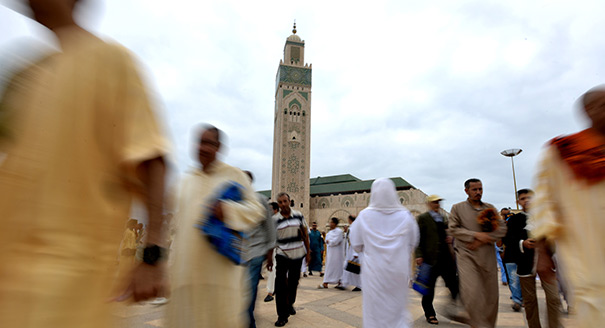
Religious authority is an increasingly influential but poorly understood source of power in governments throughout the Middle East. Who speaks for Islam in the region? How do Islamists and fundamentalists harness and exert religious authority, despite Islam’s largely decentralized power structure?
In a project supported by the Henry R. Luce Foundation, this study maps religious authority and the channels of influence between religious actors in the region and broader populations using a 12-country public opinion survey throughout the Middle East and North Africa. The survey data provides a snapshot of religious authority in various contexts, supplemented by fieldwork that examines specific mechanisms that build and maintain religious authority.
The Baker Institute Center for the Middle East and the Carnegie Endowment for International Peace present a daylong conference during which leading Middle East and North Africa experts discuss the implications of the study’s findings.
This event is generously hosted by the Carnegie Endowment for International Peace.
Project Partners
Baker Institute Center for the Middle East
The Baker Institute Center for the Middle East provides policymakers, scholars and the public with comprehensive analyses of issues, events and trends across this critical region with important implications for U.S. policy and global stability. The center offers a nonpartisan voice relying on data-driven research and direct engagement with decision-makers in the United States and in the region.
Carnegie Endowment for International Peace
The Carnegie Endowment for International Peace is a unique global network of policy research centers in Russia, China, Europe, the Middle East, India, and the United States. Working together, its centers bring the inestimable benefit of multiple national viewpoints to bilateral, regional, and global issues.
Henry R. Luce Foundation
The Henry R. Luce Foundation seeks to enrich public discourse by promoting innovative scholarship, cultivating new leaders, and fostering international understanding. The Foundation advances its mission through grantmaking and leadership programs in the fields of Asia, higher education, religion and theology, art, and public policy.
Conference Agenda
8:00 – 9:00 a.m.
Registration & Breakfast
9:00 – 9:10 a.m.
Welcome
Sarah Yerkes
9:10 – 9:20 a.m.
Introduction
A.Kadir Yildirim
9:20 – 10:00 a.m.
Keynote Address
Shaun Casey
10:00 – 11:00 a.m.
Panel I: The State, Religious Authority, and Legitimacy
Chair:
Nathan Brown
Panelists:
Courtney Freer, Annelle Sheline, Scott Williamson
11:00 – 11:10 a.m.
Break
11:10 a.m. – 12:25 p.m.
Panel II: Non-state Religious Actors and Authority
Chair:
Sarah Yerkes
Panelists:
Sharan Grewal, Mirjam Künkler, Tarek Masoud, Yusuf Sarfati
12:25 – 1:00 p.m.
Lunch
1:00 – 2:00 p.m.
Keynote Address
Peter Mandaville
2:00 p.m.
Closing Remarks
A.Kadir Yildirim
Carnegie India does not take institutional positions on public policy issues; the views represented herein are those of the author(s) and do not necessarily reflect the views of Carnegie, its staff, or its trustees.
Event Speakers
Senior Fellow, Middle East Program

Sarah Yerkes is a senior fellow in Carnegie’s Middle East Program, where her research focuses on Tunisia’s political, economic, and security developments as well as state-society relations in the Middle East and North Africa.
A.Kadir Yildirim
Shaun Casey
Nonresident Senior Fellow, Middle East Program

Nathan J. Brown, a professor of political science and international affairs at George Washington University, is a distinguished scholar and author of nine books on Arab politics and governance, as well as editor of five books.
Courtney Freer
Assistant Professor in the Department of Middle Eastern and South Asian Studies at Emory University
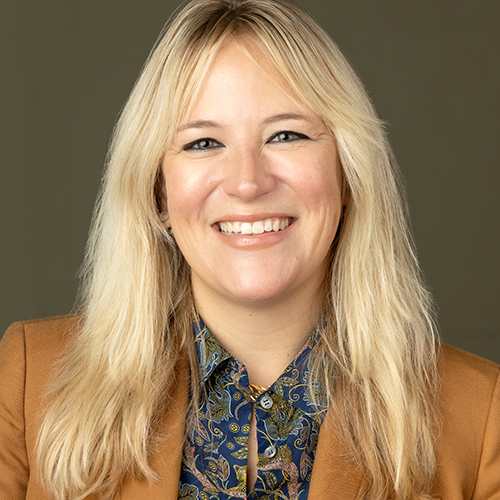
Courtney Freer is an assistant professor in the Department of Middle Eastern and South Asian Studies at Emory University.
Annelle Sheline
Annelle Sheline is a research fellow in the Middle East program at the Quincy Institute for Responsible Statecraft. Her research focuses on the manipulation of religious authority by Arab monarchies.
Scott Williamson
Former Junior Fellow, Middle East Program
Sharan Grewal
Mirjam Künkler
Tarek Masoud
Yusuf Sarfati
Peter Mandaville
Moderator: Peter Mandaville is a professor of international affairs in the Schar School of Policy and Government and co-director of the Ali Vural Ak Center for Global Islamic Studies at George Mason University.