• Research
  • About
  • Experts
Carnegie India logoCarnegie lettermark logo
AI
Podcast Episode
Carnegie India

Beyond Superintelligence: A Realist's Guide to AI

In this episode of Interpreting India, host Nidhi Singh is joined by Sayash Kapoor, co-author of AI Snake Oil, to unpack the myths, misconceptions, and exaggerated expectations around artificial intelligence. Kapoor challenges the dominant narratives of both utopian and dystopian AI futures and advocates instead for a more grounded perspective, viewing AI as a “normal technology,” akin to electricity or the internet, whose impact will unfold gradually over decades.

Link Copied
By Nidhi Singh and Sayash Kapoor
Published on Jul 10, 2025

Subscribe on

SpotifyApple PodcastsAmazon MusicYoutube
Project hero Image

Project

Technology and Society

This program focuses on five sets of imperatives: data, strategic technologies, emerging technologies, digital public infrastructure, and strategic partnerships.

Learn More

Episode Summary

In this episode of Interpreting India, host Nidhi Singh is joined by Sayash Kapoor, co-author of AI Snake Oil, to unpack the myths, misconceptions, and exaggerated expectations around artificial intelligence. Kapoor challenges the dominant narratives of both utopian and dystopian AI futures and advocates instead for a more grounded perspective, viewing AI as a “normal technology,” akin to electricity or the internet, whose impact will unfold gradually over decades. Through a wide-ranging conversation, the episode examines the limitations of benchmark-based evaluation, the dangers of speculative AI policy, and the need for domain experts in shaping meaningful governance frameworks.

Episode Notes

The episode begins with Kapoor explaining the origins of AI Snake Oil, tracing it back to his PhD research at Princeton on AI's limited predictive capabilities in social science domains. He shares how he and co-author Arvind Narayanan uncovered major methodological flaws in civil war prediction models, which later extended to other fields misapplying machine learning.

The conversation then turns to the disconnect between academic findings and media narratives. Kapoor critiques the hype cycle around AI, emphasizing how its real-world adoption is slower, more fragmented, and often augmentative rather than fully automating human labor. He cites the enduring demand for radiologists as a case in point.

Kapoor introduces the concept of “AI as normal technology,” which rejects both the notion of imminent superintelligence and the dismissal of AI as a passing fad. He argues that, like other general-purpose technologies (electricity, the internet), AI will gradually reshape industries, mediated by social, economic, and organizational factors—not just technical capabilities.

The episode also examines the speculative worldviews put forth by documents like AI 2027, which warn of AGI-induced catastrophe. Kapoor outlines two key disagreements: current AI systems are not technically on track to achieve general intelligence, and even capable systems require human and institutional choices to wield real-world power.

On policy, Kapoor emphasizes the importance of investing in AI complements—such as education, workforce training, and regulatory frameworks—to enable meaningful and equitable AI integration. He advocates for resilience-focused policies, including cybersecurity preparedness, unemployment protection, and broader access to AI tools.

The episode concludes with a discussion on recalibrating expectations. Kapoor urges policymakers to move beyond benchmark scores and collaborate with domain experts to measure AI’s real impact. In a rapid-fire segment, he names the myth of AI predicting the future as the most misleading and humorously imagines a superintelligent AI fixing global cybersecurity first if it ever emerged.

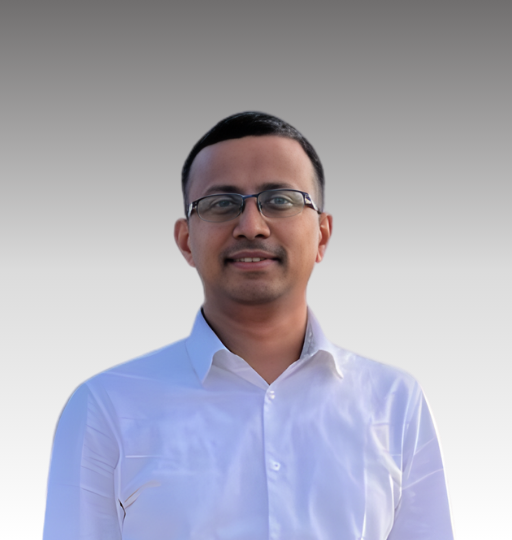
Hosted by

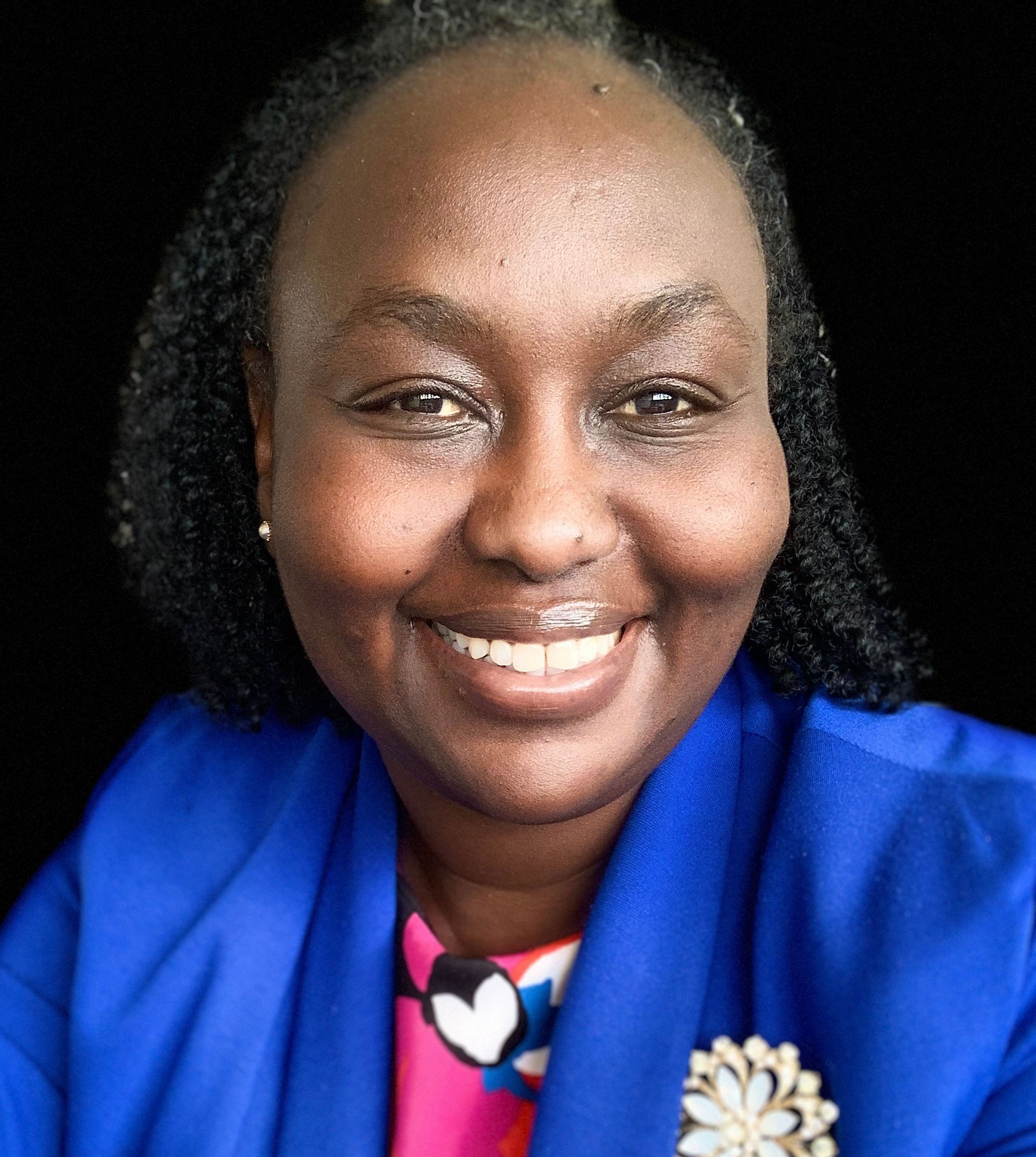
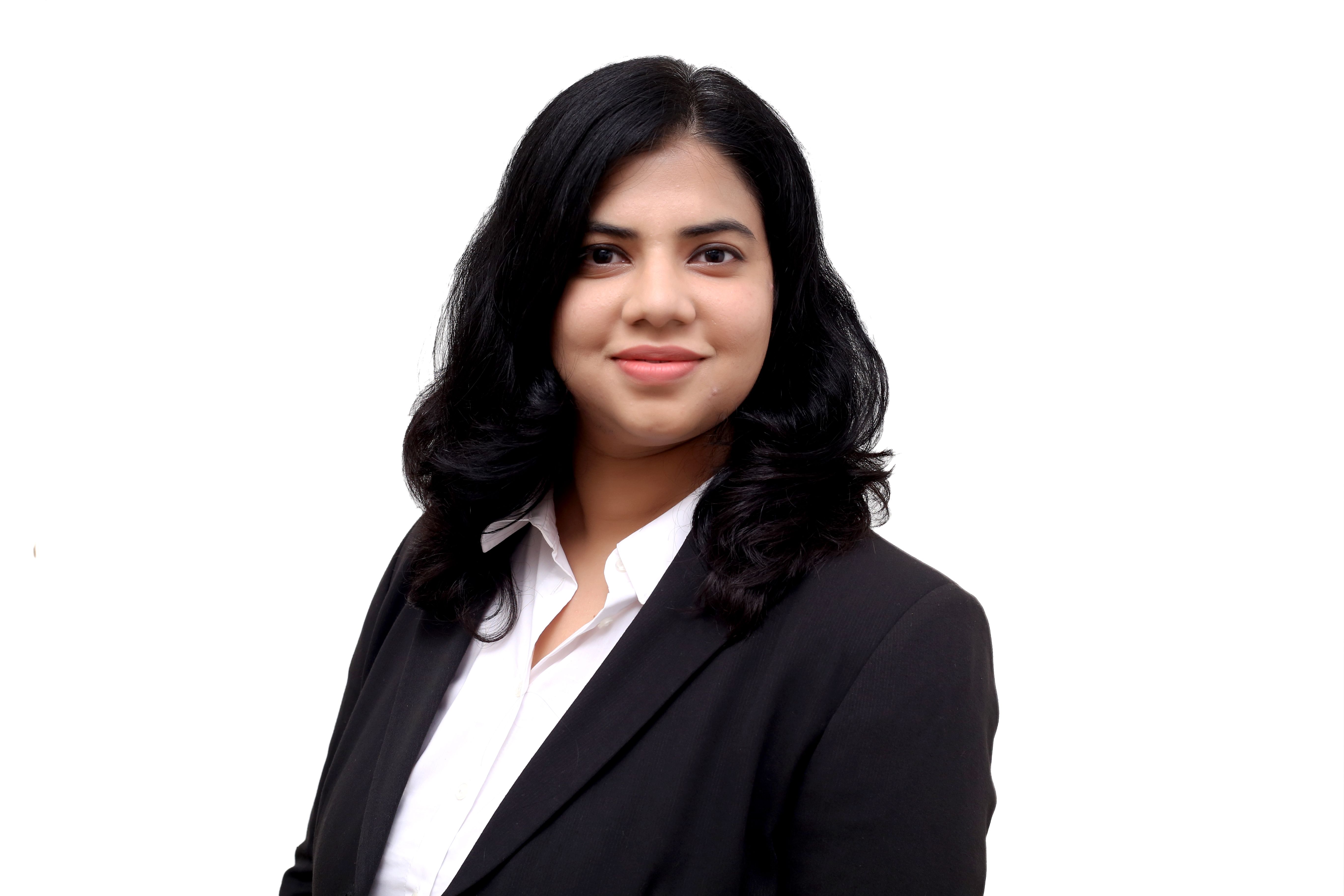
Nidhi Singh
Associate Fellow, Technology and Society Program
Nidhi Singh

Featuring

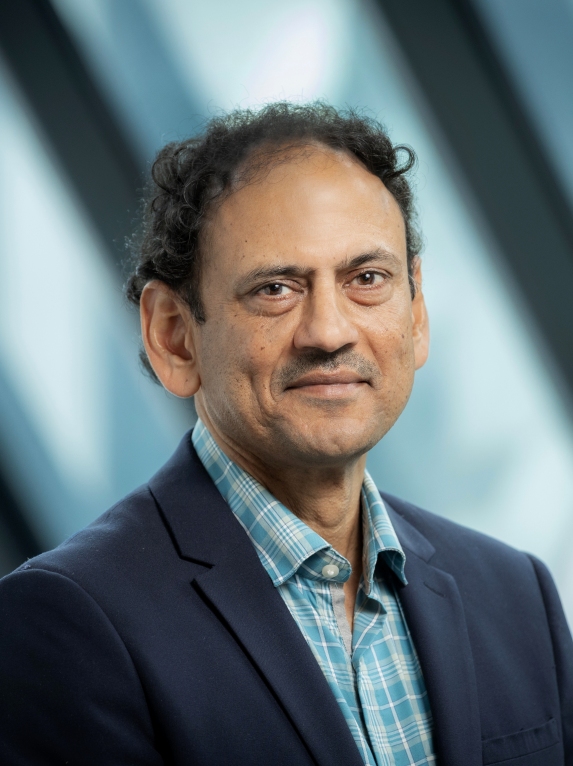
Sayash Kapoor

Co-author,
AI Snake Oil

Carnegie India does not take institutional positions on public policy issues; the views represented herein are those of the author(s) and do not necessarily reflect the views of Carnegie, its staff, or its trustees.

More Work from Interpreting India

  • Podcast Episode
    Can AI Resources Be Democratized? AI Summit Special

    In this episode of Interpreting India, Nidhi Singh, associate fellow at Carnegie India, speaks with Saurabh Garg, secretary at the Ministry of Statistics and Programme Implementation, Government of India, who chaired the working group on democratizing AI resources at the India AI Impact Summit.

      Nidhi Singh, Saurabh Garg

  • Podcast Episode
    Space Security in the Age of AI

    In this episode of Interpreting India, Tejas Bharadwaj is joined by Almudena Azcárate Ortega, senior program analyst at Secure World Foundation, for a wide-ranging conversation on how emerging technologies, particularly AI, are reshaping the landscape of space security. A space lawyer and policy scholar with deep experience in multilateral processes, Almudena brings both technical nuance and diplomatic realism to questions that most space conversations still treat as hypothetical.

      Tejas Bharadwaj, Almudena Azcárate Ortega

  • Podcast Episode
    An African Perspective for Building AI for Global South | AI Summit Special

    In this episode of Interpreting India, Nidhi Singh is joined by Raymond Ononiwu, founder and CEO of Horus Labs, for a conversation that cuts through the noise around compute, data centres, and AI infrastructure to ask a more fundamental question: who is this all actually being built for?

      Nidhi Singh, Raymond Ononiwu

  • Podcast Episode
    The India-EU Trade Deal: What It Delivers and What It Doesn't

    In this episode of Interpreting India, Vrinda Sahai is joined by Nicolas Köhler-Suzuki, Advisor for Trade and Economic Security at the Jacques Delors Institute, for a detailed conversation on the India-EU Free Trade Agreement. After decades of slow-moving negotiations, both sides have arrived at what is shaping up to be the most ambitious trade deal India has ever signed. Nicolas unpacks what is in the agreement, what is missing, and what its success will depend on in the years ahead.

      Vrinda Sahai, Nicolas Köhler-Suzuki

  • Podcast Episode
    From Bletchley Park to Delhi and What Comes Next | AI Summit Special

    In this episode of Interpreting India, Nidhi Singh is joined by Mariano-Florentino (Tino) Cuéllar, President of the Carnegie Endowment for International Peace and one of the very few people to have attended all four global AI summits, from Bletchley Park to Delhi. The conversation traces the arc of AI summit diplomacy, what has been accomplished, where the gaps remain, and what the process reveals about how different parts of the world are thinking about a technology that is moving faster than any single government or institution can keep up with.

      Nidhi Singh, Mariano-Florentino (Tino) Cuéllar

Get more news and analysis from
Carnegie India
Carnegie India logo, white
Unit C-4, 5, 6, EdenparkShaheed Jeet Singh MargNew Delhi – 110016, IndiaPhone: 011-40078687
  • Research
  • About
  • Experts
  • Projects
  • Events
  • Contact
  • Careers
  • Privacy
  • For Media
Get more news and analysis from
Carnegie India
© 2026 Carnegie Endowment for International Peace. All rights reserved.