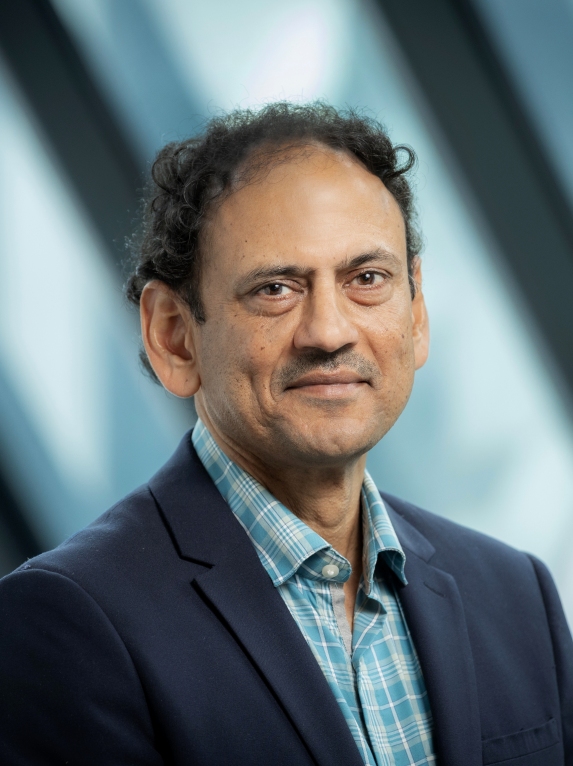
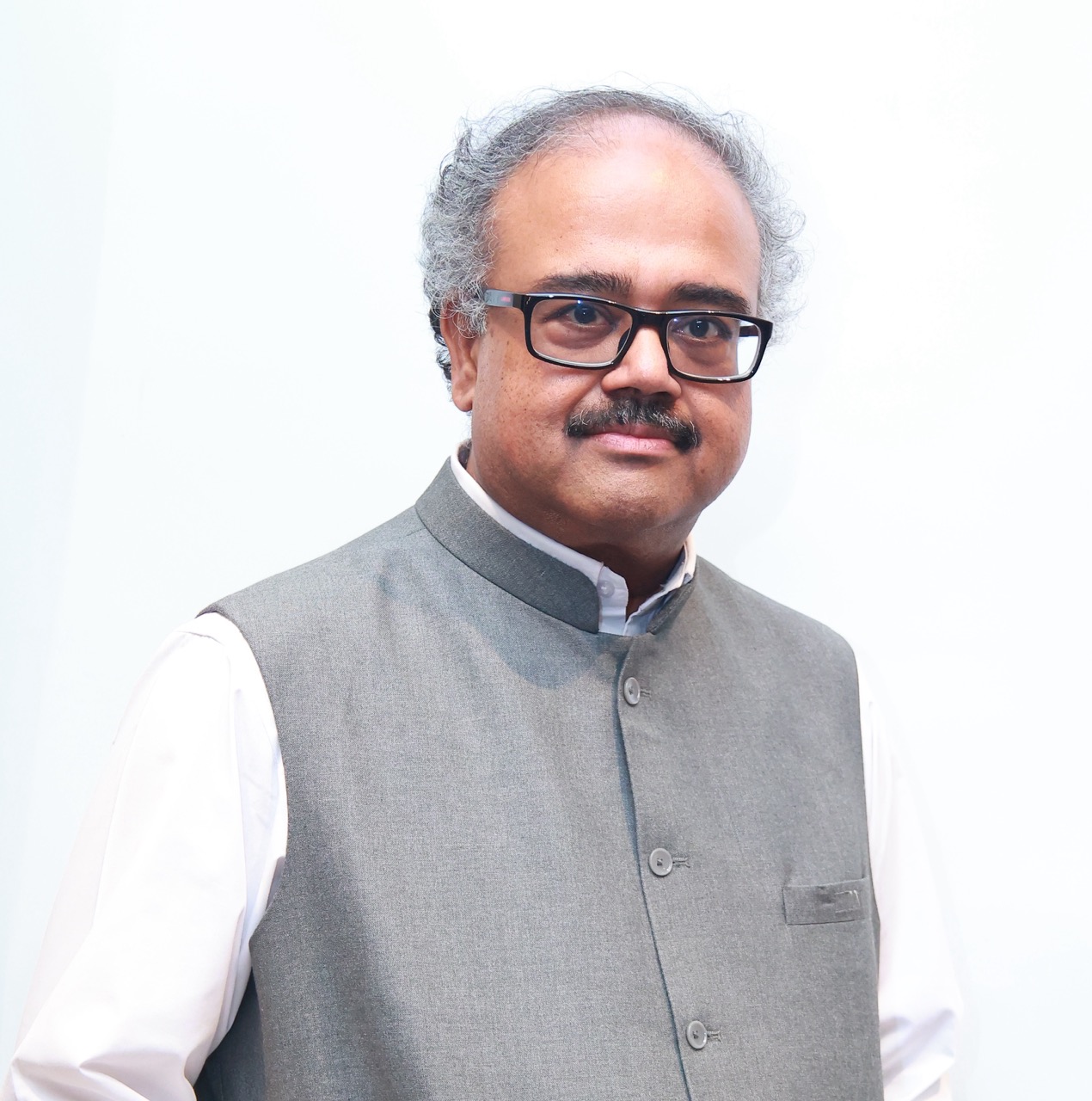
In this episode of Interpreting India, Vrinda Sahai is joined by Nicolas Köhler-Suzuki, Advisor for Trade and Economic Security at the Jacques Delors Institute, for a detailed conversation on the India-EU Free Trade Agreement. After decades of slow-moving negotiations, both sides have arrived at what is shaping up to be the most ambitious trade deal India has ever signed. Nicolas unpacks what is in the agreement, what is missing, and what its success will depend on in the years ahead.
What finally brought India and the EU to the table after years of negotiations going nowhere, and why the timing matters as much as the deal itself? How does this agreement compare to India's previous trade deals and to the EU's agreements with other partners, and where are the clearest gaps? How significant are the non-tariff barriers including the EU's regulatory standards? What do the mobility provisions mean for Indian IT professionals, and how realistic are the promises given the political climate across EU member states?
Episode Notes
For most of the last decade, a trade deal between India and the EU seemed unlikely. The nudge came as the world changed around both. Nicolas points to three converging forces: the pressure of US tariffs under Trump, which gave both sides political incentive to show they had other partners; the shared interest in reducing dependence on China for critical supply chains; and India's loss of GSP preferential treatment in the EU from January this year, which created a very concrete economic urgency on the Indian side. Together, these forces did what years of diplomatic goodwill could not.
The deal itself is ambitious by India's standards, covering tariff elimination on 96.6% of EU goods exports, significant reductions on cars, wine and spirits, and new services commitments across sectors that were previously off the table. But Nicolas is candid about the gaps. There is no chapter on government procurement, the sustainability provisions lack any real enforcement mechanism, and investment protection has been deferred to a separate negotiation. On the regulatory side, Indian exporters still face the carbon border adjustment mechanism on steel and aluminium, strict food safety standards that have already led to hundreds of rejected shipments, and product testing requirements that a tariff cut alone cannot resolve.
On mobility, Nicolas notes that the framework for Indian professionals is genuinely more promising than what was on offer in the original negotiations, partly because the UK is no longer in the room and partly because Europe's labour market has shifted significantly. But immigration policy remains a national competence, and many EU governments are currently run by or in coalition with parties for whom restricting migration is a core political position. The gap between what Brussels signs and what Vienna or Rome implement could be quite wide, and managing expectations around this will be one of the more delicate parts of the implementation process ahead.
Transcript
Note: This is an AI-generated transcript and may contain errors.
Vrinda Sahai: Hello and welcome to a new episode of Interpreting India. From geopolitical complexities to economic uncertainties, India faces critical challenges in its quest for a more prominent role on the world stage. This season, we at Carnegie India continue to bring voices from India and around the world to examine the role of technology, the economy, and international security in shaping India’s future.
I am Vrinda Sahai, Research Analyst in the Security Studies Program at Carnegie India.
The India-EU free trade agreement is shaping up to be one of the most consequential trade negotiations, both economically and strategically. For decades, trade negotiations between the two moved slowly, often constrained by regulatory differences, domestic sensitivities, and differing expectations around market access and standards. Yet at present, both sides are more willing to move toward a comprehensive agreement, which speaks to an evolving strategic relationship between the two large democratic economies, their role in shaping global trade rules, and their effort to navigate a more fragmented international economic order.
Joining us today for this discussion is Mr. Nicolas Köhler-Suzuki. Mr. Suzuki is an advisor for trade and economic security at the Jacques Delors Institute. His work is at the intersection of trade policy and economic diplomacy, with a particular focus on the European economic security agenda, EU-China and EU-India relations, EU-CPTPP cooperation, WTO reform, and digital trade. He also leads the trade policy consultancy International Trade Intelligence.
Mr. Suzuki, welcome to Interpreting India.
Nicolas Köhler-Suzuki: Hi, Vrinda. Pleasure to be on.
Vrinda Sahai: Great. I want to begin with a basic understanding of how this free trade agreement between the EU and India has come to be. Both sides, the EU and India, have been cautious when it comes to trade liberalization in the past, and specifically about trade negotiations with different countries. What other factors would you say have led to a renewed momentum for trade agreements on either side?
Nicolas Köhler-Suzuki: I have been working on EU-India trade for the better part of a decade now. And for most of the time, the honest answer to when will this deal happen was probably never. The negotiations started all the way back in 2007, and then they were, for the best part of the decade, in what I would call a zombie state. They were technically alive, but they were really not doing much of anything.
What changed is that the world changed around both of them, and I think also faster than either had anticipated. I think you need to understand three forces that converged almost simultaneously.
The first and most obvious one is Trump. So, the U.S. slapped tariffs of up to 50 percent on Indian exports in mid-2025, 25 percent reciprocal, 25 percent for Russian oil purchases. The EU also got hit with 15 percent baseline tariffs even after a deal. They had a dispute over Greenland, of course.
Suddenly, both sides found themselves at the receiving end of American aggression, and the political incentive was to show the world that you have other friends. So that became somewhat overwhelming. There is also a quote from U.S. Treasury Secretary Bessent. He complained that they put 25 percent tariffs on India for buying Russian oil, and what happened next? The Europeans signed a trade deal with India. So I think that tells you that the signal was received exactly as it was intended.
The second force is China. And this one runs deeper than the Trump factor. For the EU, the exposure to China is structural: rare earths, technologies, battery components, pharmaceuticals. So this whole de-risking agenda that has been going on for a couple of years is not really just theoretical. We have a number of different legislations like the Critical Raw Materials Act, the CHIPS Act, the Net Zero Industry Act.
India can offer something that no other partner of a comparable scale can: a very large English-speaking economy with a young workforce and strong ambitions for manufacturing. So it cannot be a replacement for China, and nobody in Brussels seriously thinks that, but it can be a credible new outside option.
For India, the calculation is similar, but in reverse. China also accounts for a lot of India’s electronic imports. Delhi has been trying to reduce their dependency for years. And of course, India wants to take some of the slice of the global manufacturing output that China had in the past.
The third force, which I think is getting a little bit less attention but was arguably quite decisive for the timing, is also the EU’s phasing down of the GSP preferences that India would get. From the beginning of January of this year, India lost preferential treatment for almost all of its exports to the EU. And this is very significant. Indian exporters would face the full European MFN tariff, and at the same time Bangladesh and Vietnam could get duty-free access, which they actually have been able to get for many, many years now already.
India has very ambitious targets for increasing manufacturing capacity, especially for textiles. And without this agreement, these targets would have basically been dead on arrival. So this withdrawal of the GSP scheme on the European side, this phasing out, was also a ticking clock that was really concentrating a lot of people on the Indian side in a way maybe all of the diplomatic objectives never really did.
Maybe one more thing that you could also add on the Indian side: India wanted to be part of the Regional Comprehensive Economic Partnership agreement. India left that agreement in 2019, I believe, because of China. So instead, India then went on a spree to sign all kinds of bilateral agreements since then, with the UAE, with Australia, with EFTA, and then the UK, all in all, more than nine different deals in the last four years.
That is undermining this old stereotype that India is impossible to negotiate with. Now, arguably, a lot of these deals were very shallow. We have to be clear about that. But at the same time, each of these agreements was successively deeper than the previous ones. So the Modi government clearly decided that there was geopolitical momentum. It was a moment that demanded that they needed to have a different approach to trade.
And the EU, in this whole chain, was the biggest prize still available because whatever agreement there may at some point be with the U.S., it is also going to have to carve out a lot of different issues because of U.S. agricultural interests.
Vrinda Sahai: So how does this agreement compare with India’s recent trade agreements and with other EU trade agreements?
Nicolas Köhler-Suzuki: I think this is where it gets interesting because this agreement is at the same time the most ambitious thing that India has ever done. But by European standards, it is actually quite incomplete. They are somewhere meeting in the middle there.
Let me start on the Indian side. We have just talked about these different agreements that India has struck since 2022, each agreement being deeper than the last one. But with Australia, for example, India did not really include services much. It excluded most sensitive goods. With the UAE, on the other hand, it went a little bit further, but it kept automobiles out. With the UK, it included automobiles, but it was restricted to a very low quota of 37,000 cars.
So with the EU, we really have a much wider-ranging agreement now, with tariff elimination on 96.6 percent of EU goods exports by value. For cars, you still have a quota, but it is a much higher quota of 250,000 cars at 10 percent duty that will slowly be phased in. You have wine duties dropping very significantly also over time, from 150 percent to 20 to 30 percent, and spirits that are also coming down to about 40 percent over a period of seven years. That is shorter than the UK, notably, which I think European negotiators will be keen to point out.
If we look at maybe another sector like services, the EU got a lot of different commitments across many, many different subsectors, which the European Commission claims is more than India has offered to any other partner in the past, including to the UK and Australia. India opened up financial services, telecoms, maritime services. These are all sectors that were essentially closed off to previous negotiations.
If we look more on the EU side, comparing this agreement to other EU agreements, it gets a little bit more complicated. If you line this up against, let’s say, the EU-Mercosur agreement, the EU-New Zealand agreement, or the EU-Canada agreement, which are all relatively recent trade agreements that the EU concluded, I think the clearest gap in the agreement with India is that there is no chapter on government procurement. That is pretty big.
In India, the government public procurement market is worth roughly $600 billion a year, and the EU got nothing. The UK got a very limited commitment, but in the end, the Europeans decided that they would not pursue this chapter because they wanted to come to a conclusion.
The second big gap compared to other agreements is the sustainability chapter. And I think this is also where this agreement will actually get most scrutiny during the ratification process. We can talk about that a bit more later.
The EU-New Zealand FTA, which I think most people in Brussels and the European Parliament would consider the gold standard of an agreement with a sustainability chapter that the EU has so far concluded, has, for example, an enforceable mechanism for the Paris Agreement. For EU-Mercosur, for example, there is also compliance with the Paris Agreement as an essential element clause that can trigger a suspension. And for the EU-India deal, we see cooperation, dialogue, expert review, but there is no penalty mechanism.
India rejected the EU’s specific model here. It was perceived as an instrument of regulatory leverage, as something that was a form of protectionism rather than environmental concern. That is a way to sell it at home. The commission on the other side now says in Brussels, yes, actually this deal is somewhat enforceable. The Indian side is not. So I think the devil will be very much in the details, but I think we will see that this is not really a fully enforceable sustainability agreement.
Maybe the third difference to other EU agreements is about investment protection. This was nominally deferred and is still to be negotiated in a separate agreement. India, of course, terminated all of its bilateral investment treaties in 2016. So there is a certain gap for the European side, which likes to have these agreements in place for investor certainty. How much they actually matter in practice is a different question, but it is the approach that the EU has always used in the past.
I think there are big question marks if we will ever see such an agreement now that the big negotiations have concluded. But nominally, there is now a negotiating track for this.
Overall, on tariffs and on services, this is probably really the most ambitious deal that India has ever signed. On a lot of other issues, on procurement, on sustainability, and investment, it is quite different from the EU’s practice. But I think there was a bet that was made in Brussels that you want to negotiate this and finish the negotiation now rather than in 10 years. You want to have maybe a somewhat more incomplete deal with the world’s largest country, fast-growing economy, rather than holding out for that perfection. But of course, now we have to see whether the European Parliament agrees.
Vrinda Sahai: On the Indian side, there has been a recurring concern that EU regulations, once they mount up, can become like a non-tariff barrier. To what extent would you say that holds true? And how is the EU responding to these concerns, or even allegations to an extent, about over-regulation?
Nicolas Köhler-Suzuki: This is a question where I have to be careful not to annoy both sides simultaneously, which in my experience probably means I am going to get it about right.
The Indian position is relatively straightforward. And I would say it is not entirely without foundation. The argument goes something like this: you give us a trade deal that cuts tariffs. Wonderful. Thank you very much. But what is the point of zero-duty access if our rice then gets rejected at the border because your pesticide residue limit is a hundred times stricter than the American one? If our medical devices need a hundred thousand dollars or a hundred thousand euros in registration fees for each product before they can enter the market? If our steel gets hit by carbon border adjustment that wipes out any advantages that we just negotiated?
So in India, European regulations like this are often seen just as a form of hidden protectionism or regulatory imperialism.
Let me take three of these big regulatory issues that figured in the negotiations in turn. CBAM, the carbon border adjustment mechanism, is really the elephant in the room, the issue that Indian negotiators pushed hardest on and actually got the least. India did not get an exemption from CBAM, none. India’s blast furnace steel emits a lot more carbon emission than the global average, I think one and a half times or so. So Indian steel and aluminum exports are going to be very significantly affected. They have already fallen before the agreement was signed. And that is significant because they have been one of the fastest-growing exports over the last couple of years.
What India did get instead was this MFN clause, which means that any flexibility that the EU would give, let’s say, to the U.S. or to any other country on CBAM would also have to apply to India. There is also a technical dialogue on India’s own carbon trading scheme, and a big financial commitment, a package of 500 million euros for a green transition, which sounds generous until you learn that decarbonizing India’s heavy industry requires something in the region of 390 billion euros. So the EU’s contribution would be only a very, very, very tiny portion of that bill.
The EU really was holding the line on CBAM. India did not get quite what it wanted, but it was willing to make a compromise.
Maybe a second area is SPS standards, so sanitary and phytosanitary measures. Here I would say it is both quite technical but also emotionally charged. Between 2020 and 2024, for example, the EU’s food safety alert system flagged over 850 notifications related to Indian food products, like on sesame seeds, where Indian exports, EU imports from India, exceeded the residue limits. And yet, those residue limits are much below, for example, what the U.S. and Canada would allow. So it is actually by an order of magnitude less.
Indian exporters would then say, okay, these are limits that are so low that we cannot really measure them very reliably with the testing equipment that we have. It makes it very difficult for us to be compliant. That concerns a lot of agricultural exports like basmati rice, spices, and marine products. Importantly, that is a big one.
These are really high-value Indian exports that have already faced intensified inspection regimes, regardless of what the tariff schedule is now saying. These are still going to be there. So what the FTA now does on SPS is useful, I would say, but it is not completely transforming it either. It introduces some clear timelines for import approvals, which matters, of course, for something like shrimp. If it is too long at the border, you cannot really import it anymore. But at the same time, Indian imports must still meet the EU rules without exception. The EU is not going to lower its food safety standards for this trade agreement.
So the honest answer to Indian complaints is that the EU still believes that its standards are proportionate, that they are nondiscriminatory, and that there is a certain degree of convergence that needs to happen on India’s side.
The third area is what I would call a general regulatory environment. So there you have product testing and conformity assessments, these kinds of things. This, I would say, is a bit less drastic than CBAM or the food safety issue, but overall it is still quite significant for Indian exporters, particularly for small firms.
The FTA has this chapter on good regulatory practices where you need to have advance notification of new regulations, nondiscriminatory stakeholder consultations, regulatory impact assessment. There is this working group on conformity assessment to address duplicative testing. These are all useful mechanisms. You can compare it to what the EU, for example, has with Japan. But they are also much less ambitious than mutual recognition protocols that the EU has with other partners like Canada. So this big gap, I think, really shows that the EU and Indian regulatory systems are quite far apart, which should not really be surprising for anyone.
Vrinda Sahai: I would like to follow up on that. Going off this discussion on regulation, you mentioned the chapter on good regulatory practices. The chapter in itself talks about the development and implementation of regulations for goods and services. So I would say that we have discussed the development part of it. We have understood why it has come into being. But on the implementation side, on a day-to-day basis, what would that mean once it comes into effect?
Nicolas Köhler-Suzuki: These are chapters that sound really boring, right? But they are the ones that actually determine what works in practice, whether a deal works. A tariff schedule gets a headline, but these questions of regulatory cooperation determine the outcome of how it works.
Let me try to make this a bit more concrete. I mentioned this example before. You are an Indian pharmaceutical company, you want to export a generic medicine, you have a registration process that can take several years and cost you hundreds of thousands of euros per product. It could involve testing requirements that are maybe sometimes duplicative of what you already do in your home market.
On the other side, maybe you are a European machine manufacturer. You try to sell to India, and India introduces what is called a quality control order that changes the technical specifications for your product, different Indian standards that you have to apply for the Indian market. But you find out about these different standards only after they have been made. So you had no opportunity to comment, you had no transition period, and so on.
These are, again, the kinds of problems that a tariff cut cannot really solve for you. Zero-duty tariff is, at the end of the day, meaningless if you do not get regulatory approval. It is still a big, big barrier.
What these chapters on good regulatory practices do is impose these disciplines on process for both sides. You have to have advance public notification before either side introduces a new big regulation that could affect trade. They have to publish the proposals. They have to allow the stakeholders from the other side to comment at an early stage. And second, you need to have this process with regulatory impact assessments. Both sides have to be able to analyze whether these measures that are proposed are actually necessary, if there are alternatives that could be put in place that are maybe less trade-restricting, and so on.
The third part is about consultation. Indian companies, for example, will get the same right to participate in European consultation processes on new regulations, the same rights as European companies do. But the same is true for European companies in India.
None of this is really exactly revolutionary. But if you have seen what the Bureau of Indian Standards has done in the last couple of years, you will actually find that European firms have cared about this quite deeply. So, it could matter potentially in the future.
Vrinda Sahai: Okay, we could probably go on endlessly about regulation itself, but I do want to move on from that.
Nicolas Köhler-Suzuki: It is maybe also a little bit boring for your listeners.
Vrinda Sahai: Maybe, but if they are interested, we will love to talk more about that in another episode.
I want to touch upon the fact that one of India’s competitive advantages lies in services sectors. If we look at this agreement, how significant are the mobility provisions for Indians under this FTA? And what does that mean going forward? Is there a major change? What are your thoughts?
Nicolas Köhler-Suzuki: This is the question that actually nearly killed the original negotiations back between 2007 and 2013. I wrote about this quite extensively a couple of years ago. There was a whole saga about the negotiations in the late 2000s where India wanted 50,000 visas a year, 20,000 of those for the UK, because the UK at that point, of course, was still a member of the EU.
David Cameron’s government at the time practically had a collective seizure because they had promised to cut net migration to less than 22,000. So something did not quite work there with those numbers. The UK Home Office then introduced minimum salary requirements and fees for non-EU workers, which had a big impact on the negotiations for the services chapter and really contributed to the suspension of the talks in 2013.
This was one of the really sticking issues at the time, maybe even more than cars or dairy. What Indian negotiators, or what trade jargon, would call Mode 4 for the temporary movement of professionals. This was really one of the issues that broke the camel’s back back then.
What changed between 2013 and 2026? I would say that this camel apparently went to the chiropractor. The UK is no longer in the room, of course. So that is a big one. It complicated things in the past. But also Europe’s labor market has shifted very significantly over the last decade. Germany has 700,000 unfulfilled IT positions. The EU’s demographic trajectory is, to put it mildly, not on a good track.
And at the same time in the U.S., you see that there is more and more difficulty for skilled migration. You have seen the big visa fees that were proposed on H-1B visas. It all becomes very unpredictable. There are longer processing times. There is a general hostility even to skilled migration from the Trump administration. So Europe suddenly looks like it is maybe a path of lesser resistance if you are an Indian tech talent.
While the U.S. is moving in the direction of making things more restrictive, the EU is kind of going in the opposite direction for skilled migration. I have to emphasize that.
In terms of the overall negotiations that we saw, what they made different than previously is that they separated the question of labor mobility from the trade negotiations and from the trade agreement. They separated it from the agreement. On the one hand, that helps with ratification now because you do not have to get the approval from far-right parties for the trade agreement text itself to go through the European Parliament, where, as I was mentioning, the sustainability issues will already get a lot of scrutiny. So if the left does not agree and the right does not agree, then maybe you can get really squeezed.
At least on the side of the far-right parties, they have brought it up already in some discussions in the European Parliament. But since this is a separate agreement, it will probably not hold up the ratification.
Secondly, it also acknowledges that migration policy is not really a competence for the EU. You can negotiate trade. That is an exclusive competence, a very powerful competence for the European Commission. But you cannot tell France or Germany how many Indian professionals it will admit. But what it can do is work together with the member states to create this framework that we now have, where certain willing member states can act.
So what they created is this comprehensive framework of cooperation on mobility. It is separate from the FTA, but it was announced on the same day. This framework creates this template for member states for fast-tracking work permits, especially for study, research, and seasonal work for up to 12 months. It also establishes a coordination mechanism in the form of this EU Legal Gateway Office in New Delhi, which was supposed to open later this year and be a one-stop shop where Indians interested in going to the EU can go to find out about opportunities. There are also some social security arrangements, some talent pools for IT professionals, and so on.
I think on the Indian side, we saw that this was perceived as somewhat positive. NASSCOM came out with some statements talking about this agreement as being a big boost for the tech services sector that can diversify the market. Indian IT services exports to the EU are already at about $20 billion. The EU is really already one of the largest destinations, I think the second biggest destination even after the U.S., but the potential growth is even bigger if these barriers come down.
There have been some studies. One study from the Kiel Institute for the World Economy projects that Indian IT service exports could grow by another $10 billion, or 50 percent more, in the next couple of years. So that could be a very meaningful buffer on the Indian side as the U.S. visa regime tightens.
Vrinda Sahai: If this agreement is fully implemented, what could the trade relationship look like in five to 10 years?
Nicolas Köhler-Suzuki: If fully implemented is doing a lot of work in that question.
Vrinda Sahai: Let’s just assume the best-case scenario. We take it as it is and go forward.
Nicolas Köhler-Suzuki: Of course. In EU trade agreements, and that is probably true for most trade agreements also for other countries, we have seen this in a number of cases now. They are fully negotiated, partially ratified, but then incompletely implemented.
But for the sake of argument, let’s say that both sides really follow through in full implementation. So what does it look like in, let’s say, 2031 or in 2036?
I want to go back to these numbers from the Kiel Institute. I think they do some of the best projections in that space, obviously always based on a lot of assumptions. According to these projections from the Kiel Institute, they have said that the bilateral trade volumes could go up 51 to 65 percent for EU goods exports to India. That would mean roughly doubling to $97 billion in just the next five years. EU chemicals exports, for example, could rise by almost $12 billion. That is very significant.
Indian textile exports to the EU, currently around $7 billion, could get to $30 to $40 billion. That is according to Minister Goyal, so I would take those numbers a little bit more with a pinch of salt. But the direction is of course plausible because Indian exports will become a lot more competitive vis-à-vis Bangladesh and Vietnam.
These trade volume numbers are very useful for press releases, but I think this is really not how we should measure success in the next couple of years. I think the more interesting measures are structural, about the integration of the European and the Indian economy, for example, supply chain integration.
Success, from my perspective, in five to 10 years would mean that European pharmaceutical companies manufacture more active ingredients in India rather than sourcing them from China. Right now, the EU imports a lot of pharmaceutical products from India, but active pharmaceutical ingredients come from China. They go from China to India and then to the EU.
It would mean that Indian pharmaceutical firms and chemical firms become tier-one suppliers into European industrial value chains. That would be a big success. For me, it would be a big success if the clean energy partnership produces some tangible results, if European electronics companies build production capacity in India as a China-plus-one strategy and not just move some final assembly for the Indian market into India.
If we go back to these projections from the Kiel Institute, they estimate that while Indian exports rise, Chinese exports would be concurrently falling 5 to 10 percent as a result of the FTA. That is a process that economists call trade diversion. It means that there is a reorganization of supply chains happening.
For me, I think that is probably the most important metric to see whether there is a strategic logic to this agreement and whether we can see this in five to 10 years, which would tell me whether the underlying motivation for it has been vindicated.
Vrinda Sahai: Thank you for playing into the 100 percent implementation scenario with me. But practically, we know that there are bound to be certain hurdles, certain friction points when it gets to either acceptance of the agreement or going forward in the implementation. Where do you see those hurdles? In what particular sectors, areas, or chapters, as we spoke about regulation before, do you see the major points of hurdles regarding implementation?
Nicolas Köhler-Suzuki: There are certainly several friction points. We already briefly talked about the issues with ratification. But if we think about specific sectors and specific issues, we can think about automobiles, for example.
Right when the deal was announced, you saw that the share prices of Indian automakers were dropping in price between 1 and 4 percent. So I think markets understood that there are certain implications of this for Indian carmakers.
You have this 250,000-vehicle quota at 10 percent duty that is slowly being phased in over a long period of time, and it is only for certain cars from a certain value. But it is a significant competitive shock for SUVs that are purely made in India, which is where some of the margins have been made. European luxury brands currently sell about 49,000 cars. That is in the market of more than 4 million cars. So for them, there is a lot of headroom for growth, even within that quota that we have.
But I think we can also see that there is potential friction. You have the Japanese and the Korean manufacturers who have built factories in India. They have invested very heavily there over years. They will lobby very ferociously, not against the tariff reductions and quotas, because those are a done deal, but probably behind the scenes, we will see that there will be some kind of friction. They have invested into a protected market. I think they still have some influence with the Indian government on some of these policies.
So, if the backlash from them is severe enough, I would not rule out that India can still find some creative administrative ways to slow implementation through some non-tariff measures, homologation requirements, safety testing, these kinds of things. That could be a potential point of friction because, also from the European side, cars were so important as a point of market access.
The second point is really CBAM. I have already talked about this before, so I will be brief. The charges for CBAM will increase over time. CBAM will expand to cover more and more downstream products. So not just steel and aluminum, but things that are produced with steel and aluminum. Every year, Indian exporters will have a very concrete figure that they can point to as you giving with one hand and taking with another.
The transition package that I talked about, these 500 million euros, will have been spent quite quickly. The technical dialogue on recognizing India’s carbon trading scheme will be ongoing, but these processes will take a lot longer than anyone expects for India to really have its own emissions trading scheme that Europe would consider equivalent.
Some Indian politicians, and probably several when there is election time, will stand up in the Lok Sabha and say, look, CBAM really shows that the EU was never serious about an equitable partnership. They tricked us. For me, the question whether that kind of narrative holds really depends on whether the EU can show that there has been some tangible progress on cooperating on CBAM before that kind of political patience runs out.
So, the EU really has to put its money where its mouth is, which it has done with this 500 million euro package. But now it really has to get implemented, and we really have to see where things go. It cannot just be a hollow process. Otherwise, we will see that.
The third point of friction relates somewhat similarly. It is this sustainability chapter, especially in the next couple of months for the ratification process. On the EU side, you will have MEPs from certain groups, environmental NGOs, who will scrutinize the implementation of the trade and sustainable development provisions with a lot of zeal. There is no doubt about that.
Some of them will have conflicting feelings because they feel strongly that India should be a de-risking partner, but at the same time, they also feel very strongly about having some enforcement mechanism with sanctions, the whole point about complying with the Paris Agreement and so on.
If India’s carbon emissions continue to rise, as they do quite dramatically right now, the European Parliament will face pressure to condition ratifications or have strong commitments. But I think they do not quite have the majorities in the next months so that it can really be a stumbling block. But we will probably see that it will be a contentious discussion at least.
If we still have time, I can go on with the friction points, but you tell me if this answer is already too long.
Vrinda Sahai: Please go ahead.
Nicolas Köhler-Suzuki: Another point that maybe has not gotten quite so much attention, but that could also be quite structurally damaging given the growth of services trade between the two, is the question of data adequacy.
India has not received a data adequacy decision under the EU’s data privacy rules, GDPR, and quite frankly, it is also not anywhere close to getting one. India’s Digital Personal Data Protection Act, which has just been ratified a couple of years ago, has very broad exemptions for government access and a government-controlled data protection board. These are really structural obstacles to adequacy under EU standards.
What does that mean? Without that adequacy decision, every Indian IT company that will process European personal data has to rely on what is called a standard contractual clause. These standard contractual clauses add cost, complexity, and legal uncertainty.
This matters because services are where India’s competitive advantage really lies and data flows between the two regions are really the backbone of modern services trade. So you can negotiate very liberal Mode 4 commitments and have these mobility arrangements, as we have seen. But if Indian companies cannot move European data efficiently, I would say that the services chapter is operating with one arm tied behind its back.
The FTA just cannot resolve this. That is a reality. It is on a separate legal track, under a separate DG Justice. I think it will become an increasingly visible irritant as services trade continues to grow or even accelerates in growth with the FTA.
Another related point is specifically this question of mobility, the implementation of it. As I said before, the mobility framework only applies to member states that are willing. Immigration policy remains a national competence of the member states. And we are currently in a period in European politics where anti-immigration sentiment is vote-winning for far-right parties and even for center-right parties.
Many EU governments now are run either by the far right or have coalition partners whose entire political identity is built on restricting migration. And yes, this is about mobility, not migration. That is what the commission will tell you. I mean, that is a fine detail in these discussions.
So asking governments to issue fast-track work permits for Indian IT professionals, even highly skilled ones, even in sectors with acute labor shortages, is asking these kinds of governments, the far-right governments, to take a political risk that many of them will not want to take.
So there is a gap between what Brussels signs and what Vienna or Rome are implementing, and that gap could be very substantial. It could be growing. And every Indian IT professional who gets stuck in a visa queue, despite the promises of what was now agreed, will say this is evidence that Europe does not keep its word.
Managing expectations, being honest with what these frameworks can and cannot deliver in the near or medium term, is probably one of the most delicate political exercises of this implementation process now.
Vrinda Sahai: Thank you so much, Mr. Suzuki, for joining us today, sharing your expertise, and speaking to the content and nature of the agreement in particular. Thank you so much for your time.
And thank you to our listeners. We will be back in two weeks with a new episode. To make sure you do not miss it, subscribe on Apple Podcasts, Spotify, Stitcher, or wherever you get your podcasts from. To learn more about our research and team, you can visit us at CarnegieIndia.org. You can also find us on social media on X, Facebook, and Instagram. Thank you for listening, and see you next time.
Nicolas Köhler-Suzuki: Thank you for having me.