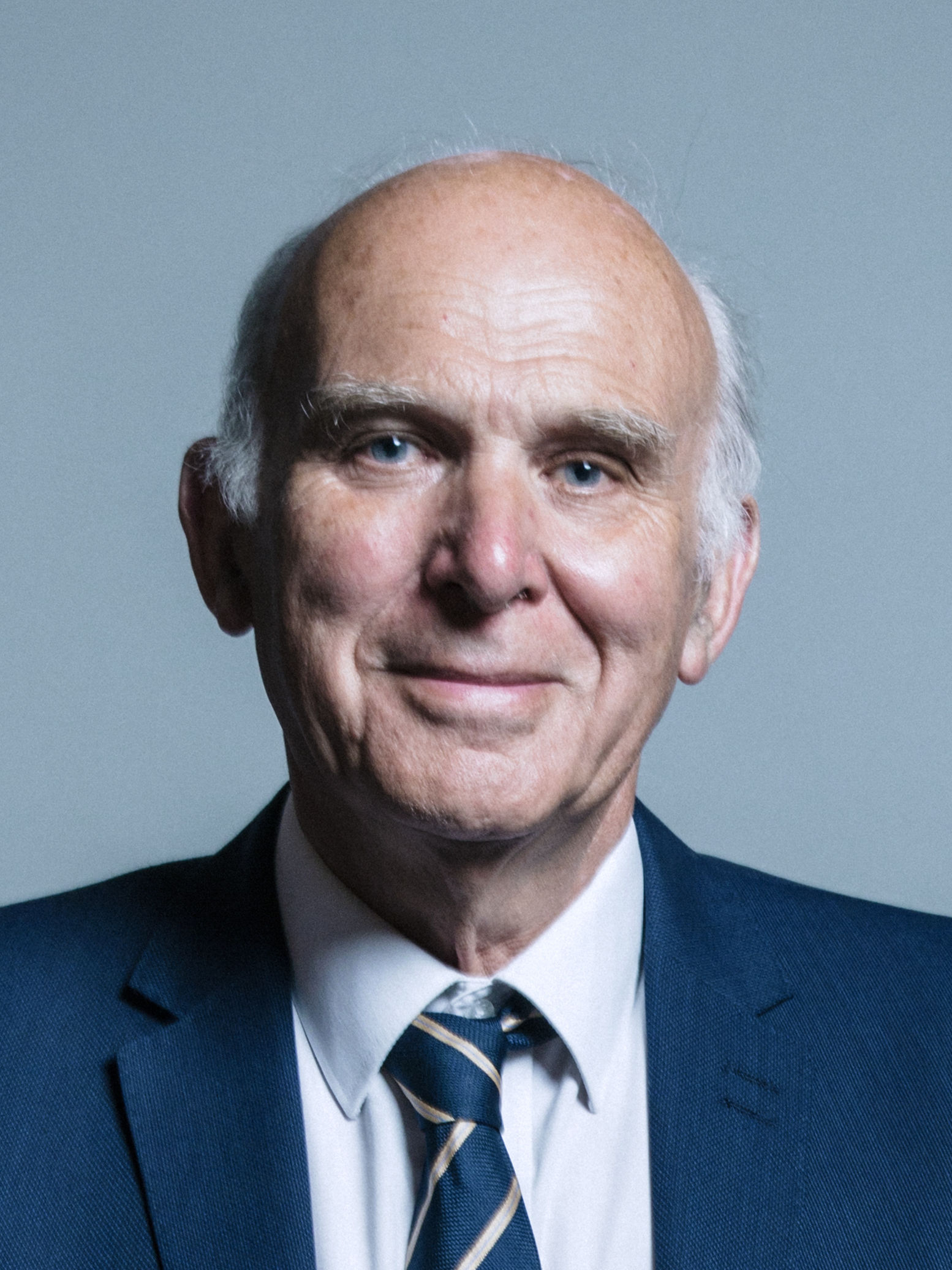
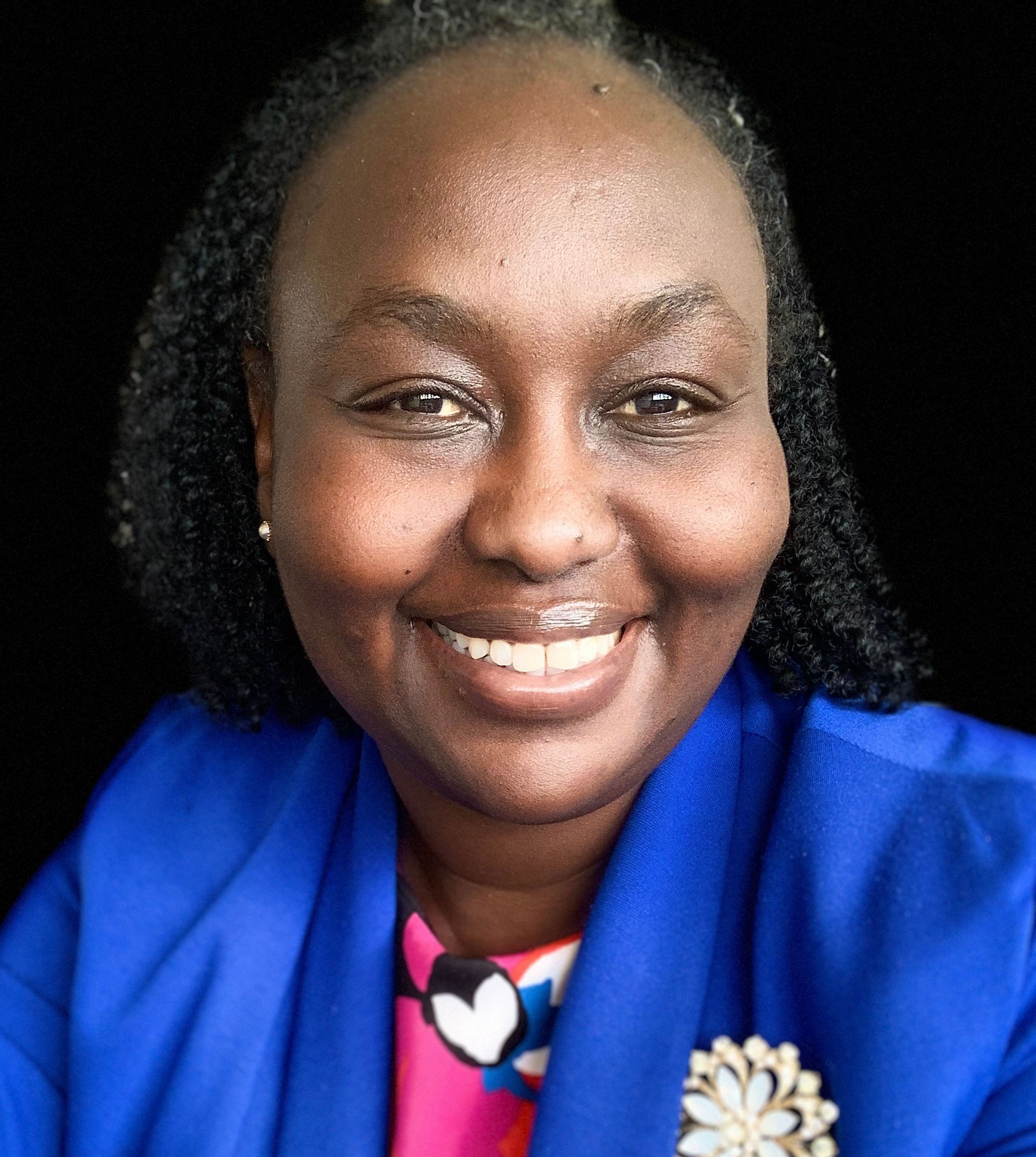
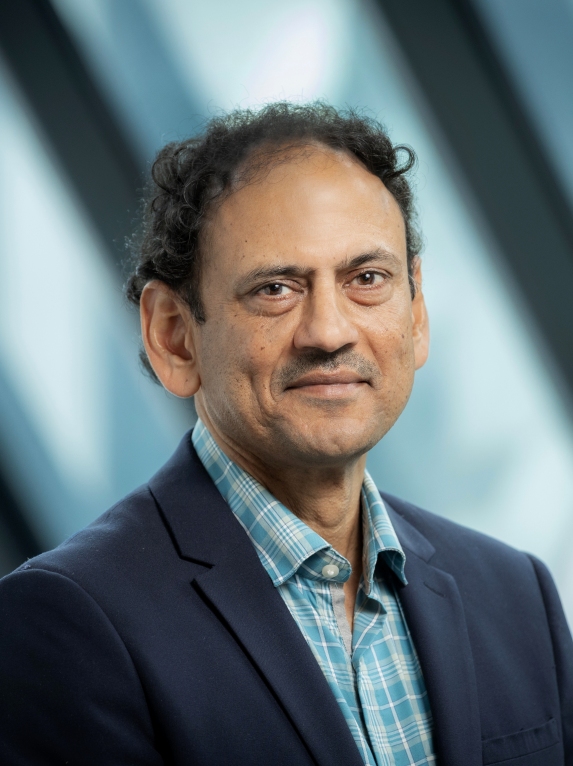
In this episode of Interpreting India, Tejas Bharadwaj is joined by Almudena Azcárate Ortega, senior program analyst at Secure World Foundation, for a wide-ranging conversation on how emerging technologies, particularly AI, are reshaping the landscape of space security. A space lawyer and policy scholar with deep experience in multilateral processes, Almudena brings both technical nuance and diplomatic realism to questions that most space conversations still treat as hypothetical.
This episode explores:
What is space security, and how is it different from space safety and why does that distinction matter more than ever in the age of AI? How is AI being used in space domain awareness, debris management, and Earth observation, and what are the limits of relying on AI for high-stakes decisions in space? What happens to accountability and liability when an AI system integrated into a satellite causes damage — either through malfunction or deliberate manipulation? Do we need new treaties to govern AI in space, or is the existing framework, built around the Outer Space Treaty, still fit for purpose?
Episode Notes
Almudena opens with a distinction that anchors the entire conversation: space security, unlike space safety, is about intentional harm. It concerns deliberate attempts to disrupt, deny, or destroy space systems and the services they provide, and it is discussed not in Vienna at COPUOS but in forums like the Conference on Disarmament and the UN General Assembly's First Committee in Geneva. AI, she argues, is not new to space systems, having been slowly integrated since the late 1990s for data processing and autonomous operations, but its implications for security are only beginning to surface in multilateral discussions.
On the opportunities AI presents, Almudena is clear: faster data processing for space situational awareness, smarter collision avoidance, more efficient Earth observation, and greater autonomy for robotic explorers in deep space. But she is equally clear about the risks. The black box nature of AI systems adds a layer of opacity to operations that are already difficult to attribute, and in a geopolitically tense environment, opacity contributes to escalation. She walks through a scenario that captures the danger precisely: an adversary feeding incorrect data to an AI system managing satellite manoeuvres, causing it to collide rather than avoid. The AI has not been weaponized in the traditional sense, but the satellite has, and liability under existing frameworks is far from straightforward.
On governance, Almudena resists the temptation to call for an entirely new treaty architecture. The Outer Space Treaty, she argues, was always a treaty of principles, functioning more like a constitution than a rulebook, and its core provisions on non-discrimination, responsibility, and due regard remain relevant in the age of AI. What is needed is not a replacement but a layered approach: applying existing principles thoughtfully, developing non-legally binding norms where binding agreements are politically out of reach, and remaining flexible enough to adapt as the technology evolves. She also flags cyber as the technology deserving the most urgent attention in the near term, given how deeply software-dependent space systems have become and how difficult cyber-attacks are to attribute and deter.
Transcript
Note: This is an AI-generated transcript and may contain errors.
Tejas Bharadwaj: Hello and welcome to a new episode of Interpreting India. From geopolitical complexities to economic uncertainties, India faces critical challenges in its quest for a more prominent role on the world stage. This season, at Carnegie India, we continue to bring voices from India and around the world to examine the role of technology, the economy, and international security in shaping India’s future.
I’m Tejas Bharadwaj, and we shall be discussing the role of emerging technologies in space security today. Emerging technologies like artificial intelligence are increasingly defining how global players are viewing space security today, offering a plethora of opportunities. These technologies also present challenges that players need to understand to effectively deploy them for ensuring a safe and secure space environment.
Joining us today to discuss this topic is Dr. Almudena Azcárate Ortega, the lead researcher at UNIDIR’s Space Security Program. An experienced space lawyer and policy scholar, Dr. Ortega has briefed UN member states on the topic of space security law and policy and has presented her research in multiple fora. She has led UNIDIR’s participation in several multilateral processes and leads the design and implementation of the program’s research projects and strategies.
She also holds a doctorate in space security law from Georgetown University, focused on the distinction between dual-use and dual-purpose space systems. She also holds an LLM in national security law from the same institution, where she was awarded for distinguished academic performance in her program. Notably, last year, Dr. Ortega co-authored a UNIDIR report on the future of space security in the age of artificial intelligence. For the listeners, do feel free to read it at your own convenience.
Dr. Ortega, welcome to the Interpreting India podcast.
Almudena Azcárate Ortega: Thank you very much for having me. It’s a pleasure to be here.
Tejas Bharadwaj: Sure. Thank you. Thanks for joining us. Before we open to specific questions, I would like you to expand upon the basic concepts for our wide audience here. How do you define space security, and how does AI change this definition of space security in the current age?
Almudena Azcárate Ortega: That is an excellent question. It is important to know that in the multilateral context, we deal with space issues in two different main groups of discussion. There is the group that discusses the peaceful uses of outer space, which is based primarily in Vienna and COPUOS, the Committee on the Peaceful Uses of Outer Space.
They can discuss things that might seem like security to a lay person. They can discuss things like space debris or the dangers that certain natural hazards, such as solar radiation, might pose to space assets. But we do not consider those things to be space security per se.
What we consider to be space security are the things that we discuss in fora such as the Conference on Disarmament, the First Committee of the UN General Assembly, or the Disarmament Commission. In this sense, security is concerned with the relationship between space objects and also the maintenance of peace and security, disarmament, and including the prevention of an arms race in outer space.
Prevention of an arms race in outer space, or PAROS, is the agenda item, so to say, under which we discuss space security issues at the United Nations. So in this sense, space security is distinct from safety, from the things that people discuss at COPUOS, this initial forum in Vienna that I mentioned.
Even though the two are directly interrelated, when we are talking about safety, we are talking more about hazards or risks, meaning non-intentional human action that can lead to those hazards. But there is no intention by humans to disrupt, deny, or destroy space systems or the services that they provide.
Whereas when we talk about space security, there is that intentionality component. So essentially, we are talking about measures designed to prevent deliberate harms when we are trying to ensure space security, and threats to space security, those actions that precisely seek to deliberately harm, deny, or destroy space systems and their services.
So in space security, we talk more about threats and how to mitigate them. And in the peaceful uses of outer space, we talk more about risks or hazards. That being said, these are not necessarily universal definitions because obviously the word risk does have connotations that are important to disarmament and security discussions, like for example, you might be familiar with nuclear risk reduction. But I think this is a helpful way to understand the separation.
AI is relatively a new topic when it comes to more traditional space security discussions, but it is not necessarily super new when it comes to space systems themselves. AI provides many opportunities, and I am sure that we will be talking about some of them here today. But obviously, the integration of new technologies into space systems can also present challenges, and that is why it is really important to understand how that new technology, in this case AI, works, and how humans can best profit from it without having to endure potential dangers.
And if we are faced with specific threats from AI usage, then we have to know how we can be able to mitigate them and eventually eliminate them to the best of our ability. So a bit general in that sense for now, but I am sure we are going to get a little bit more into the detail as we continue with the discussion. But I am happy to expand on any point.
Tejas Bharadwaj: Thanks, Dr. Ortega. In fact, like you rightly said, the interrelated concepts of space safety, space security, and space sustainability, although mutually interrelated, have their own definitions and characteristics. Like you rightly said, the intentional aspect that delineates space security from other aspects like space safety and sustainability is clearly articulated there.
The point that you mentioned, that right now we do not have a lot of international activities happening on space, how do you feel the opportunity of AI in the space domain awareness architecture? Can you expand on that?
Almudena Azcárate Ortega: Sure, absolutely. Well, first of all, thank you for mentioning the Lexicon. This is a tool that we developed in collaboration with the Secure World Foundation. I believe you had Victoria Samson in a previous podcast episode. She was the other co-editor of this project.
It is so important to build common understanding around these issues. AI specifically, because it is so new, there are so many unknowns about it. It is important to start gathering common understanding about how its integration with space systems works.
AI does provide many opportunities in terms of situational awareness, for example. What is really good about AI is that from a data processing standpoint, it can do so much more than humans. It can process data more quickly and more efficiently.
So when we are talking about space situational awareness, space domain awareness, but also keeping track of things on Earth as well, AI can be a really helpful tool. And for many years, it has been slowly integrated into space systems. I want to say since probably the late 90s, different types of AI have been slowly integrated into space systems and operations precisely because of that data analysis and data processing capability that AI has, that humans, well, I would not say do not have, but it would take humans a lot more time to carry out.
I have a couple of examples, considering space domain or space situational awareness, but also beyond. In the context of more space domain awareness or related fields, when it comes to space debris management, space debris is a huge concern for many actors because it is uncontrollable. We do not yet have the tools to clean up space when debris is created, even though some are being developed. The technology is not yet mature enough so that we can just create space debris and not worry about it, essentially.
When it comes to space debris management, AI can be used, or at least it is being developed, to potentially predict collision risk, to essentially optimize how satellites would have to maneuver in the most efficient way to avoid potential impacts and to ensure that both the space systems themselves and, obviously, the humans that are in space, the astronauts, the cosmonauts, the taikonauts, are kept safe. So that is a really useful utilization of AI right there.
Also, when it comes to planning spacecraft operations, onboard AI systems can also enable spacecraft to prioritize certain missions, whether it is scientific endeavors or whatever, to schedule their own functions to ensure that they can focus on those missions specifically without necessarily having human input 24/7.
Then, we do not talk about this that much in the security multilateral discussions, but you might also consider robotic explorers, like for example the Mars rover or similar technologies that might be deployed now that humans are going back to the moon and the moon is becoming more and more important. Autonomous navigation systems, in that sense, can be really useful to help those robotic explorers plan routes, analyze terrain, avoid obstacles, that sort of thing. So AI can really help them do that in real time, again, without the need of having human input 24/7.
I also mentioned the use of AI in space for operations on Earth or for sustainability or security on Earth as well, because Earth observation obviously is a big part of space activities. In fact, for emerging spacefaring actors, one of the first satellites that they will launch when they start their own spacefaring journey is Earth observation.
AI can actually be really useful when combined with Earth observation because it can aid again with processing data, in this case images, to monitor whatever is being tracked on Earth. That may be environmental changes, crops, deforestation, natural disasters, whatever. So in that sense, it can be really useful and it can help decision-making on Earth as well.
Then from a military or from more security perspective, that Earth observation also has applications related to ISR, or intelligence, surveillance, and reconnaissance. And so AI can also help optimize that. It can also help gather or analyze data more efficiently for the purposes of threat detection, strategic planning, that sort of thing.
So AI is definitely very useful, both for civilian and military applications. But of course, it has its challenges as well. It is not a foolproof technology, and I am sure we will talk about those in a bit as well.
Tejas Bharadwaj: Dr. Ortega, thank you very much. I think from finding the needle in the haystack, as they would say, finding the right data that needs to be related, reducing latency through its computing, and also predictive maintenance, inventory management, autonomous systems on celestial bodies, they are all really useful opportunities that AI presents.
I would just like to pivot more to the warfare front. We have seen instances of autonomous activity, instances of dogfighting, maneuvers, and rendezvous and proximity operations. We do not need to name any states here, but these kinds of instances that are being witnessed in outer space are quite concerning. How much has AI fueled these kinds of actions and how much has AI been a proponent or a driver toward these kinds of activities? Can you elaborate a little bit on that, if possible?
Almudena Azcárate Ortega: That is a good question. Thank you for that. First of all, I think there is sometimes misunderstanding or not accurate understanding about how space operations happen in orbit. I personally do not really like the term dogfighting because it sounds a little bit sci-fi. When I hear it, I think of Star Wars and X-wings fighting TIE fighters, moving really fast against one another and shooting at one another.
That does not really happen in space. I do not know if technology will be evolved enough down the line that it will be able to happen, but as of right now, movements in space are generally really predictable. They are generally slow. Depending on the orbit, they can take days. So dogfighting, I do not think, is a really accurate term.
When we use those types of terms, I think that also serves as a potential driver of escalation. So I think we have to be really careful with the terms that we use because they can also trigger reactions from rivals, from near-peer competitors. In that sense, it is important to be careful and to be precise. And that is one of the goals of projects like the Lexicon that we have developed: to shed some light on the importance of language.
Then as to your question more specifically, as I said before, AI has not yet been a huge topic of discussion in multilateral fora, even though we are seeing, well, when I say it has not been a topic in multilateral fora, I mean in relation to space, because as you may know, the UN is also discussing AI specifically in its own AI-dedicated groups.
But when it comes to space security, the topic of AI has not come up as frequently. At the regional and national levels, we have seen states prioritizing this issue, but again, not necessarily merging the two fields. For example, we have the EU AI Act, which does not really take space into account. And we of course have different states which are starting to consider AI legislation or AI mechanisms that they can implement at the domestic level.
That being said, from a security perspective, there are of course concerns. I do not know if you are familiar with the concept of black box. Black box, essentially in relation to AI systems, means that we know what is being put in the AI. So what information we are giving the AI, and we know the information that the AI is giving us.
Think, for example, generative AI tools like ChatGPT or Claude. You know the prompt that you put in, you know the response that you get, but you do not necessarily understand the thought process that goes on within the AI system itself. So that decision-making process that happens at the internal level of the AI system is very difficult for us humans to understand.
That entails an inherent lack of transparency, which can make AI seem untrustworthy, especially at a time where we have a lot of geopolitical tension right now, and space operations are already kind of lacking transparency in many respects. So when you add an AI, it adds an additional level of lack of transparency, which can be concerning for some.
Tejas Bharadwaj: It was useful to know the aspect that you mentioned on the black box nature of AI. We as humans are increasingly finding it difficult to do collision avoidance maneuvers or assessments, for the reason being that they are very overwhelming. And to operationalize it or make it more efficient, we use AI.
But again, AI as a black box algorithm poses risks. What if in the future AI leads to a collision avoidance decision? Or are there any other kinds of escalations that AI leads to? How are countries currently addressing these challenges? How much should we rely on AI, and how much should humans have that intuition or decision-making? How do you address these challenges?
The second thing I would like to expand upon is the role of generative AI. But first I would like to hear your thoughts on the black box nature and the challenges it poses.
Almudena Azcárate Ortega: That is a really tricky question, and I do not know if I have an answer for you, to be honest. I think different states have different views on how to address the challenges of AI. Again, when it comes to space specifically, there has not been that much of a discussion specifically on AI.
Although, as you may know, we are going to be having the third and fourth sessions of the Open-Ended Working Group on PAROS in all its aspects this year. I would expect that AI might be mentioned. I do not necessarily think that it is going to be a primary topic of discussion, but non-kinetic threats, which AI can certainly be considered, or be considered adjacent to, definitely have taken priority over the years.
Technologies such as cyber, electromagnetic threats like jamming and spoofing, those things are becoming increasingly a priority. Or specific conducts and actions that space technologies can take, such as rendezvous and proximity operations, are becoming a key point of focus for many states. And of course, AI can be integrated or can be involved in carrying out those actions.
AI in and of itself, I do not necessarily think it is a threat. You mentioned dual-use. It is a tool that is being used for a lot of civilian applications. It is a tool, as I mentioned, that also has significant military applications, but it is not necessarily aggressive in nature.
That being said, it could potentially be repurposed in the context of the use of certain space technologies to be used as a counterspace capability even. Or maybe not the AI itself, but the AI could be repurposed to cause the space system to integrate it to be used as a weapon, if that makes sense.
For example, if you tamper with an AI system that manages or contributes to the management of a satellite that is capable of carrying out maneuvering actions such as RPO, you could feed it incorrect data and cause the satellite to veer off from its intended task. So instead of avoiding a collision through maneuvering, you could cause it to place itself in the trajectory of the debris that it is trying to avoid, or you could even cause it to maneuver to collide against another satellite.
So the AI has been repurposed so that the satellite can be used as a weapon, can be used in another capacity different than what it was designed to do. And so we do not necessarily have examples that this has happened in this context, or a state or a commercial entity has done this on this date. I do not have that data to give you. That is mostly speculative to a certain degree, but the danger is there and states acknowledge that this is a possibility.
So this dual-purpose danger is something that states are scared of more generally, but AI obviously adds an extra degree of complexity, if you will.
Let me think about it. If we are talking about damage more specifically, what if there is damage being caused on Earth or in space due to the malfunction of AI, especially if that malfunction has been caused intentionally by a rival or a bad actor, or however you want to call it?
Under the Liability Convention, you obviously have an absolute liability regime that applies to damages happening on Earth or at sea or in the airspace. So that perhaps would be a little bit easier to solve. But when it comes to space, the liability regime that applies is fault-based liability. And when you have a space object where there are so many stakeholders involved in its functioning, it can be difficult to attribute that, who is essentially liable here.
There are many, many ways to attribute jurisdiction, but it is not necessarily super straightforward. So again, adding the AI component could add an additional layer of complexity because, for example, the AI is operated by a different entity than the operator of the satellite itself, etc. Those complications again blur things a little bit, make them a little bit less transparent than perhaps many would like.
This added lack of transparency can really contribute to escalation. It can contribute to an undesirable security dilemma. So yeah, AI definitely brings a lot of interesting topics, or at least heightens existing topics, and at this stage I do not necessarily see the international community focusing a lot on AI and space. They have a lot obviously to address, there are so many concerns, but so far AI has not been a top priority, although I would expect that it becomes increasingly one as discussions continue and as the technology itself also continues to develop.
Tejas Bharadwaj: Thank you, Dr. Ortega. You rightly mentioned novel aspects like data poisoning. These kinds of instances have not happened yet, or there have not been instances that you can suggest have happened. This takes us to the approach of whether to be reactionary or precautionary. That is what your report earlier talked about. Do we really have to wait until these kinds of risks emanate?
You mentioned that in the Open-Ended Working Group we will see the probability of non-kinetic space threats being discussed, cyber, electromagnetic threats, and how AI can be accommodated in these discussions. You also rightly mentioned the Liability Convention, which takes me to the next question. Consider the Outer Space Treaty as well as the other space treaties. They were written much before the advent of AI.
So, considering the current space governance landscape, do you feel the need to have new treaties to govern AI in space? We have seen how the geopolitical landscape was during the era of the Cold War. We had a lot of space treaties being drafted and enforced. But right now we are seeing more of a pivot toward soft-law instruments or guidelines. You mentioned COPUOS. In 2019, we had guidelines on long-term sustainability of space activities.
So are we moving toward soft laws? What is the role of existing space treaties here to govern AI? And if you think they are not sufficient, then where do you see the future going? Will we have hard laws that can govern AI? The EU AI Act is one example of multilateralism coming together to regulate AI. So do we see something emerging like that in the global landscape, or do you think soft law is the way forward?
Almudena Azcárate Ortega: That is an excellent question. And a question that many have been asking, not just in relation to AI, but in relation to space regulation more generally.
I would say, first of all, that I think the Outer Space Treaty is nowadays probably more relevant than ever before. But it is a treaty of principles. If you read the title of the Outer Space Treaty, it very clearly says that it is a treaty on principles governing the activities of states in the exploration and use of outer space. So we often forget that, but it is really important to remember that it is a treaty of principles, and therefore we cannot really expect it to do more than it was created to do.
To give you an analogy that I think is useful, the Outer Space Treaty is like the constitution of space. Similarly to constitutions that we have for countries on Earth, it does not deal with the nitty-gritty of everything that can happen when it comes to space exploration and use. Other legal and normative mechanisms do that.
For example, the Outer Space Treaty had several treaties that were negotiated and entered into force after it, which do deal with some of the more specific issues that the Outer Space Treaty mentions but does not go deeply into, like for example liability. There are also things like registration, etc.
Going to your question that is more specifically focusing on AI, I do think that the Outer Space Treaty does still provide principles that are very relevant in the age of AI. For example, we have the principle of the use and exploration of outer space being the province of all humankind in Article I, the obligation of non-discrimination, which is also enshrined in Article I, the responsibility regime in Article VI, the due regard principle in Article IX. All of these principles still apply and are still relevant when we are thinking about integrating AI into space systems and what uses and challenges can emerge from that integration.
Then Article III of the Outer Space Treaty also establishes the applicability of general international law. I think this is a really important article of the Outer Space Treaty. So the application and the applicability of general international law to the outer space environment. And there are many principles in general international law that are very relevant to space operations that involve AI.
That being said, of course, no mechanism is perfect. And I do think that it is positive that we continue to talk about legal and normative mechanisms for space and specifically to address space security concerns.
I think one of the reasons why the international community has been focusing on guidelines and principles, like you mentioned the LTS guidelines, for example, in the last few years, is because the Outer Space Treaty was a treaty that was negotiated between a few states, primarily the United States and the then Soviet Union, which were the most important or maybe the only spacefaring nations at the time.
And now you have so many more states that want to be involved in those discussions, which is great. It is great that they want to be part of the discussion. But the consequence of that is that it is easier to agree on something between two parties, and it is harder to have 193 agree to a similar mechanism. So that is part of it.
The geopolitical climate also, which is pretty tense at the moment, does not help. So that is why there are many actors who perceive non-legally binding measures as potentially more useful at this point in time.
That being said, non-legally binding mechanisms and legally binding mechanisms fulfill different functions, and they are not incompatible. Both of them can be negotiated at the same time, or one can be used to help pave the way for the other, or to clarify what the other means. For example, the Outer Space Treaty came to be as a result of the negotiation, before the Outer Space Treaty was negotiated, of two UN General Assembly resolutions. And then those two General Assembly resolutions eventually became the Outer Space Treaty that we know nowadays.
Similarly, some non-legally binding mechanisms like the one you mentioned, the long-term sustainability guidelines, help interpret the principles that are already enshrined in the Outer Space Treaty. So as you can see, there is a lot of compatibility between the existing measures. That is something that we have to keep in mind as we continue to negotiate or to think about new mechanisms, that we are not starting from scratch, we do not have to reinvent the wheel.
Even if AI is a very novel technology, we already have a robust legal and normative framework upon which we can rely. So again, AI is not an exception to that.
You mentioned that reactionary or visionary rulemaking process. I think that when it comes to new technologies, especially those that develop really fast, and I think AI is a clear example of this, it is inevitable that there is going to be a certain amount of reaction because technology always advances faster than law and policy. But you can be pretty visionary as well to a certain degree. And the Outer Space Treaty is an example of a visionary treaty.
The negotiators did not know that commercial actors were going to have such a huge role to play in space activities, and now they make up 80 percent of the space economy. They thought that states were going to be kind of like the main characters of space activities. And yet they included Article VI, they mentioned non-governmental space actors. So that can also be replicated with AI as well.
But you have to remain flexible when it comes to these new technologies and know that there is not going to be any single mechanism that is going to address all of your concerns forever and ever. You will always have to continue to adapt with new mechanisms, with new ideas. So that flexibility is important as well.
Tejas Bharadwaj: I believe you are proposing a hybrid kind of mechanism, that you make the best use of things that are available and do not rely on one single mechanism.
Talking about this position, on the AI world, countries are coming up with those institutes to foster some kind of transparency and confidence-building, at least to test AI models being deployed in space, to see how these models are behaving, sharing the results between countries through international networks. That is something that has already been done in the past, if I am not wrong.
Talking specifically about instruments, we did see the U.S. and a couple of other countries coming up with UN General Assembly resolutions in the past. We have seen those kinds of instruments come up. But quite specifically in the arena of the Conference on Disarmament, we have not seen any kind of political instruments, let alone legal instruments, come up in the last few years.
I can go back to the previous Open-Ended Working Group on reducing space-based threats also. We have not seen the political appetite. So given the current geopolitical will and appetite to have any kind of binding or even non-binding political instruments, where do you see the future of space security governance going? Do you feel that multilaterally it is going to remain fragmented, which will then force countries to look at a hybrid architecture? Or do you see some kind of optimism there? Because at UNIDIR, you track multilateral processes quite intensively.
Almudena Azcárate Ortega: I definitely think that multilateral processes continue to be key, especially for fields such as space, which is a domain that is inherently international. So having those multilateral fora that address these concerns continues to be so essential.
Obviously there is a call for more inclusivity, which I think is very positive. It is one of the reasons why I think we have transitioned from what used to be the more traditional mode of ad hoc bodies, such as the groups of governmental experts, which as you may know are smaller groups of up to 25 states, where the permanent members of the Security Council, so the United States, China, Russia, the UK, and France, are always represented, but then the remaining states are selected on the basis of diversity.
It is a diverse, relevant group, but of course many are left outside of the room. And of course, other stakeholders which are not states, such as civil society, academia, and industry, which might not have decision-making power, but they nevertheless have a lot of insights that they can provide to the discussion, are also left outside of the room.
While the GGE model has its advantages, the lack of inclusivity is one of its major disadvantages. And that is why we have transitioned into this Open-Ended Working Group model. We had the first in 2022 and 2023 with a responsible behaviors Open-Ended Working Group. And now we are having that Open-Ended Working Group on PAROS and its aspects, and the inclusive aspect of it, the fact that every state can participate, is definitely a big advantage and something that states have really been in favor of. So that is great.
You mentioned the Conference on Disarmament, but the Conference on Disarmament is also a body where not every single member state of the United Nations is represented. So it also presents, it is bigger certainly than those closed groups of governmental experts, but it is not as big as the General Assembly itself. It is not as big as those ad hoc Open-Ended Working Groups can be.
So I think that willingness to shift to a more inclusive process is indicative of the fact that these discussions continue to be really important and that all states consider space to be an issue of priority, even states that are not necessarily spacefaring themselves, because they realize that even though they are not spacefaring, they are nevertheless stakeholders when it comes to space. Everybody is a stakeholder. You and I are stakeholders when it comes to space.
Then again, the non-governmental entities that also get to participate in these processes, again, they do not have sovereign power, obviously, so they do not have that decision-making ability that states do. But it is very positive that they are part of the conversation because they oftentimes have a lot more know-how or a lot more context that states maybe lack or lack to a certain degree. Having that added perspective provides useful information that allows states to ultimately make more informed policy and lawmaking decisions, which is eventually the goal.
That being said, again, I reiterate, I do think multilateralism in this sense continues to be very important, even though we are in a geopolitically tense environment right now, perhaps even more so because it is a geopolitically tense time.
That being said also, states can continue to talk about these issues at the regional level. Regional discussions can help to have greater cohesion, even if it is not consensus or uniformity about opinions, because regions are themselves very diverse. Having that cohesion, knowing what other states within your region think about these issues, can be really useful when you then go to the multilateral fora to discuss these same issues, because otherwise your voice, especially if you are not one of the biggest states, can get a little bit lost in the discussion.
Discussions at the regional level are also really important. And of course, then it is states that have to implement those decisions, those recommendations, those international laws, whatever that states make at the multilateral level. They have to be implemented at the domestic level. So having those discussions internally between the different departments of a government, also between the different stakeholders at the national level, is also important and relevant as well.
So as you can see, once again, perhaps the best approach is a bit of a mix. I do not think there is a be-all and end-all solution for your question here.
Tejas Bharadwaj: Thanks, Dr. Ortega. You clearly mentioned the point on inclusivity. I would like to stress upon that. If you see AI, especially a lot of innovation is with the private sector. It is those big techs and those companies that are at the forefront of developing sophisticated frontier AI models.
Talking about inclusivity, we have seen the UN also grappling with this aspect of inclusivity and creating new initiatives. We saw the UN space debate, engagements on space security policy aspects in different countries and different regions. That is one. But apart from that, is there any willingness from UNIDIR or the UN Conference on Disarmament to involve the private sector? Are you looking at any new dialogues or any forums? I just wanted to understand or know from you.
Almudena Azcárate Ortega: Thank you for that question and thank you also for mentioning the Space Security Portal, which is a tool that is available to everyone and anyone. In a way, it serves as a form of transparency and confidence-building because it puts all of the policies on space security issues from different states in one sole portal, which makes them easier to access, which states have found convenient.
In terms of engagement with industry at UNIDIR, we have definitely been engaging with industry as well as with other stakeholders like academia and civil society for quite a while. Specifically with industry, we have had, if I am not mistaken, since I joined in 2021, three workshops with industry. Essentially, the intent of these workshops is twofold.
First of all, to gather the views of industry actors regarding space security. So what are their concerns? What do they perceive as threats or as issues to address? How are they addressing them? And then how can states be helpful in that mission? What should states know about what industry is doing?
Then the second aspect is to inform industry of what is being done at the multilateral level so that they themselves can also be part of those discussions and get involved in that sense. Because sometimes industry does not necessarily know what is happening at the UN level. The UN can be somewhat niche if you are not a part of that world of diplomacy and multilateralism.
We saw this in the Open-Ended Working Group on reducing space threats in 2022 and 2023, which was the first group on space security where the discussions were open to non-governmental entities. We did have some participation from industry, but we could have had so much more because industry, of course, is so active when it comes to space activities. But I think that maybe they were not more active because they did not necessarily know that this was a discussion that was happening.
So these workshops are also for that purpose, to inform them that they can be part of the discussion. The UN and states within the UN want to hear about their perspectives as well. And we have definitely seen an evolution in the time that we have held these workshops.
I think traditionally, industry actors did not necessarily want to be too involved in space security discussions. It is different on the peaceful uses side. I think on the peaceful uses side, at COPUOS, they are significantly more active. But when it came to security, there is an association of space security with space weapons, so industry perhaps did not want to be associated with the idea that they were themselves developing space weapons.
Traditionally, they had not been too involved, but in recent years they have become more knowledgeable of what space security entails. They have space security-specific concerns themselves. So we do see them raising issues that are very relevant for space security discussions that maybe are not necessarily being raised by other actors.
Things relating to insurance, for example, is not an issue that states have really raised, but it is so important to space industry because, as I said, they are the primary operators when it comes to space activities. So of course they want to have a certainty that if there is an issue, a security-related issue in space, they are going to be protected, that their investments are going to be protected.
So yes, we definitely engage with industry. We do engage with academia as well. At UNIDIR, we have what we call a Global Disarmament Research Network. This is institute-wide. It is not unique to space security. But at the space security level, what we do with this group is we have different universities that are members of this group, and we collaborate on different projects with them.
Right now we are in the process of developing a map of threats to space systems and consequences to both space and Earth. And we are doing this in collaboration with universities from all over the world to gather different perspectives on these issues.
Of course, we also engage with civil society. So I mentioned Secure World Foundation, they are a long-standing partner of ours. Then we collaborate with many other civil society entities like the GCSP in Geneva and many others.
So yeah, definitely we want everybody, all the stakeholders, to be part of these discussions on space security. And at UNIDIR, we do really try to be that nexus between states and these other stakeholders which have not necessarily traditionally been part of the discussion as much. And we do what we can in that sense, hopefully with some success.
Tejas Bharadwaj: That is good to know. I think inclusivity is a flavor that you are looking to describe here, and that is well taken.
Could we also briefly open up on your Outer Space Security Conference that you have been doing, and how much AI has also featured in these debates? I feel the need to have AI as a discourse under this conference going forward. What do you think?
Almudena Azcárate Ortega: That is a really good question. We introduced the topic of AI for the first time last year, so in 2025. And it is definitely something that, again, generates interest. It is a topic, as I have been saying, that is somewhat novel when it comes to space security, but it is becoming increasingly important because AI is becoming itself increasingly important in our daily lives.
You mentioned generative AI briefly before. I think thinking about GenAI is really reflective of the evolution of AI more broadly. So us humans on Earth here, ChatGPT or similar LLM models are such parts of society right now. Everybody knows what ChatGPT is, everybody knows what an LLM is. Not necessarily everybody uses them, but they know what it is. And in 2023, this was completely new. I think 2023 was the year that ChatGPT specifically was launched. I might be wrong on the date, but before 2023, you did not really hear about AI.
Working in the context of academia as well, it has been really interesting to see that the use of GenAI for research has become a big concern now, but it was not a few years ago. We do not have to go back 10 years. We just have to go back three or four years. So it has advanced so rapidly and it has made such progress so fast.
And that is similarly reflected in space. While it is still fairly new, I think we can definitely expect it to continue to progress. And as I said, it is fairly new maybe in the way that we think about it, but different forms of AI, because of course there are many different types of AI, many degrees of sophistication of AI, but we have had some form of AI integration or machine learning integration or autonomy in space from, I would say, maybe the 90s.
It is right now that we have seen that rapid growth, and it is due to that that we are seeing increasingly more discussions at the multilateral level. Of course, at UNIDIR, we do try to identify what are those forward-thinking, forward-looking topics, and try to be a little bit visionary in that sense when we propose topics for our Outer Space Security Conference. And the panel that we had on emerging technologies where AI featured rather prominently was an example of that.
Tejas Bharadwaj: Thanks, Dr. Ortega. Just to emphasize on that, the question that I had is: where do you feel the opportunities of generative AI in space security are? We can conventionally use generative AI to develop images and procure texts, but in the field of space security, where do you see the opportunities and challenges? I just wanted to hear your thoughts on that.
Almudena Azcárate Ortega: That is a really good question. First of all, I know you and I have been talking about generative AI quite a bit, but just for the sake of your listeners, I would imagine that maybe most of them know what GenAI is. But essentially, AI is a type of technology that allows for the generation of content. It can be text, audio, images, video, etc., and that can be used for a wide variety of tasks.
It is able to create that content due to having been trained with a large amount of existing data. And the fact that it is existing data is important when we consider the applications that these technologies can have.
GenAI specifically can be really helpful in the security context from a logistical and administrative point of view. This is of course not unique to security, but it can be really helpful in the context of security when you need to streamline tasks where fast decision-making is really important, where there is a sense of urgency that maybe you do not have in other fields.
That being said, the effectiveness of GenAI actually does rely on the quality and the accuracy of the data, how good the data that has been fed into it is. So not just in terms of prompting it to do something, but also in terms of what data has been used to have that AI model learn. Both streams of data are important in this sense.
In a military context, if the GenAI is relying on false data, it can lead to incorrect assessments. It can lead eventually to incorrect decisions by the military made on those incorrect assessments made by the AI that could potentially lead to catastrophic situations. It can lead to escalations.
So I do not think that GenAI, in that sense, is advanced enough that humans can blindly trust. You will probably have heard in the context of ChatGPT and other similar LLM models that AI hallucinates, AI has inner biases to it. And that is also important in the context of the use of GenAI for security.
Then for space situational awareness, GenAI can also be useful. It can again provide assistance for fast decision-making during space operations by producing analysis on that situational data. So again, it can analyze data much faster than humans can.
But again, it has that drawback that GenAI produces content on the basis of the information that it already has. So it does not have the creativity that humans have. Maybe it will at some point. I hesitate to think that it will because it is, after all, a machine. It is not alive. But as of right now, it can only act on the basis of what it knows. It cannot improvise in a way that a human can.
So in a fast-paced, tense situation, like collision avoidance, or another form of tense situation in space, AI might not be able to, on its own, defuse that tension. It might still need a human, at least on the loop, but probably even in the loop. The difference between on and in is that human in the loop is very much part of every part of the decision-making process and the data processing that the AI does, whereas on the loop is a little bit more removed type of oversight, but it is still a form of oversight.
So I do think that when it comes to space operations, and specifically security-related issues, there is still that need for having a human on or in the loop, especially when these things can lead to escalation, especially when these things can lead to concerns about the attribution of responsibility and liability that we were talking about before.
Yes, GenAI specifically offers certain opportunities, of course, but we have to be cautious and we have to be responsible in how we use it. We have to consider the ethical considerations around its use as well.
Tejas Bharadwaj: Thanks, Dr. Ortega. You rightly summarized the usage of AI in the space security landscape. Since we are now done with AI, I would just like to open up the floor to this new phenomenon that is coming in technology and also a bit in the space security landscape, and that is quantum. What are your thoughts on the emergence of quantum? That is also an emerging tech. Where do you see that affecting or impacting the space security landscape?
Almudena Azcárate Ortega: I am going to be completely honest with you. When it comes to quantum, I have not really seen any discussions in the multilateral field at all. I think quantum is a technology that is still very much in its infancy, much more in its infancy than AI. I think it is less understood.
It seems that quantum could offer a lot of opportunities when it comes to communications specifically, particularly maybe along large distances. It seems, to a certain degree, to have a bit of a science fiction component to it considering the current capabilities that we have. So it could perhaps become a little bit more relevant in the future.
But again, as of right now, it is not something that has been addressed in any shape or form by states in multilateral fora or by other stakeholders. But I could envision it being perhaps a little bit more relevant, especially once AI discussions become a little bit more mainstream and we slowly but surely start to think about space security and these new technologies, the application of existing mechanisms to these new technologies, and how we can best create new mechanisms to address these.
I myself am not a technical expert, so I cannot really tell you a lot about the inner workings of quantum technology because I do not really know about them myself. But hopefully, in time, we will know a little bit more about these types of technologies like quantum and be able to better assess the opportunities and the challenges that they might present for space security.
Tejas Bharadwaj: We have discussed AI and quantum. Are there any other new emerging technologies you feel would pose any risks to the space security landscape? Any emerging technology you feel that diplomats or policymakers right now would need to focus on apart from AI and quantum?
Almudena Azcárate Ortega: Well, this is not a new technology per se, although it sometimes gets lumped into the group of new technologies with the others that you mentioned. But I think cyber. Cyber is such an important technology. Space systems are increasingly software-based. So if you compare how they were when humans first became spacefaring to now, now everything is connected.
When we think about space systems, we also have to consider that we are not just talking about the space segment. We are not just talking about the satellite, we are also talking about the ground segment. We are also talking about the data links in between. And cyber can be used to interact or to target any of those segments, with the ground segment specifically being the easiest to target.
When I mentioned that non-kinetic issues and threats are becoming more of a priority for states in the context of these multilateral discussions, cyber is probably one of the key issues that states are concerned about because cyberattacks can be really insidious. They can be very difficult to attribute. The degree of harm that you can do with cyber is very broad. It can range from something really momentary and completely reversible to completely decimating a space system.
So the level of accessibility, meaning cyber technologies are pretty accessible, you just need a computer and knowledge of how cyber works, to the difficulty of attribution, to what you can do in terms of how many things you can target when it comes to cyber, is something that really merits attention. We should consider the integration of cyber and space really carefully moving forward. So I am glad that states are giving non-kinetic threats, and specifically cyber, more and more attention.
Tejas Bharadwaj: Thanks, Dr. Ortega. I think the Geneva Cyber Week planned in a month from now emphasizes the importance of cybersecurity in space. And also the work that UNIDIR has done on the importance of cybersecurity in space, I think the listeners can take a look at it at their convenience.
It is very important that you mentioned this, and on a very empathetic note, we are ending this conversation. So thank you very much. All these insights are wonderfully taken, and I hope listeners got a good understanding of the role of emerging technologies, the opportunities and the challenges that they pose in the outer space security landscape.
We will be back in two weeks with a new episode. To make sure you do not miss it, be sure to subscribe on Apple Podcasts, Spotify, Stitcher, or wherever you get your podcasts from. To learn more about our research and team, you can visit us at CarnegieIndia.org. You can also find us on social media on X, Facebook, and Instagram. Thank you for listening. See you next time.