This episode is part of our special series on the India AI Impact Summit, examining the conversations, decisions, and debates that are shaping global AI governance.
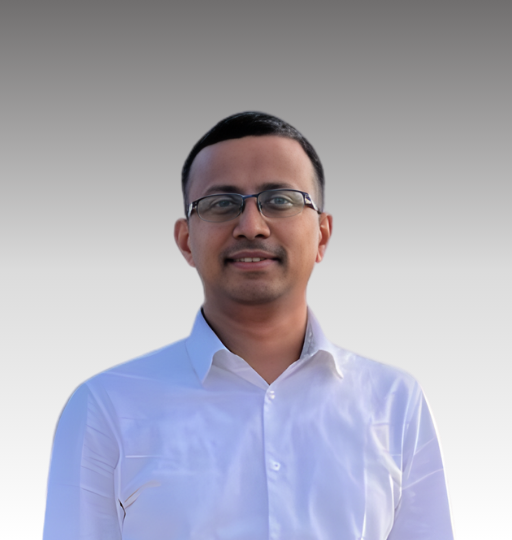
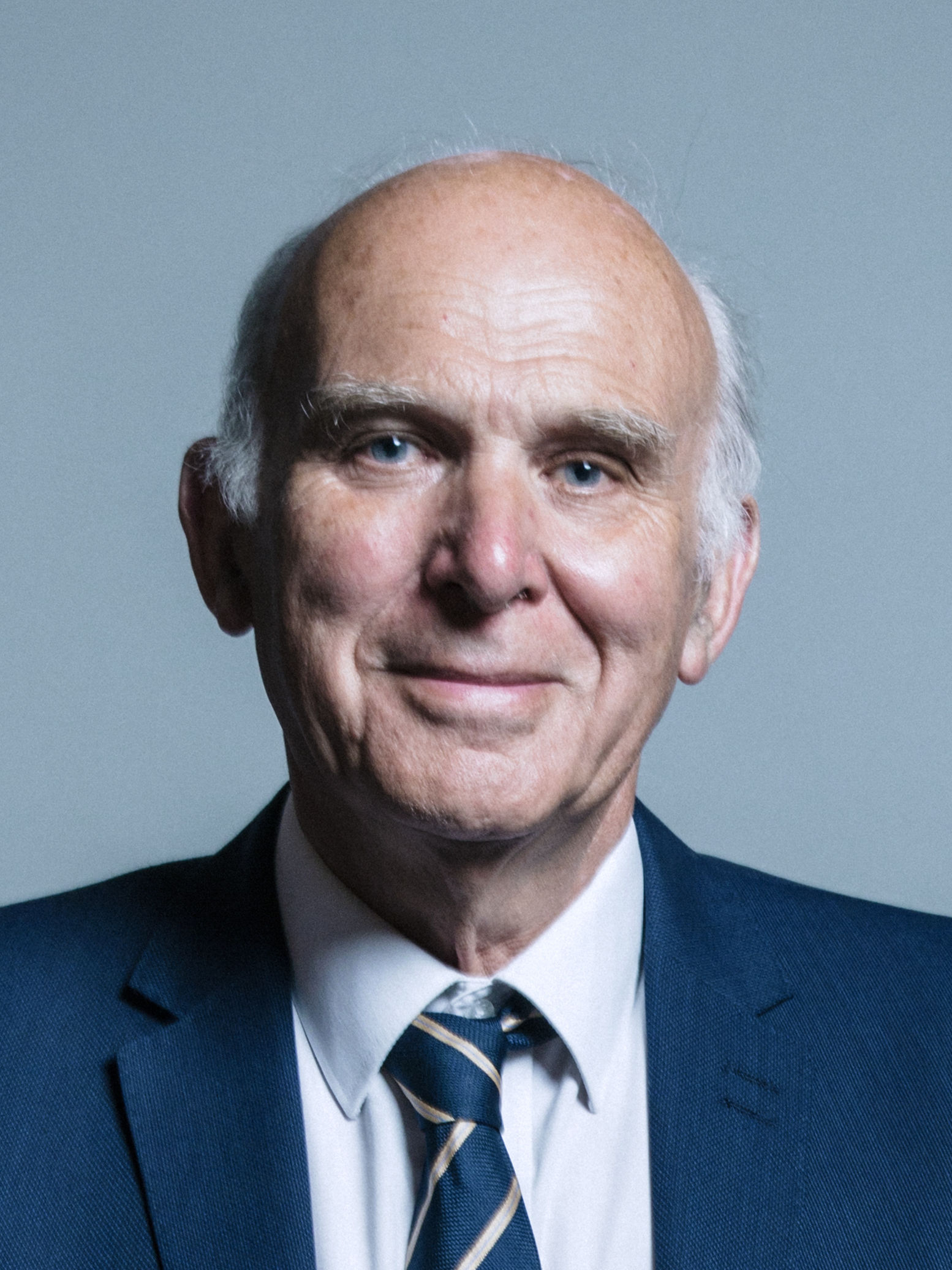
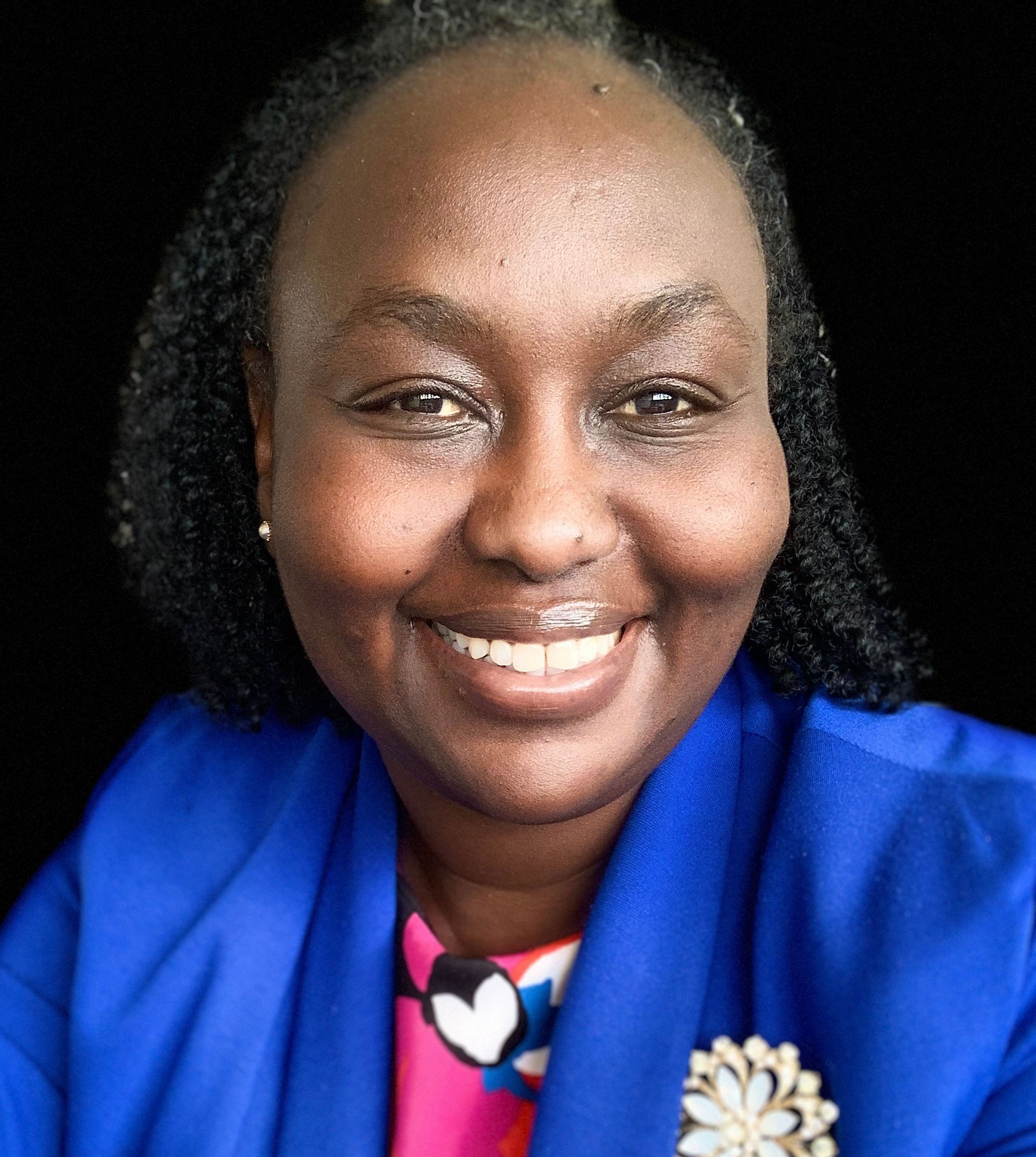
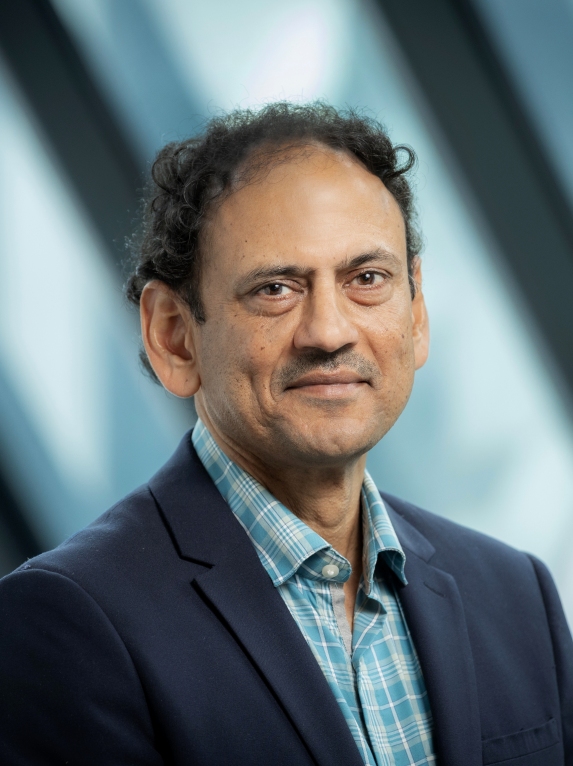
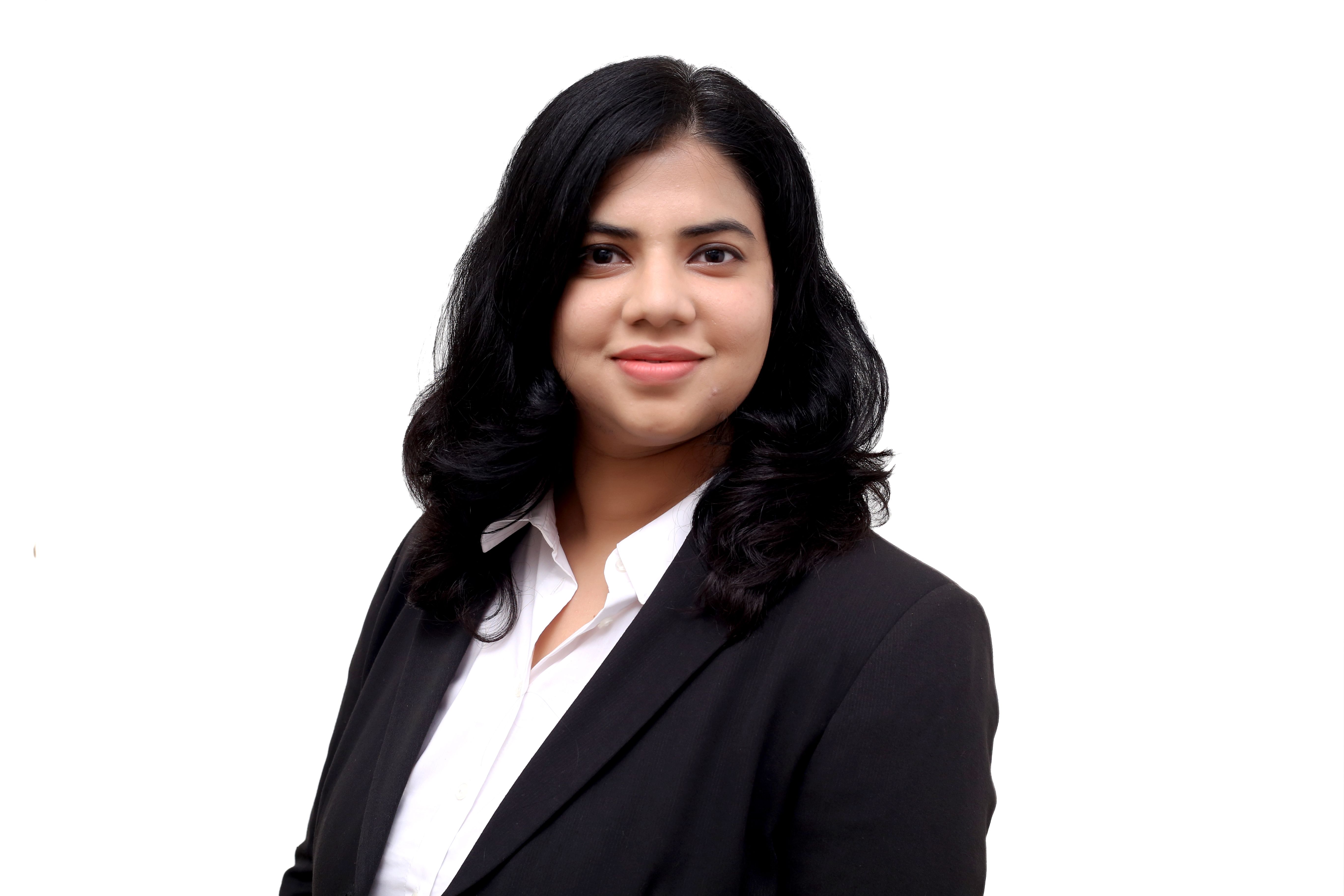
In this episode of Interpreting India, Nidhi Singh, speaks with Professor Balaraman Ravindran, Head of the Department of Data Science and AI at IIT Madras, and Co-Chair of the Safe and Trusted AI Working Group at the India AI Impact Summit. Since the summit, Professor Ravindran has also been appointed to the UN's Independent International Scientific Panel on AI. There is a narrative that has taken hold since the summit, that India moved away from safety and left frontier risks behind. This conversation sets the record straight.
This episode explores:
- What did the Safe and Trusted AI Working Group actually deliver, and what are the Trusted AI Commons? And the AI governance guidance note designed to do?
- Was the India AI Impact Summit really less focused on safety, or did the conversation simply evolve when it moved to the Global South?
- How quickly is the frontier risk landscape changing, and are the frameworks we are building keeping pace?
- What does the growing concentration of the most capable AI models in the hands of two countries mean for a country like India?
Episode Notes
Professor Ravindran addresses early on the perception that the India summit sidelined safety. More than 60% of the summit's events and discussions were focused on safety, trust, and cross-border collaboration. The framing shifted, and deliberately so. When the summit came to the Global South, leading with existential risk, rather than the very real opportunity AI presents to improve healthcare, education, and public services for hundreds of millions of people, would have been the wrong entry point. The two key deliverables from his working group reflect that balance: the Trusted AI Commons, a repository of benchmarks, testing protocols, and best practices designed for AI deployment in resource-constrained settings, and a high-level governance guidance note endorsed by 22 countries, that calls out the issues every national AI policy should address without being prescriptive enough to limit how different countries approach it.
On frontier risks, Professor Ravindran notes that the landscape has shifted in ways that would have seemed speculative even a year ago, and that the frameworks being built to manage these risks will need to keep pace with that change. He also reflects on what the growing concentration of the most capable AI models means for countries like India, and why that conversation may need to move from being a company-to-country dialogue to a country-to-country one. His overall view is one of cautious optimism: there will be disruption in the short term, but there will also be a new equilibrium, and the work is to make sure the transition is managed well.
Transcript
Note: This is an AI-generated transcript and may contain errors.
Nidhi Singh: Hello and welcome to a new episode of Interpreting India. From geopolitical complexities to economic uncertainties, India faces critical challenges in its quest for a more prominent role on the world stage. This season, we at Carnegie India continue to bring voices from India and around the world to examine the role of technology, the economy, and international security in shaping India’s future.
I am Nidhi Singh, Associate Fellow in the Technology and Society Program at Carnegie India.
There is a narrative that has taken hold since the India AI Impact Summit in February: that India’s summit moved away from safety, was primarily about access and development, and left frontier risks behind. This is not right.
The Safe and Trusted AI Working Group produced two of the summit’s most significant deliverables: the framework for the Trusted AI Commons and the guidance note on AI governance, which was endorsed by 22 countries.
Since the summit, the frontier-risk landscape has shifted in ways that make that work even more urgent. Today, we are going to talk to the person who chaired that working group about what it took to build, what it produced, and whether the frameworks we have are ready for what is coming next.
Joining us today is Professor Balaraman Ravindran. He heads the Department of Data Science and AI at IIT Madras and is the founding head of the Wadhwani School of Data Science and AI, the Robert Bosch Centre for Data Science and Artificial Intelligence, and the Centre for Responsible AI at IIT Madras.
He chaired the Safe and Trusted AI Working Group at the India AI Impact Summit, led the committee that drafted India’s AI governance guidelines, and was recently appointed to the UN’s Independent International Scientific Panel on AI.
Professor Ravindran, welcome to Interpreting India.
Balaraman Ravindran: Thank you, Nidhi. I am very happy to be here and share my thoughts.
Nidhi Singh: We will get right into it. You chaired the Safe and Trusted AI Working Group at the summit, with Brazil and Japan serving as co-chairs.
That is a really interesting combination because Brazil is one of the largest and most active voices in the Global South when it comes to technology governance. Japan, on the other hand, is one of the most advanced AI economies in the world.
What was it like to work across such a diverse range of actors, and how did you navigate the very different priorities that these two countries brought to the table?
Balaraman Ravindran: Actually, Nidhi, it was pretty surprising for me. I had great co-chairs, both from Japan and Brazil. They helped us not only shape the deliverables, but also navigate them through the very diverse working group that we had.
Surprisingly enough, even though, as you said, they come from different ends of the spectrum in some sense, they had a similar appreciation of the possibilities of AI and of how regulation should not stifle its broader adoption.
In that sense, we were in sync almost from day one. And that has been India’s stance as well, as you know very well. So we were in sync from day one, and it was amazing.
Both Ambassador Garcia and my co-chair from Japan were very supportive of the whole effort. We did not have a single disagreement in terms of what the focus of the deliverables should be.
We had discussions about what the actual mechanisms should be and what the wording should be, and so on and so forth, but never about the actual substance of the deliverables. So it was a great experience working with the group.
Nidhi Singh: That is really great to hear because I think one of the larger things that India was trying to do through the summit was bring diverse voices to the table. It is good to hear how well many of these countries worked together.
Following from this, as I mentioned in the introduction, there was a perception, especially in some of the Western media coverage of the summit, that India’s summit was not about safety and that it had moved away from the Bletchley-era focus on frontier risks. It was portrayed as being all about access, development, and impact.
But as you have discussed, there was actually broad consensus among countries at different stages of AI development about why safety is important. There were also several endorsements related to safety, and the working groups produced a substantial body of work.
Why do you think the safety conversation was sidelined in this reporting?
Balaraman Ravindran: I am not sure why the press picked that up. If you look at the number of events and discussions that happened during the summit, a good fraction—more than 60 percent, I would say—focused on issues such as access, safety, cross-border collaboration, and related matters, all of which contribute to ensuring the safe development and deployment of AI.
There was also a lot of debate about open source, for example. All of these discussions were essentially looking at building a foundation of trust in AI development and deployment. I think that focus was present in the activities that were happening.
But I do agree that keeping the focus exclusively on safety, especially when the summit came to the Global South, might have been a little counterproductive.
We really have to encourage and support AI deployment in the Global South. As that deployment happens, we need to determine what guardrails and safety measures have to be adopted.
Existential risk is fine as a topic when you are not relying on AI to provide the most fundamental and basic services. But in the Global South, there is a huge opportunity to improve people’s quality of life across the board, starting with basic health care and education and extending to more efficient government services.
There are many areas in which AI can play a major role. To start the conversation by saying, “By the way, there is a 0.0001 percent existential risk from AI,” is not the right way to frame it.
I am glad that we chose to talk broadly about the impact of AI rather than only worrying about safety. In that sense, the broader framing was appropriate.
But if you look at the actual mechanics of what happened, the number of discussions, the continuing dialogue, the commitments made by frontier-model companies, and the various deliverables that came out of the summit, a lot of it was about safety and trust.
Trust is broader than safety. Not only should AI be safe, but it should also be seen as safe. That is what really came out of this, and I am happy with the way it went.
The press likes to say things. They pick whatever works for them.
Nidhi Singh: Yes, and I think part of what you have described is that it was a safety conversation. It simply was not a safety conversation in the same form that it had taken at Bletchley Park. Perhaps people were not quite able to keep up with how that conversation evolved when it moved to the Global South.
Balaraman Ravindran: Yes, exactly.
Nidhi Singh: One of the other interesting things is that, while there was a diversity of countries, there was also a diversity of stakeholders—
Balaraman Ravindran: Sorry, this was the other thing I wanted to correct. The working group did not have any companies participating. It included only country representatives and international organizations. No companies were part of the working group.
Nidhi Singh: Yes, no companies in the working group. I will rephrase that.
A major focus of the Impact Summit was to have a more multistakeholder process. One issue with this kind of process is that many of the actors involved in the safety conversation are not naturally incentivized to share.
When you have these conversations with companies, they may not want to share safety research that could reveal vulnerabilities. Countries may also not always want to pool their governance capacity with competitors in this space.
How do you deal with these kinds of tensions in practice?
Balaraman Ravindran: In fact, there have already been multilateral efforts led primarily by major AI companies. One example is MLCommons.
MLCommons is an effort through which various leading AI companies have come together to fund a multilateral organization that maintains benchmarks, independent test suites, and related resources. These can potentially serve as industry standards against which people can validate their models.
They continue to push the frontier. Right now, for example, they are looking at how to build test suites for underrepresented languages.
So this is already a form of multilateral effort by companies. It is not unthinkable. It is similar to any standards organization, such as IEEE or ACM in my field. These are industry bodies that come together to discuss and build common standards to which everyone can be held.
I agree that AI is different because it is moving so fast that, half the time, people do not even know what risks other companies are confronting. That is going to be a challenge, but I do not believe it is impossible to achieve. It is a good conversation to have.
When a large number of countries that are going to adopt AI come together—which is what happened during the deliberations around the summit—many of them are looking for assurances and support.
In fact, when we floated the idea of the Trusted AI Commons, there was support across the board from companies such as Google, OpenAI, Anthropic, and NVIDIA. All the companies were happy to support an effort along those lines.
So I do not think it is the case that companies do not want to do this. They are not the big bad wolf in the picture.
We just have to ensure that we get the framing right so that everyone can participate. We should not try to place blame on anybody. We should think of it for what it truly is: a joint venture to make sure that we get the most out of a very transformative technology.
I did not see too much pushback from companies during the discussions, but we also kept the commitments lightweight in terms of the guarantees they were required to provide.
The Frontier AI Commitments that came out of the summit were a reasonable achievement, even though that process was unfortunately sidetracked when two companies declined to sign.
Getting the major companies to say that they would, first, consider the Global South and, second, publish various usage metrics, track usage, and issue reports was important.
Regardless of how the follow-up happens, we now at least have a headline commitment to thinking about the Global South, which is a good thing.
Nidhi Singh: Building on that, the Frontier AI Commitments were, of course, important deliverables from the summit.
Can you walk our listeners through the other deliverables? What is the Trusted AI Commons? What does it look like and what does it do? And what does the guidance note do for people who have not read the documents?
Balaraman Ravindran: One of the biggest challenges in building safe and trusted solutions for the Global South is the lack of tools and understanding.
The first issue is the lack of understanding of what safety looks like for the Global South. The second is the lack of tools, datasets, and benchmarks for testing frontier models—or AI systems that use these frontier models—for deployment in the Global South.
What the Trusted AI Commons aims to do is serve as a repository for these kinds of resources. There have been isolated efforts to build benchmarks and testing protocols and to identify best practices for adopting AI, especially in resource-constrained settings or where there is not enough data.
The idea is to bring all of this into one central repository that people can easily access and assess.
Right now, we did not receive sufficient budgetary commitments for the Trusted AI Commons itself to conduct development work. At this stage, it is going to serve as a repository that supports people doing this work, surfaces their work, and makes it more visible to others so that people start using it more broadly.
Once people see its utility, we can hopefully begin directing research and development toward the gaps that the Trusted AI Commons identifies.
As I understand it, it is going to be hosted in India. We have already started gathering some of the resources.
Organizations such as the OECD, which have already been working on this at a broader and more inclusive scale, although not necessarily with a specific focus on the Global South, have also agreed to highlight Trusted AI Commons resources in their repositories so that their visibility increases.
These are still early days. We are still recovering from the summit’s impact. It will be announced soon, and we will have a repository to which people can refer. That is the Trusted AI Commons.
The second deliverable from my working group was a high-level guidance note on AI governance.
This is not a framework. It is not a policy document. It is not something that people can simply take and roll out in their country.
We did not want to do that because there are so many differences from one geography to another and from one culture to another. I do not think we can easily produce a universal AI policy guideline.
What the document does is identify the issues that a policy document should address. It is not only a question of safety and governance; it is also a question of enablement.
Especially when discussing the Global South, you have to be as concerned about enablement as you are about regulation. We identified some of the high-level issues that every policy document should attempt to address.
That is the level at which we left it. Had we made it prescriptive, almost none of the countries that supported it would have done so. More importantly, making it prescriptive simply does not work because every country has its own unique concerns.
I do not think it is a good idea to make something prescriptive at the global level. We identified the issues countries should consider when drafting their policies and left it at that.
Even this kind of guiding document has not really been produced before. It is another attempt, and it incorporated a lot of input from stakeholders in the Global South. It was not created by AI companies or by people unaware of the realities and challenges of the Global South.
That was the second important deliverable.
There were also a few important initiatives from other working groups. One looked at success stories in the Global South. I believe it was called the Global AI Impact Commons.
Nidhi Singh: Yes, the Global AI Impact Commons from the working group on Social Good and Economic Growth.
Balaraman Ravindran: Yes, the Global AI Impact Commons.
People have been trying to use AI in the Global South. There have been small pilots and, in other cases, successful countrywide rollouts. But people need a way to access those examples.
Someone should be able to go to the platform and search for an AI system that could help achieve a particular educational goal in their schools, for example, and find relevant examples.
I think that is a very useful resource. It already has several case studies, and the team is working in collaboration with philanthropic funding organizations focused on projects in the Global South.
There is also an AI diffusion roadmap that has been proposed, which is useful for determining how international collaboration should happen.
Then there was the proposed AI for Science Network of Institutes. Again, that is a great initiative. We will have to see how all of these take shape.
A number of interesting initiatives were proposed. These are all official deliverables coordinated by the IndiaAI Mission.
There is also one unofficial deliverable that emerged from the ground up and in which I have been involved: the Global South Research Network for Trustworthy AI.
It is a group of research institutes, research organizations, and civil society organizations operating primarily in the Global South that have come together to work on issues related to trust and safety in the Global South.
These organizations are not backed by countries or other institutions, but the network has the blessing of the IndiaAI Mission and was launched at the Impact Summit. That is yet another deliverable that has come out of the summit. We will see how it shapes up.
Nidhi Singh: Thank you, sir.
You also chaired the committee that drafted India’s own AI governance guidelines, which were released shortly before the summit. Those guidelines take a principles-based, techno-legal approach to AI governance.
How does that domestic framework fit into the broader global AI governance landscape reflected in the summit’s deliverables? And how did it inform the discussions within the working group?
Balaraman Ravindran: To some extent, given that I was involved in both, it obviously could not help but inform the discussion.
The base document we framed, on which we then had multiple rounds of discussions before it evolved into the final deliverable, borrowed principles from the original Indian document.
We did not copy it because we did not want to produce a principles-level document. We wanted to discuss specific issues.
As I mentioned earlier, India’s AI governance guidelines are as much about enablement as they are about regulation. We wanted to make sure that the issues discussed in the working group also addressed enablement.
That included capacity building, compute provisioning, and similar concerns. These are issues countries have to consider when defining their policies, not just regulation.
We also discussed regulation. And if you look at our governance guidelines, they are not entirely techno-legal. The techno-legal approach is one part of them.
We also say that the technology is not there yet, so we have to think about self-regulation, voluntary commitments, and various incident-reporting mechanisms that can surface what is happening on the ground.
Parts of the broader ecosystem that we discuss setting up in the governance guidelines were also translated into the working group’s policy document.
So I think the Indian guidelines informed it, but it was not a copy. Some of the issues were common.
In fact, you can think of India’s governance guidelines as one example of how a country might take the high-level guidance from the working group and translate it into a more grounded national version.
Nidhi Singh: That is really interesting to hear because the AI governance guidelines do a good job of reflecting what AI development looks like in India.
It is helpful to understand how that experience was translated into the working group’s discussions and how other countries can take the guidance forward.
Another question, again relating to how different pieces of work connected to the working group, concerns the Frontier AI Impact Commitments. It is remarkable that you were able to achieve consensus on them, and they are a strong starting point.
Can you explain how those commitments connect to the safety conversations you were having and to the conversations we are now having about frontier AI risks?
Balaraman Ravindran: Which safety conversation are you talking about that we are having right now? There seems to be one wherever I go, but I assume you will come to it later.
The point is that unless you measure something, you do not know what issues you have to worry about. Getting the companies to agree to measurement was a major step.
For example, if you want to understand how job profiles will change in a country, you need to know how AI is being used in that country before making a judgment.
Not every country is adopting AI uniformly or in the same way. Diffusion is happening faster in certain sectors and more slowly in others. We need to understand that.
Once you have the kinds of measurements that these companies are promising to make, it becomes easier for us to think about policy.
For me, the trust and safety conversation includes job displacement as well.
If I am going to say that humans will leave a particular job role and that the work will be performed mostly by AI, I immediately see that as a safety issue because I do not think AI is ready to act independently yet. We may get there, but I am not sure it will happen in my lifetime.
Unless we have these kinds of measurements of what is happening on the ground and how adoption is progressing, it will not be possible for us to think seriously about policy.
In that sense, I think the commitments will have an impact. I will let you ask the other safety question before I answer further.
Nidhi Singh: You have given me the opening. We have one of the most prominent voices on AI safety in India on the podcast, so I cannot avoid asking you about frontier AI risks.
There has been a lot of discussion about them. The conversation has shifted quite drastically in the few months since the summit, especially because the frontier-risk picture itself has changed significantly.
Balaraman Ravindran: Weeks. It moves quite fast.
Nidhi Singh: In the months since the summit, we have seen models demonstrate capabilities that would have been considered speculative even a year ago, including autonomous vulnerability discovery and multistep exploitation.
How quickly is the frontier-risk landscape outpacing the frameworks we are building to manage it?
Balaraman Ravindran: There is no way to quantify how quickly this is happening. Many of these developments are like black swan events. You can plan as much as possible, and then something happens that you never anticipated.
That is essentially what has happened with [unclear model or system name]. I noticed that you carefully avoided using the name.
Nidhi Singh: You can say it if you would like. Please go ahead.
Balaraman Ravindran: What you are referring to in terms of autonomous vulnerability discovery and multistep exploitation is essentially [unclear model or system name].
You could have anticipated something like this, just as hindsight is 20/20, but people were not actually expecting it to happen.
Now people are saying that Opus [unclear version number] can do almost everything that [unclear model or system name] does, or that there is a Qwen version that is very powerful.
That is even more concerning. It is not just the system that is now under embargo for most people. There are other open-weight models that seem to have significant capabilities as well.
This is something we need to think about. But all of these developments are double-edged swords.
If you move faster than the other party, you can use the same tools to detect vulnerabilities and fortify systems against them rather than waiting for someone else to detect and exploit those vulnerabilities.
In that sense, it is an alarming development if we are complacent. But if we act quickly, determine how to get ahead of it, and start using these systems to patch our own software, then it can be beneficial.
The challenge, of course, is that we are in a country where we have to rely on someone else’s frontier model to give us this capability.
It is not yet clear whether our homegrown models can provide it because we did not focus on this at the beginning. We have been looking at other applications of AI.
So I suppose it is a challenge for our own frontier-model companies to see how quickly they can catch up. But we should not wait for homegrown models.
We have to determine safe operating procedures for using the existing frontier models. They are all available in the “open,” whether as open-weight models or simply because they are not under embargo.
We have to determine how to use them and act very quickly. I know it is a very difficult issue, but we have to address it.
As I said, it is an unexpected development in some sense, but it is not as catastrophic as we could make it out to be. It is not the end of secure software systems.
We simply have to recognize that a new equilibrium will emerge in which every piece of code that is written goes through this kind of autonomous vulnerability assessment. It will become part and parcel of testing very shortly.
But we do have a lot of work to do. The government is cognizant of that.
Nidhi Singh: It is reassuring to hear you say that it is not catastrophic because I do think there is some amount of—
Balaraman Ravindran: In the short term, there will always be disruption. I am simply saying that we will reach a new equilibrium.
We have to ensure that the disruption is not too catastrophic for us. I am not saying that the impact will be minimal. We simply have to respond to it.
Nidhi Singh: Apart from the impact on technology and how it is going to change, another pattern is emerging: the most capable and potentially dangerous models are increasingly gated.
Access is controlled by the companies that build them, and it is concentrated among a small number of countries and institutions.
Balaraman Ravindran: Two countries. Two countries.
Nidhi Singh: Yes, sir.
For a country like India, which needs to understand these capabilities and prepare for them, what does this asymmetry mean for the safety conversation? And what would a more equitable arrangement look like in practice?
Balaraman Ravindran: I do not have a good answer for that. Let me expand on it.
This is not the first time that we have seen a technology controlled by a few countries that can have a much broader security impact.
Various forms of mutual deterrence, controlled access, and other mechanisms have been developed in the past.
The challenge with AI is that it is moving so fast. It is mind-bogglingly fast. And with all these open-source models available, it is going to be difficult to control the diffusion of the side effects of frontier AI models.
I believe that, for a country the size of India, with the resources and capabilities we have, we should try to join those two countries if at all possible, rather than only worrying about how to negotiate an equitable access arrangement with them.
One thing is that we are a large market. If we can determine how to use access to our market as leverage, as has been done in other sectors in the past, we may be in a better position to negotiate with organizations and countries.
This transcends safety and becomes a question of national security and international relations.
I do not think it is entirely within the companies’ authority to control access. Much of that is likely to be government-mandated.
So it stops being an argument between a country such as India and a company. It becomes a country-to-country discussion. The dialogue has to be reframed in that way.
I do not have a good answer. It is very complicated. It is not just a question of technology, which I would be able to answer more confidently. It becomes a question of international policy, international relations, and politics. I am a little lost in that space.
But we have dealt with similar issues involving other technologies in the past. What makes AI unique is its pace and extent.
Nidhi Singh: Thank you. I think that was as good and as reassuring an answer as we could have to a question this complicated.
Moving to the final segment, which is about what happens now: you have been involved in AI safety and governance discussions across multiple institutions, including CeRAI, the RBI’s FREE-AI framework, the UK State of the Science report, and now the UN’s Independent International Scientific Panel on AI.
Across all these conversations, what is one safety risk that you think is still not receiving enough attention?
Balaraman Ravindran: There are several, but one that I would identify is the human response to interacting with AI. I think we need to start calling that out more.
People are talking about job losses. They are talking about a variety of other risks, including risks to human life.
But we also need to consider the new forms of human dependence on AI, particularly emotional dependence, as well as phenomena such as AI-related psychosis, which can completely change how humans interact with one another.
There was a recent study that showed that, suppose two people have a disagreement on social media and person A says something rude to person B. If person A is then allowed to discuss the incident with an AI model, they may be less likely to apologize later because the AI model reinforces their behavior: “What you said was right. You do not have to be sorry about it.”
I do not know what the broader implications of this are. What happens when this spreads to children? What happens going forward? These are questions we need to think about.
There is also the broader societal impact. When social media first emerged, we did not think about these things. But social media has significantly changed how society functions.
People post all kinds of things on Facebook, and far more personal information is now publicly displayed. That has created different dynamics in how people interact with each other and how societies evolve.
I think AI is going to have a similarly large impact because it will increasingly drive interactions on social media.
I do not know what form that will take. It might move in a positive direction. It might make society more isolationist. It is not clear to me. But this is something that needs to be studied.
I do not think we are paying enough attention to AI’s broader impact on the social ecosystem.
Of course, people could say that this is a more downstream effect and that we are currently worried about existential risks and chemical or biological risks because they could have a broader immediate impact.
But we have enough people to study all aspects of this. I do not think we should wait until we have addressed existential risk before beginning to think about broader societal risk.
Nidhi Singh: That is true.
Finally, Switzerland will host the next summit in 2027. Based on your experience chairing this working group, what is one thing you hope they will carry forward from Delhi? And what is one thing you want Geneva to do differently?
Balaraman Ravindran: I would love to make sure that the focus on the Global South is carried forward because that did not happen at the first few summits.
Even in my discussions since the Delhi summit, I do not think people have fully internalized that the issues facing the Global South are going to be different.
The focus should certainly not move away from that.
I also hope there will be more actionable outcomes. Here, we had a few concrete initiatives, as opposed to only pronouncements and declarations. There were things people could take away and use, and that could support broader adoption.
I would like to see a broader commitment of resources to ensure that the outcomes are carried forward.
That is something we are working toward. I think we made a great start in India, and I hope it can be expanded further at the next summit.
Nidhi Singh: Thank you so much, sir.
Before we let you go, I have some rapid-fire questions. The rule is that you cannot explain your answers: only one word or one line.
Are you ready?
What is harder to get right: AI safety research or AI safety diplomacy?
Balaraman Ravindran: Diplomacy, obviously.
Nidhi Singh: Open-source models: are they a net positive or a net negative for safety?
Balaraman Ravindran: Net positive.
Nidhi Singh: Alignment, interpretability, or governance: where does the next dollar go?
Balaraman Ravindran: Governance.
Nidhi Singh: What is the most overused term in AI safety?
Balaraman Ravindran: This time, no options?
Nidhi Singh: No, sir. Out of everything you have heard, what is the most overused term in AI safety?
Balaraman Ravindran: For me, it is a tie between “existential risk” and “explainability.”
Nidhi Singh: Given your academic background, what is one AI safety paper or report that everybody should read but probably has not?
Balaraman Ravindran: One comprehensive resource that people should look at is the international AI safety report put together by Bengio, particularly the previous version.
There are many things in the current version with which I do not agree. But the previous version, I think, is—
Nidhi Singh: The full report, sir. That is actually a great resource. I know that it is updated as well, so it is a useful way to track what is happening.
You have partly addressed this, but do you think we will have a binding international AI safety treaty in your lifetime?
Balaraman Ravindran: [Response not captured in the source transcript.]
Nidhi Singh: Last question, sir: what is the AI application that you personally use the most?
Balaraman Ravindran: Perplexity.
Nidhi Singh: That is the end of our questions. I think the rapid-fire round can be quite difficult because you have to make a lot of decisions in a very short amount of time.
Thank you so much, sir.
Balaraman Ravindran: Thank you. I was not trying to plug Perplexity, but I really do use it more often than the others because it gives me a choice. I can choose to use Claude, Gemini, or something else.
Nidhi Singh: Professor Ravindran, this has been a really engaging conversation. Thank you so much for being so generous with your time and insights, for joining us, and for answering our questions across such a wide range of topics.
Balaraman Ravindran: You did not make the questions easy, but thank you.
Nidhi Singh: Thank you, sir. I will take that as a compliment.
We will be back in two weeks with a new episode. To make sure you do not miss it, be sure to subscribe on Apple Podcasts, Spotify, YouTube Music, or wherever you get your podcasts.
To learn more about our research and team, you can visit us at CarnegieIndia.org. You can also find us on social media on X, Facebook, LinkedIn, and Instagram.
Thank you for listening. See you next time.