Episode Summary
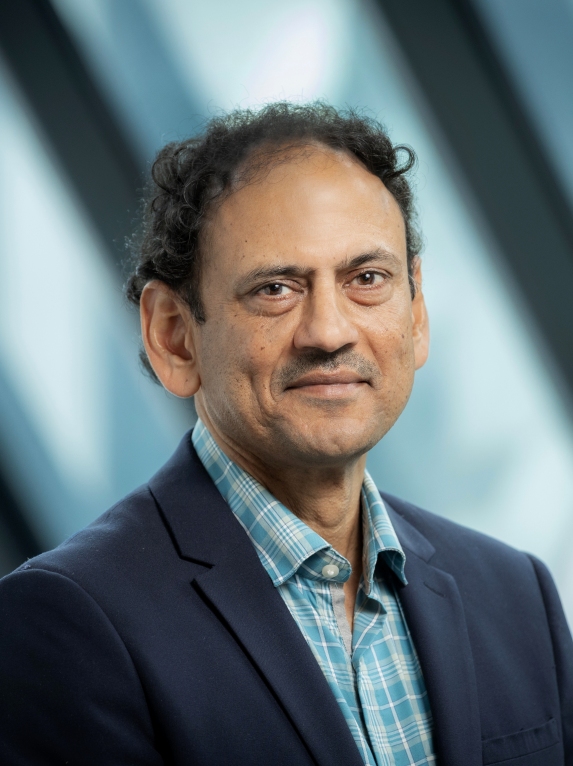
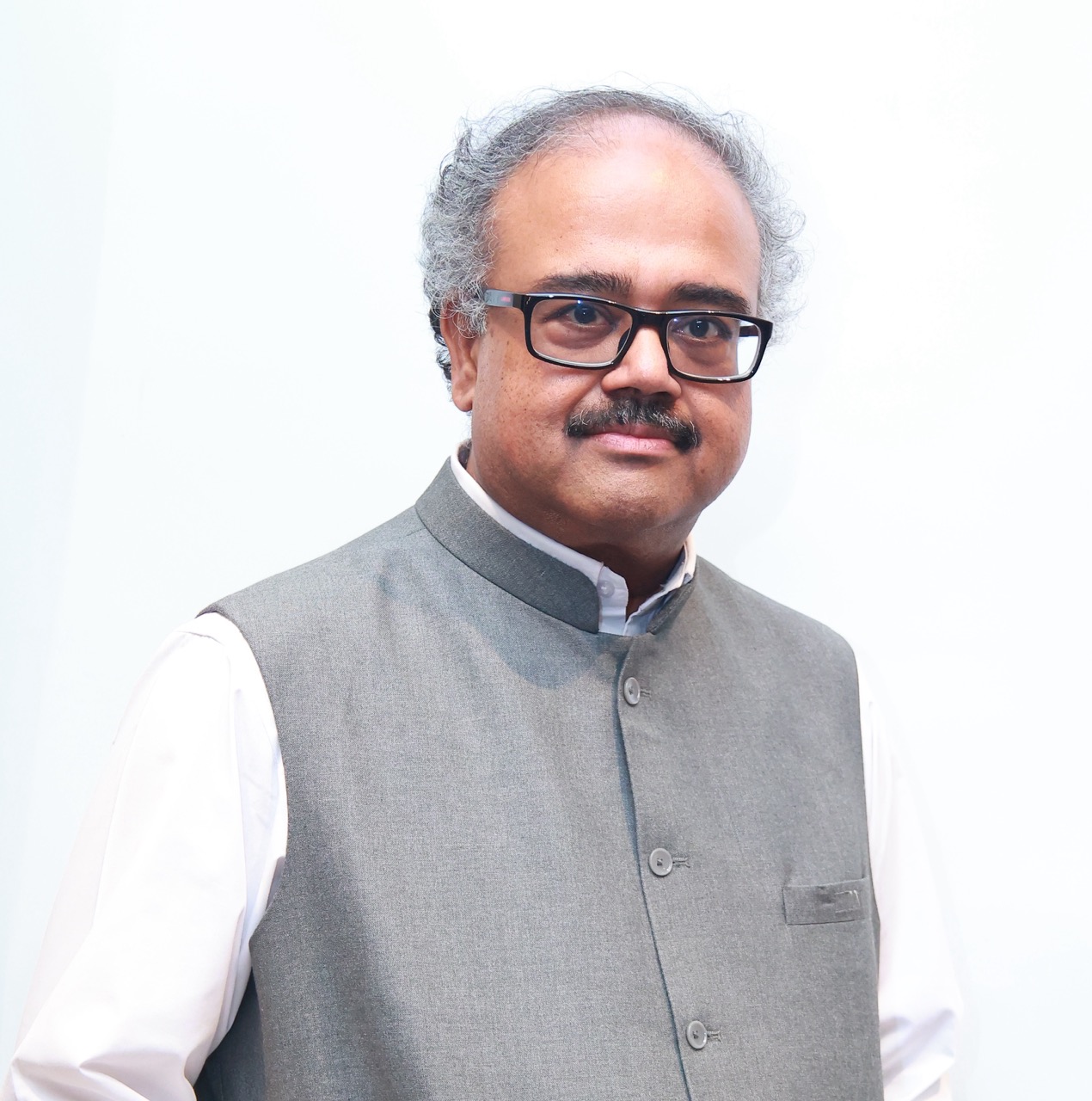
In this episode of Interpreting India, Adarsh Ranjan, research analyst at Carnegie India, speaks with Jaspreet Bindra, founder of AI&Beyond and Tech Whisperer Limited, UK, and author of 'Winning with AI: Your Guide to AI Literacy.' Jaspreet brings a practitioner's perspective to questions that often get lost in the noise around AI: not just what is changing, but whether people, organizations, and policymakers are actually prepared for it.
This episode explores:
Is India's enthusiasm for AI actually translating into adoption on the ground, and which sectors are seeing real change? Is AI destroying jobs or transforming them, and what does that mean for a country whose economy was built on knowledge work and software services? What is AI literacy, why is it different from training, and why does Jaspreet think it is the most underappreciated variable in the AI policy debate? On deepfakes and copyright, are India's existing frameworks anywhere close to adequate?
Episode Notes
Jaspreet's framing for the AI and work debate is worth staying with. He is not dismissive of disruption: he thinks AI will destroy certain jobs, create new ones, and the rupture will be real. But he pushes back on the idea that job destruction is the right frame. The more useful question, he argues, is what happens to workers, and the answer to that depends almost entirely on whether people develop the skills to move into the roles that AI creates rather than the ones it displaces. His reference point is the IT sector itself, an industry born out of the last great technology disruption, when fears about computers eliminating clerical work gave way to an entirely new economy of higher-paying, more fulfilling jobs. The same logic, he believes, applies now.
The bulk of the conversation settles on AI literacy, a concept Jaspreet distinguishes sharply from training. Training teaches you how to use a specific tool. Literacy gives you the grammar to work with any tool, across any context. He lays out a five-step framework from his book, reads, writes, ads, thinks, does, designed as a practical ladder for building that literacy, and is candid that even three years after ChatGPT, most organizations have brought the horse to the water without making it drink. On the policy side, he is supportive of initiatives like AI in school curricula and IIT fellowships, but his bigger ask is that India treat AI the way it treated digital public infrastructure: as a genuine national mission, not a sectoral initiative. On deepfakes and copyright, his view is pragmatic: deepfakes are a known evil that needs specific, exemplary regulation rather than an omnibus AI law, and copyright will likely resolve through a combination of revenue sharing agreements and citation norms, neither side fully satisfied but better than where things stand today.
Transcript
Note: This is an AI-generated transcript and may contain errors.
Adarsh Ranjan: Hello and welcome to a new episode of Interpreting India. From geopolitical complexities to economic uncertainties, India faces critical challenges in its quest for a more prominent role on the world stage. This season, we at Carnegie India continue to bring voices from India and around the world to examine the role of technology, the economy, and international security in shaping India’s future.
My name is Adarsh Ranjan. I’m a research analyst in the Technology and Society Program at Carnegie India.
AI is fundamentally reshaping the nature of work, automating tasks, transforming job roles, and raising urgent questions about which skills will define employability in the years ahead. For India, a country whose economy was built on knowledge work and software services, the stakes are particularly high.
Yet, while there is plenty of speculation about job losses and gains resulting from the integration of AI, there is far less clarity on what is already changing, how businesses are integrating AI, how roles are evolving, and what the short- to medium-term outlook looks like.
Underlying all of this is the more fundamental issue of AI literacy. Because when individuals don’t understand what AI can do, they can’t fully leverage its opportunities, understand its risks, or prepare for its disruptions. When organizations don’t understand its limits, they adopt it poorly. And when policymakers don’t understand it deeply enough, the frameworks they build risk falling short.
This becomes even more critical as we confront the ethical dimensions of AI, from privacy and deepfakes to copyright. These are not just technical challenges. They are questions of understanding.
So, in this conversation, we will try to bring the threads on AI, the future of work, AI literacy, and ethics together to understand not just where we are headed, but how prepared we really are for what comes next.
Joining us today to discuss these issues is Mr. Jaspreet Bindra, founder of AI&Beyond and The Tech Whisperer. Jaspreet has served as the group chief digital officer at the Mahindra Group, as a regional director at Microsoft India, and as a general manager in the Tata Group as part of the select Tata Administrative Services. He was also a member of the founding team at Baazee.com, which later became eBay India.
Jaspreet was recognized as the inaugural Digitalist of the Year by Mint and SAP. He is a visiting professor at Ashoka University and an expert at Singularity University. He is the author of two books. The first, The Tech Whisperer, was published in 2019 by Penguin Random House and demystifies emerging technologies such as AI, offering business leaders a practitioner’s guide to digital transformation. His second book, Winning with AI, was published in 2025 by Juggernaut and makes the case that AI literacy is the essential skill of this era. It gives individuals and organizations a practical path to building it.
Jaspreet holds an MBA, is a chemical engineer, and has a master’s in AI ethics and society from Cambridge University.
Jaspreet, we’re delighted to have you on the podcast. Thank you so much for joining us today.
Jaspreet Bindra: Great, Adarsh. It’s fantastic to be here. I look forward to the conversation.
Adarsh Ranjan: Great. So, I want to begin by talking about some of the work you’ve done on AI and the future of work. In some of your writings, you’ve pointed out that there is significantly greater enthusiasm for AI in India and China as compared to the West, where the discourse tends to be a bit more cautious.
Now, is that difference actually translating into faster adoption on the ground? And what are the broad trends that you’re seeing when it comes to how AI is affecting the nature of work? And if you could comment on what you think the short- and medium-term policy outlook looks like globally, but also for India.
Jaspreet Bindra: Sure. It’s a great question because I’ve always maintained that the single biggest early impact of specifically generative AI is going to be on how we work.
Therefore, work will change as dramatically as it changed from so-called blue-collar to white-collar work. With the advent of digital tools and software like spreadsheets and word documents, the whole way that we used to do work collaboratively using machines and computers completely changed from how it used to happen before that. What was perhaps clerical work changed. The same level of change will happen because of AI.
AI is a cognitive technology, and most of this change will be focused on white-collar work. But as we go forward and physical AI comes in with robotics, humanoids, and so on, perhaps we will see something similar in blue-collar work as well.
For now, let’s focus on white-collar work.
You are also right that survey after survey shows that countries like India, China, and some other Asian and African countries are far more optimistic and enthusiastic about the advent of AI than European countries, or even the U.S. or Australia. Europe, Australia, and the U.S. are pretty much at the bottom. India is usually at the top, ahead of every other country, or definitely in that cluster of countries.
So, we look at it much more optimistically. I have written and speculated about the reasons for that. One reason is, frankly, that we have a lot less to lose. The West has a lot to lose with a new disruptor coming in. Everything is set. They lead a good life. In India, we grasp at anything new that can come and lift up our station in life.
There are a few other reasons: a younger population, for example, and the fact that we are much more used to using digital goods and digital public infrastructure. Every single person, every one of our 1.4 billion people, uses it in some form. All of those lead to the fact that we are early adopters and therefore more optimistic.
Now, whether that is translating into usage of AI at work is still an open question. Again, there are many surveys which state that AI adoption among a certain strata of the population in India is higher than in many places in the West. These are not authoritative surveys, so I’m not sure how much of that is true.
Whether Indians are using it more in their work, again, for a certain narrow segment, yes. For knowledge workers, tech workers, and IP workers, Indians seem to be on par or ahead in terms of adopting these tools.
But I still think the vast majority of India is not even aware of AI tools, much less using them in their work. Remember, in India, a lot of the population is in non-cognitive areas of work, whether agriculture, construction, and so on. AI doesn’t touch that yet.
So, to summarize, I would say Indians are definitely far more enthusiastic and optimistic about absorbing AI in their work and life, but the jury is still out on whether they have done so or not. That will take some more time.
Adarsh Ranjan: You just touched upon it a little bit when you said that the uptake is higher among knowledge and tech workers. But you do a lot of work with different kinds of organizations. You’ve been doing a lot of digital transformation work for the past seven or eight years now.
Are there specific sectors where you are seeing that the uptake is much higher? I just wanted to point out this resource that Anthropic released, mapping which sectors and roles are most exposed to AI. Their research shows that, theoretically, computer and mathematical roles, business and finance, programmers, customer service, and data processing are among the roles most exposed to AI. But they also note that there is a gap between theory and reality at the moment.
Do you think this is also mapping onto the Indian economy, or is there a difference here?
Jaspreet Bindra: The Anthropic research is reasonably relevant to India as well. Coding, IT, and software engineering are probably where the maximum usage of AI is happening. In fact, I hardly know any good software engineers who do not use AI tools now. Those don’t exist any longer.
Another area is customer service, and that has also started seeing an uptake, although much less than software engineering or tech. A third area is a sector that is very interested in absorbing AI but is hampered by regulation at this point in time: BFSI, banking, financial services, and insurance. Again, this is a sector that would see a lot of impact from AI, but the regulatory framework does not yet allow it.
Finally, professional services or consulting is also an area that is almost facing an existential threat from AI. If not an existential threat, then at least a disruption in the business model. This sector is also very open to adopting or absorbing AI.
So, I think what the report says is still largely true. But I must again say that these are early days. As you rightly said, the Anthropic report also shows gaps. But even if there are gaps, the actual seems to be tracking the theoretical.
I think the real changes will start happening once AI starts getting absorbed and used much more in education, governance, government, healthcare, or the legal sector, where it has started but will take some time.
Anecdotally, I can say that even after three-plus years of ChatGPT, as I go around enterprises, while there is a lot of awareness of AI, the adoption of AI is still abysmally low. In many ways, organizations have invested in AI and brought the horse to the water. But making the horse drink is still a big problem. That is actually an area for my next book: how we get people to make the horse drink. That is still not happening at scale the way we thought it would.
Adarsh Ranjan: I’ll come back to that in a bit. But one of the things that happens when we talk about AI and the future of work is that there is a lot of speculation. In some cases, it is very alarming, with projections that AI would necessarily lead to a lot of job losses and disruption of existing jobs.
The IT sector is very sensitive. As you know, in India, the IT sector has been the backbone of the modern economy and the primary vehicle through which millions of people have entered the middle class.
You see this a bit differently, and I think you’ve previously written that it is not so much job destruction as job transformation. Can you talk a little bit about that?
Jaspreet Bindra: I can go on and on about AI and jobs, but let me focus on the IT sector since that was more your question.
Before I come to the IT sector, let us acknowledge the fact that AI will disrupt jobs. It will destroy certain jobs. It will create massive new jobs, as has every technology before AI. What this will mean is that there will be a great disruption, a rupture, whatever way you call it.
Now, if I move specifically to the IT sector, it is a bit ironic that the entire sector was created out of the last big technological disruption on jobs. The last big disruption, for people old enough to remember, was when computing came in: personal computers on everyone’s desk, Microsoft and everyone bringing that in.
If you remember that time, the fear of job loss was probably as great as the fear is now, except there was no social media to amplify that fear. But there were people out on the streets railing against computers, calculators, and so on. Governments were looking at new policies to protect jobs and livelihoods.
What happened really? Certainly, stenographers disappeared and a bunch of other such jobs disappeared. But this entire IT sector, of which we are justifiably proud, came because of that. It created many more jobs, more fulfilling jobs, and higher-paying jobs than what existed at that point.
Therefore, I believe that framing it as job destruction is the wrong way. It should be framed as job transformation: how jobs change and therefore how the skills needed for those jobs change. That means we have to change ourselves, which is why I focus on AI literacy.
I would like to end by citing a statement I read from someone in Sweden, I think a minister or a union worker. They said, “We don’t protect jobs, we protect workers.” That’s not the same thing.
Protecting jobs, frankly, is an exercise in futility because those jobs are going to go. But if the workers themselves reskill and re-equip themselves through AI literacy, the same workers can take on newer roles and newer jobs. Therefore, even as we think about potential policy in India, we should think about protecting workers rather than protecting jobs.
Adarsh Ranjan: I think that’s a perfect segue to get into the work that you’ve been doing over the last couple of years, the thrust of which has been on AI literacy.
You said that awareness is quite high in a lot of industries and across a lot of institutions, but adoption is not. In the previous question, you spoke about the skills needed for the AI era needing to change.
Do you think that in the AI policy debate, which tends to focus on things like data and compute, literacy is a bit underappreciated? And from your own work, the boot camps and workshops that you conduct, what is your perception of how people think of AI literacy?
Jaspreet Bindra: You’re right. I’ve been working in AI for a long time, and obviously all these disruptions are happening. People would ask me, “Fine, it’s going to change everything, but what do we do? What should we do?” Frankly, I didn’t have a good answer until I stumbled on the concept of AI literacy.
Different words are used: AI fluency, AI expertise, AI upskilling. But I like the word literacy because it is different from training and different from upskilling, as I’ll explain.
So, what is this literacy thing? I have what I call my three laws of AI literacy. The first one states that in this age of AI, with all these new jobs and roles coming in, everyone doesn’t need to be an AI expert, but everyone needs to be AI literate.
The second is that the definition of literacy itself will change from reading, writing, and arithmetic to all of those plus how you can use AI in everything you do, whether at work or otherwise.
The third is that all the investments that enterprises, governments, and educational institutions make in AI tools, agents, software, and so on are not going to land unless people are AI literate. This has been borne out study after study. There was a famous MIT NANDA study which said that 95 percent of generative AI startups don’t scale. One of the big reasons was that people weren’t ready to receive them. They weren’t literate enough.
Literacy, Adarsh, is different from training. Training is where you say, “Open Copilot. On the left-hand side, there will be this drop-down menu. You click on that.” That makes it boring.
Literacy is about knowing the grammar, structure, and articulation of a language. Once you become literate, you can read any novel. Say you become literate in English, you don’t need to be trained in every novel.
Therefore, the whole way you look at it has to change. I believe, as a corollary, that the definition of AI talent itself will change. We think of AI talent as AI/ML engineers, MLOps, data scientists, and so on. Those are great talent. But AI talent will be everyone, whatever job she or he is doing, using AI to do that job better.
For a recruiter, for example, saying, “I can use Lovable or Emergent or one of these workflow tools to automate my recruiting workflow. I don’t need to go to the IT department. I can do it myself.” That is literacy.
In terms of the second part of your question, most organizations think of AI today as training. We were never trained on the internet, for example. We became literate about it. We became knowledgeable about it.
Therefore, the effort is to do boot camps across multiple places where, in four or five hours, people get excited about stuff and start figuring out how to use multiple tools for their work, how to use them the right way, and how to use them safely.
Finally, AI&Beyond, my organization, talks about building AI literacy in organizations and beyond. We got the opportunity to do the “beyond” bit, with the Government of India asking us to make a tech education video with a government certificate to make every Indian AI literate. So, the “YUVA AI for All” course is available on Khan Academy, Coursera, NASSCOM, and multiple other places. I believe close to half a million people have registered for it, and a bunch of them have taken it.
I think literacy needs to be the bedrock. I agree that we are measuring AI by the number of startups, the amount of funding, or the number of Nvidia chips bought. All of those are very important things, but they are not going to land unless people are AI literate.
Adarsh Ranjan: Let’s talk about this a little bit more. You’ve said that it’s not so much about the tools. It’s not only about understanding how to use ChatGPT, but rather understanding the underlying context of how AI works.
In your book Winning with AI, I think you have a framework, or a five-step process, through which you try to break it down. Can you explain what that is and what each of the elements are?
Jaspreet Bindra: A slight correction. I do believe it’s about the tools. You need to understand the tools. It’s not about a tool. Training is about a tool. For example, I have Copilot or Claude, and I am going to train you how to use Claude for your work. That is training: a tool to do the work you do.
Literacy is about how you use AI generally across tools, across agents, across everything.
We believe that AI has two kinds of senses, as we have written in our book. One is called the direction sense: what is happening in AI, what new things are happening, how I can keep up with it, how it will change my work, and so on. The second is execution sense: how do you use the tools out there to execute or do your work better?
In this execution sense, we created a five-step framework. When I say “we,” it is because I co-authored it with my AI&Beyond co-founder Anuj. We created a five-step framework that goes from reads to writes to adds to thinks to does.
The reason we created it was to make it simple. If you want to become literate in anything, forget about AI, you have to learn to read, write, add, think, and do. So we used the same thing. We made it even simpler by making “reads” an abbreviation. The R of reads means one skill, E is another skill, A is another skill, and so on.
The S of reads, for example, is summarizing using AI. The reads part is about how you take in and absorb information by summarizing and so on. The writes part is about how you create stuff, whether across text, video, or anything else. Adds is about how you analyze stuff using AI. Thinks is about how you use AI as your second brain to brainstorm and think of new ideas and concepts. Finally, does is about how you use agentic AI to make AI actually do things.
That is the framework. As you climb the ladder, we believe that by the end of the fifth step, you will be super literate in AI.
Just to add, the book is a year old, and AI moves very fast, so some of that is dated already. In our new book, we are thinking of adding two or three more steps. The staircase becomes longer. There will be things around making, drawing, and orchestrating, for example, which are new literacy skills you need to develop now, especially with agentic AI.
Adarsh Ranjan: In the boot camps and workshops that you do, bringing in this framework and teaching it to business executives or even people who have a higher education degree is one thing. Do you think there is a challenge when you teach it to a business executive versus, say, a shopkeeper in rural Maharashtra?
Jaspreet Bindra: We’ve taught this to business executives. We have taught this to students. Through our video, probably to shopkeepers as well, but we don’t know. So I have limited knowledge of how it works. I have taught the first two constituencies, but not the third directly. I can speculate.
For business executives, when we go there, we don’t just give them the general framework that they can get from the book. In fact, our book has a little chatbot also built off it, grounded in the book, so people can query it and get information from the book. But in our boot camps, we very sharply customize the session to that participant, industry, business, or function.
An HR person in a cement company will have a totally different boot camp than someone in a front-management division in a bank. Their jobs are different, so we make it relevant.
Students are a little different. Students are obviously much faster. They are more AI-native than executives are. Many of them are on this framework or a similar framework already. There, we focus much more on teaching them how they can build stuff using AI, vibe code, and so on.
As you know, Ashoka, for example, is a liberal arts university. When I teach there, the exam is actually what you build. It’s not a theoretical thing. Humanities students have built amazing things using vibe coding and English to code, including a couple who had almost 100 percent visual disability. There is a lot of superpower there.
Finally, for shopkeepers, rickshaw-walas, and others, I have no idea because I have not directly taught them. But given the fact that translation in AI is so easy, contextualization is also not very difficult, and using speech rather than the written word is also very simple, I think it lends itself to teaching these constituencies.
The video I talked about, which we made for the Government of India, is now being translated, or already has been translated, into 12 Indic languages by Sarvam. They picked up that video to translate it. That is what the Sarvam folks told me. I’m not sure whether it is out yet or not. Hopefully, it will reach those kinds of people.
Adarsh Ranjan: That sounds great. I wanted to talk a little bit about challenges. You alluded to this earlier: the enthusiasm is there, the awareness is there, but the adoption isn’t, and we are some ways away from mass AI literacy.
What do you think is the biggest barrier to that?
Jaspreet Bindra: If I talk about a narrow constituency, which is corporates and people who are educated, well-off, and so on, it is much more psychological.
I have seen that they get overwhelmed with the hype. They get overwhelmed with the sheer number of things happening and are unable to wrap their heads around it. A lot of it is psychological. They have not gotten into it.
Some part of it is cost. Most people use free tools, and when they use free tools, they find that there is a lot of hallucination happening. They are not able to use a bunch of features, and they are unwilling to invest in paid versions. So that is a part of it.
But I think the biggest barrier is fear. There is fear because, as we all know, bad news travels faster than good news. They keep reading about deepfake creation, about their data going out into the void, and fears around environmental degradation. These fears prevent them from adopting AI.
But if I talk about India at large, Bharat at large, 1.4 billion people, I think frankly, people just don’t even know that it exists. The overwhelming majority don’t. I don’t know the real numbers, but I would sense that more than 80 percent of people in India don’t even know.
Here, there is an opportunity. 1.4 billion people use digital goods without knowing they are digital, or knowing what they are called. So I think there is a great opportunity to bring generative AI to 1.4 billion people in the same way digital was brought to 1.4 billion people: through applications, treating it as a digital public good, and through the devices they own.
Then we will see adoption similar to the kind of adoption we saw in the great Indian digital transformation. It is a concept I sometimes call JanAI. AI for the janata. A lot of people, including in government and institutions, are working toward it, so I hope that happens.
Adarsh Ranjan: There are people who are doing a lot of work toward building up these skills. The government is obviously also very invested in ensuring that upskilling happens and that people have the necessary skills to really make use of the AI era.
The government recently created some new initiatives to drive AI skilling. Budget 2026 proposed 15,000 AI labs in schools and 10,000 tech fellowships at IITs. What do you make of these initiatives? Are these interventions enough? What more do you think needs to happen from a policy perspective?
Jaspreet Bindra: I’m not an expert in this in many ways, and I don’t follow exactly what the government is doing. But I think a few things are very important and being done right.
For example, most school curricula have changed a lot. In CBSE, AI is now a separate subject. It is not just something that is also taught. There is a separate exam. I’m also led to believe that introduction to AI is being introduced at fairly junior levels, in lower and middle school itself.
I think that is a good thing because educating people about AI through the school system or the educational system is probably the single biggest area of good you can do. Investing in that, as well as in higher education, is a great thing.
But I think AI is too big and our population is too big. A couple of other things perhaps need to be done. I personally believe that AI is big enough and important enough to be treated as a national mission. However strong our intentions are, we are still not treating it at that level as a national mission.
To give you an example, population control was treated as a national mission, or the Green Revolution before that, or even reducing smoking, for example, was treated at a much more fundamental level. Think about it: all of those have worked.
The more recent one I can think of is digital public infrastructure. It was a national mission, and that also worked.
So, I think if the government elevates AI to that level and treats it as a national mission, it becomes far more holistic. It is not limited to an IIT scheme or something else. The opportunity of 1.4 or 1.5 billion AI-enabled people is massive. It can help us realize our 2047 developed-country ambitions much faster.
While DPI is free for everyone, the amount of value it has created in terms of reducing friction, subsidy distribution, entrepreneurship, global investments into India, and so on is immeasurable. I think the same, or more, can happen with AI if it is treated at that level. That is my wish.
Adarsh Ranjan: Talent is one of the legs of the IndiaAI Mission, one of the seven pillars. So I think the government is responding to some of what you are saying as well.
I quickly want to touch upon one more element, which is AI and ethics. You hold a master’s from Cambridge in AI ethics and society.
I want to look at two issues. One is deepfakes, and the other is copyright. Some of the harms of deepfakes are now well documented: everything that happened with X recently, deepfake videos of politicians being circulated, and even in war and battlefield scenarios, when AI deepfakes are being created.
When it comes to copyright, we have two parallel issues. One is that in many cases, the training data used by LLMs includes work by artists and writers who are not necessarily compensated for it. The second is that AI-generated art and writing may be demonstrably inspired by or derivative of a specific artist’s body of work, again without acknowledgment or compensation, even when there is clear inspiration from it.
Do you think genuine AI literacy would have an impact on either of these issues? How do you think it could influence them?
Jaspreet Bindra: This is a vast subject. I spent two years in Cambridge doing this and other things, and I can spend two years more telling you about it. I’ll try to keep it as abbreviated as possible.
First of all, ethics in AI is a real concern. Ethics in every technology has been a concern. Every powerful general-purpose technology is dual in nature. While there are all the good things, there are also destructive things, as we have seen with technology after technology.
In some sense, let me go back to the first question that you asked: Indians are among the most optimistic about AI. Similar surveys, or the same surveys, also reveal that Indians have the least concern about AI ethics. In fact, they don’t care in many ways. Part of that is economic, part of that is cultural. I looked a lot into the cultural part, especially vis-à-vis privacy, in my Cambridge work.
In fact, the fact that we care less about ethics has, perversely, made DPI and DBT successful. It would be very difficult to do that in other countries. Some have tried, but it is very difficult. Keep that in the back of your mind as we talk about deepfakes and copyright.
Deepfakes and copyright are real problems in AI ethics. They are different problems, but real problems.
Let me take each one quickly. Deepfakes, in my mind, are a known problem, a known evil. It is something no one agrees is good. No one says it is good. Everyone agrees it is bad. I am not going to get into what deepfakes are and what they do. I think we know all that.
Two things I will say here. One is that the effect of deepfakes is sometimes not as great as we think it is. For example, in the last general elections, there were a volley of deepfakes in India, but multiple surveys done after that revealed that they did not really change voters’ minds the way they were made out to.
Human beings are very good at judgment. We sometimes underestimate that. It is how we judge other people, and therefore we can judge deepfakes. I am not saying we should not worry about them. But so far, it is not as huge, perhaps because they are not so convincing yet, or because humans have judgment.
Having said that, we definitely need very strong regulation, education, awareness, and technology-based solutions to deepfakes. All three are necessary: tech-based solutions, education much like a “smoking kills” kind of program, and regulation.
I don’t think we have either right now. Again, I’m not a lawyer, but regulation-wise, I believe it is the Copyright Act that is used to punish deepfakes. If so, we need something much, much stronger. I have always advocated that rather than trying to create an omnibus law around AI, which tries to capture everything and will never be possible, let’s at least pick up known evils like deepfakes and create exemplary regulation around them. That does not exist.
Similarly, education is not at that level. Technology will always be a catch-up game. We will build technology to detect deepfakes, and someone will build a better deepfake, and then better technology, and so on.
On copyright, it is a different problem, but also a real problem. Deepfakes are more of a societal problem in many ways. Copyright is also an economic problem. It is about people’s economic output in the form of content being plagiarized and used.
Again, there are two views. The majority view is obviously about people losing livelihoods. There are multiple cases out there right now in major courts around the world. We are going to get precedents around this, about whether using someone’s work, like The New York Times and so on, is permissible.
I think two things are going to happen. One is that, frankly, technology is going to “win.” I don’t know how you stop it. Secondly, I think big companies and large AI labs will enter into revenue-share agreements with big content creators, so some of that will get better.
But the counter-philosophical argument is that all human knowledge is built upon knowledge that has already been created. When you write a scientific or research paper or your PhD dissertation, you write it on the shoulders of a hundred papers that already exist. Sure, you cite them, and that is the big difference, which AI does not do.
But now, some of the newer models are actually showing explicit citations back to the origin. I think that is how this will evolve in some way: a halfway solution that will not make either side happy but will be better than the totally one-sided situation that exists right now. That is how I look at both of these.
Adarsh Ranjan: Thank you. That is very helpful to contextualize these issues and look at how we might think about them in the future.
I think we are at time, and that was also the last question I had for you. Thank you so much for taking out the time to talk us through these issues and help us understand what the future might contain.
Jaspreet Bindra:
Thank you.