

Paper
- +1
Mr. Lee Feinstein, James Clad, Lewis Dunn, …
{
  "authors": [
    "Lee Feinstein"
  ],
  "type": "other",
  "centerAffiliationAll": "dc",
  "centers": [
    "Carnegie Endowment for International Peace"
  ],
  "collections": [],
  "englishNewsletterAll": "ctw",
  "nonEnglishNewsletterAll": "",
  "primaryCenter": "Carnegie Endowment for International Peace",
  "programAffiliation": "NPP",
  "programs": [
    "Nuclear Policy"
  ],
  "projects": [],
  "regions": [],
  "topics": [
    "Security",
    "Nuclear Policy"
  ]
}
REQUIRED IMAGE
Source: Carnegie
U.S. Proliferation Policy and the Campaign Against Terror
By Lee Feinstein, Visiting Scholar
Tuesday's terror attacks on New York and Washington DC should bring about a major shift in US nonproliferation policies. Until now, the main goal of US nonproliferation policy has been to prevent the emergence of new nuclear nations. After Tuesday's terror attacks, however, the focus of US efforts is to prevent terrorists from acquiring weapons of mass destruction. In most ways these policies are complementary and not in competition. But making the shift will pose risks and require tradeoffs.
Since May 1998, when India and Pakistan conducted tit-for-tat nuclear test explosions, the focus of US policy in South Asia has been to prevent an all-out nuclear arms race in the region and to deter other nations from pursuing the nuclear option by demonstrating there would be an international cost in pursuing weapons of mass destruction.
For example, after the 1998 tests, the G-7 nations agreed to "postpone consideration" of lending from the International Financial Institutions (IFIs) to both nations. Japan, Canada, and the United States, among others, also imposed national measures, including economic sanctions, and the UN Security Council issued a strong statement identifying a series of benchmarks for the two countries to meet, designed to prevent a further ratcheting up of the arms competition in the region, and to deter other nations that might consider the nuclear option. The US sanctions on Pakistan were in addition to residual "Pressler Amendment" sanctions imposed in 1990 when the elder President Bush was unable to certify that Islamabad did not possess a nuclear explosive device.
By the time of President Clinton's visit to India in 2000, the first by an American president in a generation, most of the post-test sanctions on both nations had eroded or been lifted, but several still remained, including a ban on most US military sales to both nations. The Bush administration, which has advocated continuing the effort to strengthen ties with India, and also sought to revise overall US sanctions policy, began a review of nonproliferation sanctions on India and Pakistan shortly after coming into office. This is a process that has accelerated since last week's attacks.
The most significant and immediate impact of the shift will be on US policy toward Pakistan if, as is hoped, Pakistan cooperates with U.S. anti-terror efforts. President Musharraf has publicly said the package would include removing nuclear related sanctions on Islamabad, a large aid package and resumption of military sales. India, which itself has pledged strong support for the US anti-terror campaign, will seek relief from remaining test-related sanctions. And, if the United States restarts a military supply relationship with Islamabad, India may seek to compensate by increasing military purchases from Russia or others, and it is no longer inconceivable that the United States might initiate some kind of a military aid relationship with New Delhi.
Adjusting our policy toward South Asia is necessary in light of the last week's attacks. They are not without risks, however, the most obvious being the potential to destabilize a nuclear armed state with connections to radical Islam, the possibility that a large aid infusion will free up money for Pakistan to accelerate its weapons of mass destruction programs, and unintended consequence of heating up the arms competition in South Asia. More broadly, by putting anti-terror measures ahead of the nonproliferation effort, there is a risk of sending the wrong message to fence sitters elsewhere that the United States no longer places a priority on preventing the emergence of new nuclear states.
While such a dramatic a shift in policy toward Iran is less likely, Secretary Powell has indicated that the United States is not ruling out the possibility that Tehran could join or associate with the US anti-terror coalition. Whether Tehran will be able dramatically to shift its policies, including on the issue of state support for terror, remains to be seen. But at a minimum, any US tactical cooperation with Iran must not lead to a diminution of efforts to prevent Tehran from acqiring a nuclear or longer-range missile capability.
Former Visiting Scholar
Recent Work
Mr. Lee Feinstein, James Clad, Lewis Dunn, …
Carnegie India does not take institutional positions on public policy issues; the views represented herein are those of the author(s) and do not necessarily reflect the views of Carnegie, its staff, or its trustees.

In any defense establishment, change is an ongoing process. However, despite the best of intentions, existing bureaucracies, bound by habit and years of socialization, have their limits in implementing transformative change.

Anit Mukherjee

After the chill in ties between 2020 and 2024 that brought India–China relations to their lowest point in several decades, the two countries have engaged each other afresh. This paper argues that there are predominantly four imperatives guiding India’s approach to China, and they exist in an order of priority.

Saheb Singh Chadha

This piece argues that the present Indian strategy, based on opportunistic diversification and utilization of limited strategic reserves, remains inadequate when confronting supply disruptions. It evaluates India’s options in the short, medium, and long terms.

Vrinda Sahai

This piece examines India’s response to U.S. sanctions and tariffs, specifically assessing the immediate market consequences, such as alterations in import costs, and the broader strategic implications for India’s energy security and foreign policy orientation.
Vrinda Sahai
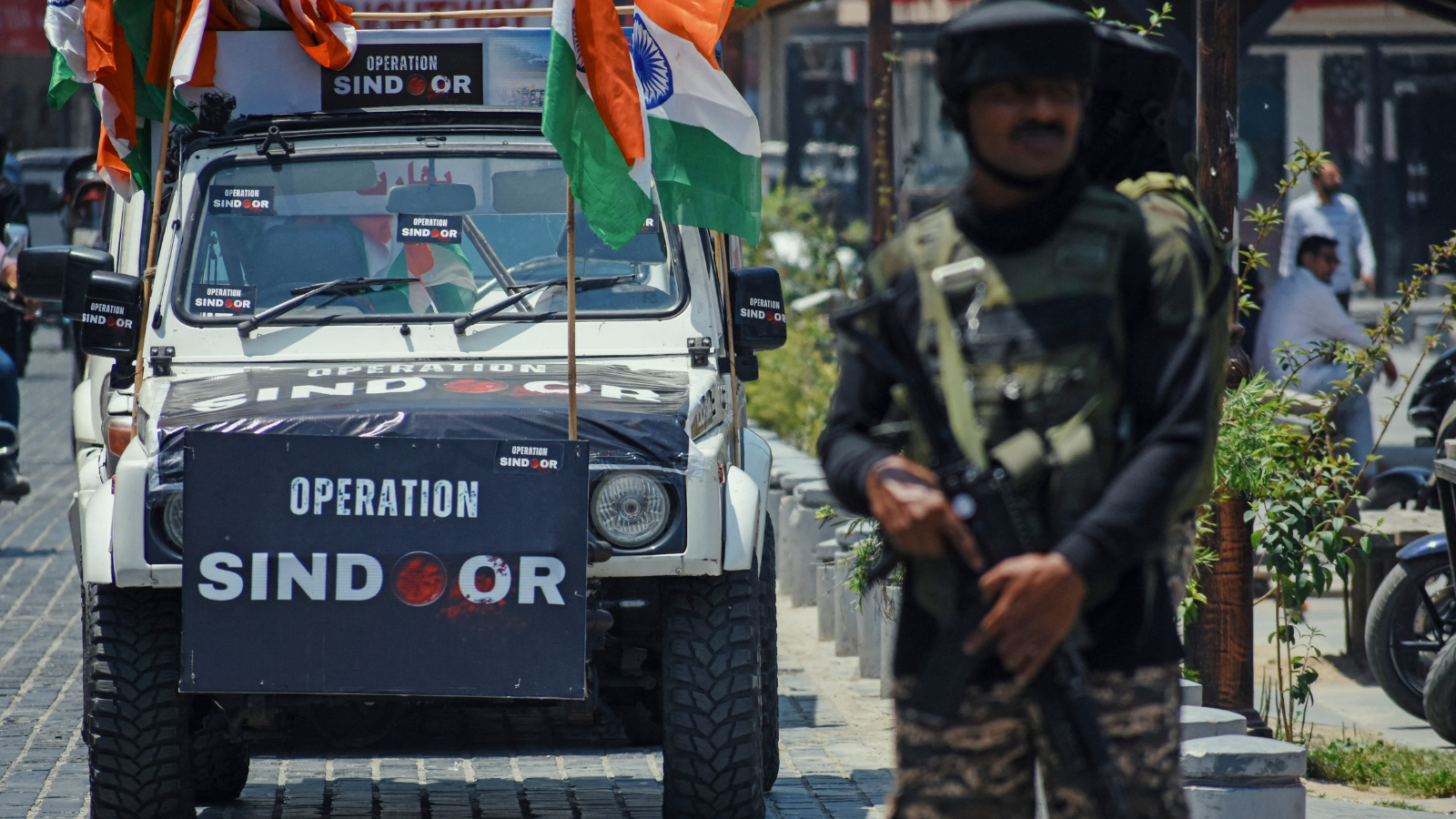
The India-Pakistan conflict that played out between May 6 and May 10, 2025, offers several military lessons. This article presents key takeaways from Operation Sindoor and breaks down how India’s preparations shaped the outcome and what more is needed to strengthen future readiness.

Dinakar Peri