

Report
Mr. Husain Haqqani, Ashley J. Tellis
{
  "authors": [
    "Husain Haqqani"
  ],
  "type": "legacyinthemedia",
  "centerAffiliationAll": "dc",
  "centers": [
    "Carnegie Endowment for International Peace"
  ],
  "collections": [],
  "englishNewsletterAll": "ctw",
  "nonEnglishNewsletterAll": "",
  "primaryCenter": "Carnegie Endowment for International Peace",
  "programAffiliation": "russia",
  "programs": [
    "Russia and Eurasia"
  ],
  "projects": [],
  "regions": [
    "India",
    "Pakistan"
  ],
  "topics": []
}
REQUIRED IMAGE
Source: Carnegie
Reprinted with permission from The Indian Express, Monday, April 29, 2002
There's no sign that the religious riots in Gujarat will end any time soon. According to the international and Indian media, most of the victims are Muslims and the state government is complicit in (or, in the least, unable to control) the carnage. The riots, that were initially described by Prime Minister Atal Bihari Vajpayee as a ??a blot on the face of India?? are costing India the pride and prestige it has built internationally in recent years.
In Pakistan, the riots are being cited as new evidence of incompatibility between Hindus and Muslims thereby reviving discussion of the two-nation theory. At a time when nuclear-armed India and Pakistan need reasons to live with each other in peace, the riots in Gujarat are adding fuel to the religious fires that have divided the impoverished nations of South Asia.
Faced with international criticism, the Indian government has taken refuge in the timeworn argument of national sovereignty. India?s external affairs spokesperson recently rejected international comments on the Gujarat situation, describing them as ??interference in our internal affairs?? and criticised an interview given by the Foreign Minister of Finland, one of the smallest members of the European Union, to The Indian Express as ??pandering to domestic lobbies.?? Expressing concern about mobs lynching a religious minority can hardly be described as ?pandering?.
Gujarat?s images of horror beamed through TV serve as recruitment advertisements for militant Islamists, whose appeal is based on such images. Imagine, Osama could easily turn around and say, ? To protect our identity, to remain true believers, we must strike terror? The world cannot ignore the developments in Gujarat for several reasons. In the current day and age, human rights have become a global concern. Orchestrated violence against a religious minority in India is as much the world?s concern as the absence of representative institutions across the border in Pakistan. Instead of hiding behind the argument of non-interference in internal affairs of the country, New Delhi will have to start addressing the substance of the world?s concerns some time soon.
The status of Muslims as victims on any part of the globe creates sympathy, and in some cases anger, among the world?s one billion Muslims. The Islamists claim that only their militancy can help the Muslims survive what they describe as a global crusade against Islam. Unfortunately, the images of Gujarat?s horrors being beamed through television are serving as recruitment advertisements for the militant Islamists, whose appeal to angry young men is based on such images.
Prime Minister Vajpayee has disappointed his international supporters with his recent reported anti-Muslim remarks at the BJP?s executive meeting in Goa. By lashing out at Muslims as the source of violence at a time when they are generally perceived as the majority of the victims in Gujarat, he has revived questioning of his secular credentials. Ironically, his remarks serve as an inverted justification for extremist jihadis. Osama bin Laden could easily turn the argument around and say, ??Wherever there are Muslims, they are drawn into strife. If we are not violent, we lose our identity. To remain true believers we must strike terror and fear, or risk being eliminated by Islam?s many enemies??.
With Hindu mobs on the loose in Gujarat, Vajpayee?s argument that somehow Islam and Muslims alone identify with violence rings hollow. No religion or its followers have a monopoly over violence or extremist thinking. The Hindu mobs in today?s Gujarat have more in common with the Christians of the Spanish inquisition and the medieval crusades than they do with their co-religionist votaries of non-violence or the Muslim Sufis who brought Islam to South Asia. And the current BJP-RSS-VHP way of thinking that blames everything on Muslims or foreigners, has more in common with al Qaeda than Vajpayee apparently cares to admit.
Religious violence in Gujarat is a result of the same flawed thinking that produced militants and sectarian terrorists symbolised by al Qaeda among Muslims. It is founded in a claim to moral superiority that erodes all moral restraints and sanctions violence in the name of one?s own beliefs by dehumanising other religious communities. Vajpayee?s attempt to create the stereotype of a strife-causing Muslim, instead of condemning violence by anyone irrespective of his or her religion, is a reflection of the same mindset.
The international community?s response has been relatively low-key, partly in view of India?s sensitivity to external interference. But the world will not remain quiet for long. In any case, India should focus on resolving the problem of communal violence-described by the media as a targeted campaign against Muslims ? instead of seeking refuge in arguments about this being India?s internal problem. The first step in that direction would probably be to assign responsibility for the Gujarat riots and remove the state government that allowed ?the blot on India?s face? to appear.
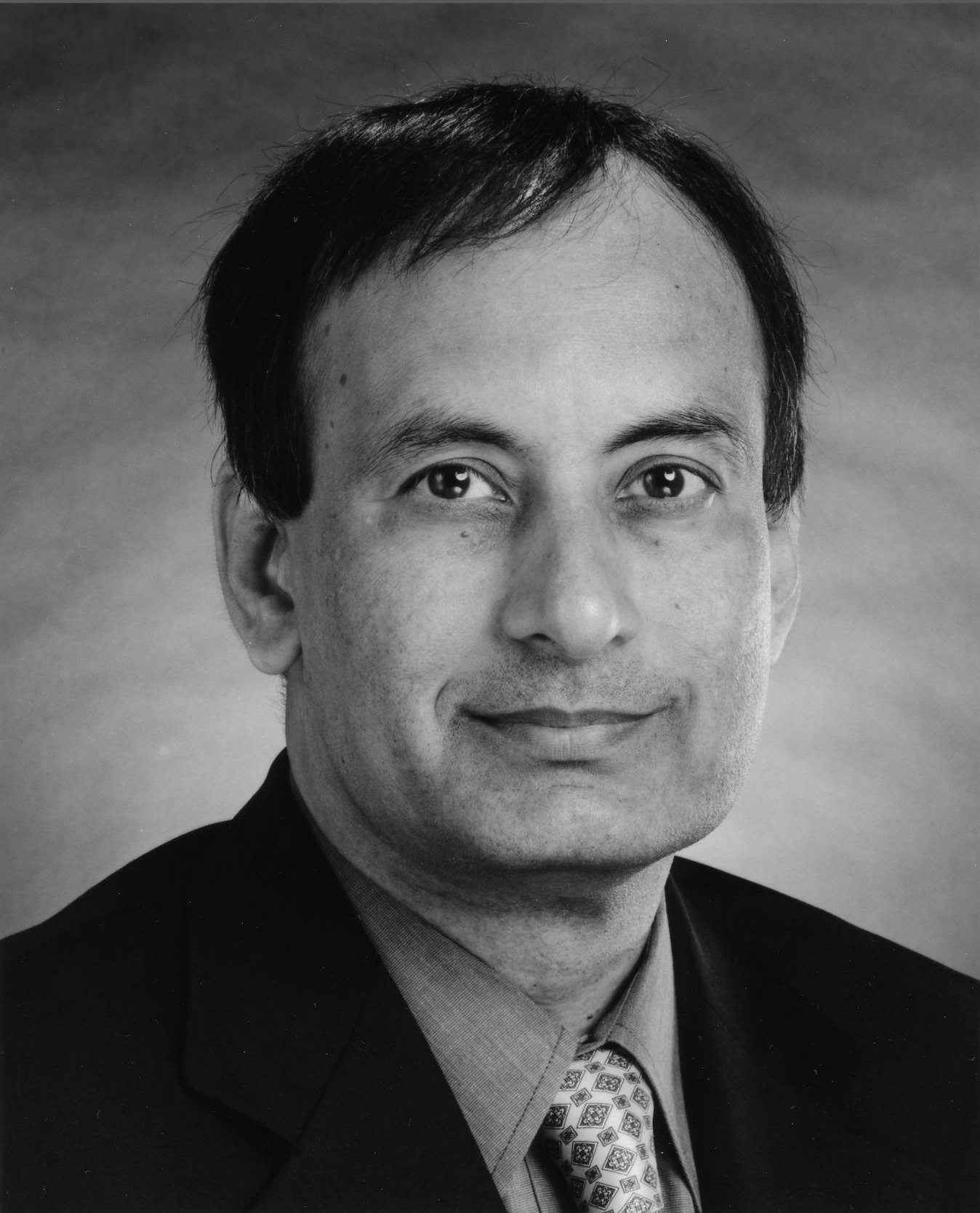
Husain Haqqani is currently a Visiting Scholar at the Carnegie Endowment for International Peace In Washington DC. He has served as advisor to Benazir Bhutto and Nawaz Sharif.
Former Visiting Scholar
Recent Work
Mr. Husain Haqqani, Ashley J. Tellis
Mr. Husain Haqqani

In any defense establishment, change is an ongoing process. However, despite the best of intentions, existing bureaucracies, bound by habit and years of socialization, have their limits in implementing transformative change.

Anit Mukherjee

As AI grows more sophisticated, as the supply chains that power it become more contested, and as access to frontier models becomes geopolitically charged, India must begin to ask a different set of questions. Not what applications it can build on someone else’s infrastructure but what the world needs.

Konark Bhandari

The Indian Ocean Region hosts one of the densest concentrations of subsea cables in the world. Yet, despite accounting for a significant share of global internet traffic, India’s participation remains limited.

Charukeshi Bhatt

How is AI reshaping space security, creating governance challenges, and where does international diplomacy stand today?


Tejas Bharadwaj, Almudena Azcárate Ortega

After the chill in ties between 2020 and 2024 that brought India–China relations to their lowest point in several decades, the two countries have engaged each other afresh. This paper argues that there are predominantly four imperatives guiding India’s approach to China, and they exist in an order of priority.

Saheb Singh Chadha